A hybrid marketing strategy combines traditional marketing methods, such as print, television, radio, and events, with digital channels like social media, email, content marketing, and online advertising. This integrated approach allows businesses to reach audiences across multiple touchpoints, creating a more consistent and effective customer experience.
A hybrid marketing strategy integrates traditional offline methods like print and broadcast with digital channels like SEO and social media. This unified marketing approach maximizes brand visibility, engages diverse audiences, and drives measurable revenue growth across all physical and digital consumer touchpoints.
Business leaders frequently ask, “what is hybrid marketing strategy, and why does my organization need one?” The answer lies in how consumers actually shop today. Buyers do not live entirely offline or completely on the internet. A customer might see a physical billboard during their morning commute, search for the brand on their mobile device during lunch, and finally complete a purchase through a retargeted social media advertisement that evening.
To capture attention across this fragmented journey, organizations must stop treating digital and traditional channels as competing forces. Relying exclusively on digital advertising often leads to audience fatigue and soaring acquisition costs. Conversely, depending solely on traditional print or television campaigns makes it nearly impossible to track exact conversion rates and return on investment (ROI).
By uniting these disciplines into a single hybrid marketing strategy, organizations gain the broad, authoritative reach of traditional media alongside the precise targeting and data analytics of digital platforms. This guide breaks down every component of a hybrid marketing approach, providing actionable decision criteria to help your business build a unified, revenue-driving growth engine.
What are the core components of a hybrid marketing strategy?
 A successful hybrid marketing strategy requires a careful selection of promotional channels. Organizations must evaluate which traditional and digital elements best serve their specific target audience.
Which traditional marketing elements still drive results?
Traditional marketing elements build broad brand awareness and establish deep consumer trust.
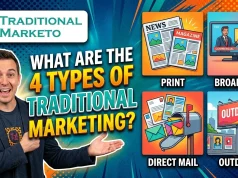
- Print Media: Newspapers and magazines offer tangible credibility. Choose print media when targeting specific local demographics or high-level executives who regularly consume industry trade publications.
- Broadcast Media: Television and radio commercials reach massive audiences simultaneously.
- Direct Mail: Physical postcards and catalogs stand out in an era of crowded email inboxes. Direct mail boasts high open rates and pairs perfectly with digital coupon codes.
- Outdoor Advertising: Billboards and transit signage create memorable, high-impact brand recognition within specific geographic boundaries.
- Public Relations: Securing earned media in trusted publications builds immense corporate authority. A strong PR marketing strategy provides third-party validation that digital advertisements simply cannot buy.
What digital marketing elements complete the hybrid model?
Digital marketing elements provide precise targeting, interactivity, and measurable data.
- Search Engine Optimization (SEO): Optimizing website content ensures your brand appears organically when consumers search for specific solutions on Google.
- Content Marketing: Publishing valuable blogs, videos, and guides establishes industry expertise.
- Social Media Marketing: Platforms like LinkedIn, Facebook, and Instagram allow organizations to build active communities and engage directly with buyers.
- Email Marketing: Sending targeted messages to a permission-based subscriber list remains one of the highest ROI activities in digital business.
- Pay-Per-Click (PPC) Advertising: Choose PPC advertising when you need to drive immediate, highly targeted traffic to a specific product launch or landing page. Comparing content marketing vs advertising strategy reveals that paid ads drive immediate sales, while organic content sustains long-term growth.
Why is a hybrid marketing strategy essential for modern businesses?
Implementing a hybrid marketing strategy solves several major growth challenges for modern organizations.
First, this approach reaches diverse audiences. Younger demographics might discover your brand through a TikTok influencer, while older demographics might respond better to a direct mail catalog. A hybrid marketing strategy ensures no profitable demographic is left behind.
Second, the strategy enhances brand visibility. According to [Gartner, 2023] research on marketing budgets, campaigns utilizing five or more channels generate significantly higher brand recall than single-channel campaigns (link to an external source like Gartner). When a consumer hears a radio advertisement and later sees a corresponding digital display ad, the repeated exposure builds stronger recognition.
Third, a hybrid marketing strategy maximizes ROI through integrated efforts. Traditional media drives top-of-funnel awareness, filling the pipeline with interested prospects. Digital media then captures and converts those prospects through targeted remarketing campaigns. To understand this dynamic fully, review the foundational differences between digital vs traditional marketing.
How do you develop a successful hybrid marketing strategy?
 Building a hybrid marketing strategy requires systematic planning and strict alignment between offline and online marketing teams.
How do you define your target audience and objectives?
Start by analyzing your ideal customer profile. Determine where these buyers spend their time, what media they consume, and what problems they need solved. Set clear Key Performance Indicators (KPIs) for the campaign, such as specific revenue targets, lead generation quotas, or website traffic increases.
What is the best way to allocate a hybrid marketing budget?
Distribute your budget based on your primary business goals. Choose traditional broadcast media if your goal is mass brand awareness, but prioritize digital PPC advertising for immediate lead generation. Ensure you reserve at least 20% of your budget for testing new channels and adapting to unexpected market shifts.
How do you craft a unified brand message across all channels?
A hybrid marketing strategy fails if the messaging feels disconnected. The visual identity, tone of voice, and core offer must remain identical whether the customer views a physical billboard or a digital Instagram post. Consistent messaging prevents consumer confusion and accelerates the purchasing decision.
How should teams measure and optimize a hybrid marketing strategy?
Data analysis is the foundation of any successful hybrid marketing strategy. Tracking offline and online metrics together provides a complete picture of campaign performance.
For digital channels, marketing teams must track metrics like click-through rates (CTR), cost per acquisition (CPA), and overall website conversion rates. Analytics platforms like Google Analytics make this process highly transparent.
Tracking traditional channels requires a bit more creativity. Organizations can measure offline success by using unique promotional codes, custom vanity URLs, or dedicated trackable phone numbers printed on direct mail and billboards. By integrating this offline data into a centralized Customer Relationship Management (CRM) system, leaders can evaluate exactly which traditional efforts are driving digital sales. For a deeper dive into evaluating these methods, explore the hybrid approach vs traditional approach.
Which real-world case studies prove hybrid marketing works?
Examining successful organizations demonstrates the tangible power of a hybrid marketing strategy.
Example 1: Large Corporation (Coca-Cola)
Coca-Cola’s “Share a Coke” campaign is a masterclass in hybrid marketing. The company utilized physical, traditional marketing by printing popular consumer names on their physical bottles. Simultaneously, they launched a massive digital marketing push, encouraging buyers to share photos of their personalized bottles on social media using a specific hashtag. The physical product drove digital engagement, resulting in a massive global sales increase.
Example 2: Small to Medium Business (Local Retailer)
A regional furniture retailer utilized a hybrid marketing strategy by mailing high-quality physical catalogs to specific postal codes. Simultaneously, the retailer used digital geo-fencing technology to serve targeted Facebook advertisements to mobile devices located within those exact same postal codes. The dual exposure established deep local trust and drove significant foot traffic into the physical showroom.
What challenges arise in hybrid marketing and how do you overcome them?
While highly effective, implementing a hybrid marketing strategy presents specific operational challenges.
Siloed Teams: Often, traditional PR teams and digital SEO teams operate independently. Overcome this by establishing a unified marketing department with shared KPIs. When teams collaborate, the digital specialists can amplify the physical events planned by the traditional specialists.
Data Integration Difficulties: Merging offline coupon redemptions with digital tracking pixels can be complex. Solve this by investing in a robust CRM platform that acts as a single source of truth for all customer interactions.
Budget Constraints: Running campaigns across multiple mediums requires capital. Overcome limited budgets by repurposing assets. For example, a company can shoot a high-quality television commercial (traditional) and then edit that footage into dozens of short-form vertical videos for social media (digital).
What does the future hold for hybrid marketing strategies?
The line between traditional and digital marketing will continue to disappear entirely. Emerging technologies are already turning physical advertisements into digital gateways.
Augmented Reality (AR) allows consumers to point their smartphone cameras at physical magazine advertisements to view 3D product models. Connected TV combines the mass reach of traditional television programming with the precise, household-level targeting of digital advertising. According to the [Nielsen, 2024] consumer report (link to external source), buyers increasingly expect these hyper-personalized, cross-channel experiences. Organizations that master this unified approach today will dominate their respective industries tomorrow.
Maximizing Growth with a Hybrid Marketing Strategy
 A hybrid marketing strategy provides the ultimate framework for sustainable business growth. By combining the tangible credibility and broad reach of traditional advertising with the targeted, data-rich precision of digital marketing, companies can engage consumers at every possible touchpoint.
Relying on a single marketing channel leaves organizations vulnerable to algorithm changes and shifting consumer habits. A unified, hybrid approach diversifies your promotional efforts, lowers overall customer acquisition costs, and builds deep, lasting brand loyalty. Take action today by auditing your current marketing channels, breaking down internal team silos, and launching an integrated campaign that bridges the physical and digital worlds.
Conclusion
A hybrid marketing strategy offers businesses the best of both worlds by combining the broad reach of traditional marketing with the precision and flexibility of digital marketing. This balanced approach helps brands connect with diverse audiences, strengthen customer relationships, and maximize marketing effectiveness across multiple channels. As consumer behavior continues to evolve, businesses that integrate online and offline marketing efforts are often better positioned to increase brand awareness, generate leads, and achieve long-term growth. By carefully aligning both strategies, organizations can create a seamless customer experience and gain a competitive advantage in today’s dynamic marketplace.
Frequently Asked Questions (FAQs)
1. What is hybrid marketing strategy in simple terms?
A hybrid marketing strategy is a promotional approach that intentionally combines offline traditional marketing tactics (like print ads and direct mail) with online digital marketing channels (like SEO and social media) to create a seamless customer experience.
2. Why is a hybrid marketing strategy better than purely digital marketing?
A hybrid marketing strategy is better because it builds broader brand trust. Digital marketing can sometimes feel intrusive or get lost in online noise. Adding traditional elements like direct mail or television provides tangible credibility and reaches audiences who are less active online.
3. How do you track the success of traditional marketing in a hybrid campaign?
Marketers track traditional efforts in a hybrid campaign by using digital tracking mechanisms. This includes printing QR codes, custom landing page URLs, or unique discount codes on physical marketing materials, allowing offline engagement to be tracked in digital analytics software.
4. Is a hybrid marketing strategy too expensive for small businesses?
No, small businesses can execute highly profitable hybrid marketing strategies on a budget. A local bakery can combine affordable physical flyers (traditional) with highly targeted, low-cost local Facebook advertisements (digital) to dominate their specific geographic neighborhood.
5. What role does content marketing play in a hybrid strategy?
Content marketing acts as the educational backbone of a hybrid strategy. Traditional advertisements grab the consumer’s attention and direct them to the company website, where in-depth content marketing articles build trust and persuade the buyer to make a purchase.
6. How do PR and SEO work together in a hybrid marketing model?
Public relations (PR) teams secure media coverage in prominent physical or digital news publications. When these publications include a digital link back to the company’s website, it dramatically improves the site’s Search Engine Optimization (SEO) authority and search rankings.
7. What is the biggest challenge when implementing a hybrid marketing strategy?
The biggest challenge is maintaining consistent messaging across vastly different platforms. Organizations must ensure their brand voice, visual identity, and core offer remain identical whether the customer is reading a physical brochure or interacting with an automated website chatbot.
8. How does consumer behavior drive the need for hybrid marketing?
Modern consumers do not follow a straight, single-channel path to purchase. They bounce between offline and online environments constantly. A hybrid marketing strategy ensures the brand remains visible and relevant throughout this complex, multi-touchpoint buying journey.
9. Which traditional channels pair best with social media marketing?
Direct mail and event marketing pair exceptionally well with social media. Organizations can host a physical networking event (traditional) and encourage attendees to post photos using a specific branded hashtag (digital), creating massive online and offline buzz simultaneously.
10. How quickly can a business see results from a hybrid marketing strategy?
Digital elements like PPC advertising can generate immediate sales within hours, while traditional elements like PR and brand-building print ads typically take three to six months to establish deep market authority. A hybrid strategy balances immediate cash flow with long-term growth.