
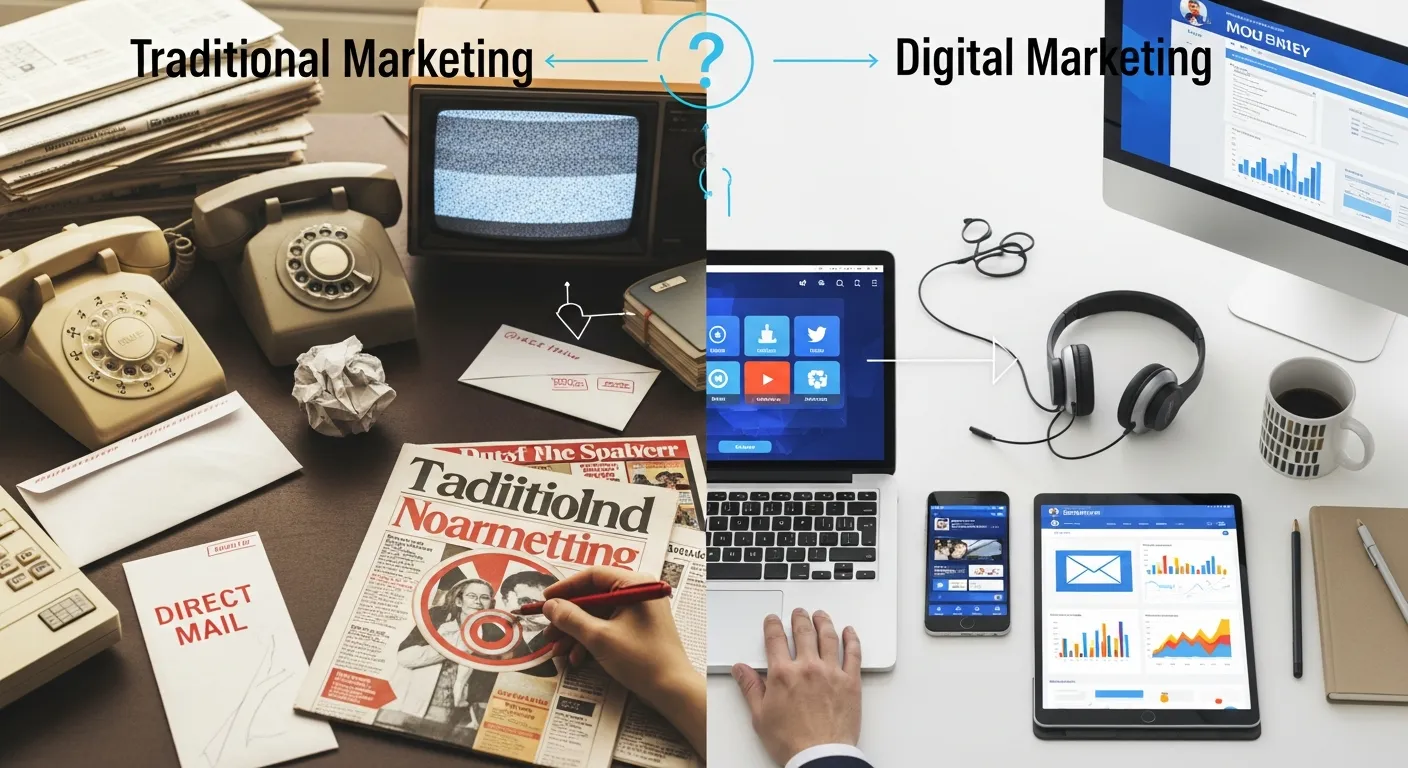
Marketing has changed more in the last twenty years than it did in the previous century. For decades, businesses reached customers through newspapers, radio jingles, and billboards along the highway. Then the internet arrived, and everything shifted. Suddenly brands could talk directly to buyers, track every click, and adjust campaigns in real time.
Yet traditional methods never disappeared. Billboards still grab attention. Direct mail still lands in mailboxes. So the real question for any business owner is not which approach wins—it’s how does digital marketing differ from traditional marketing, and how can you use both to your advantage.
This guide breaks down the key differences between digital and traditional marketing, weighing the advantages and disadvantages of each. You’ll learn how the two approaches compare across reach, cost, and measurement, see real examples of campaigns that worked, and discover how to blend them into one powerful marketing strategy.
What is traditional marketing and how does it work?
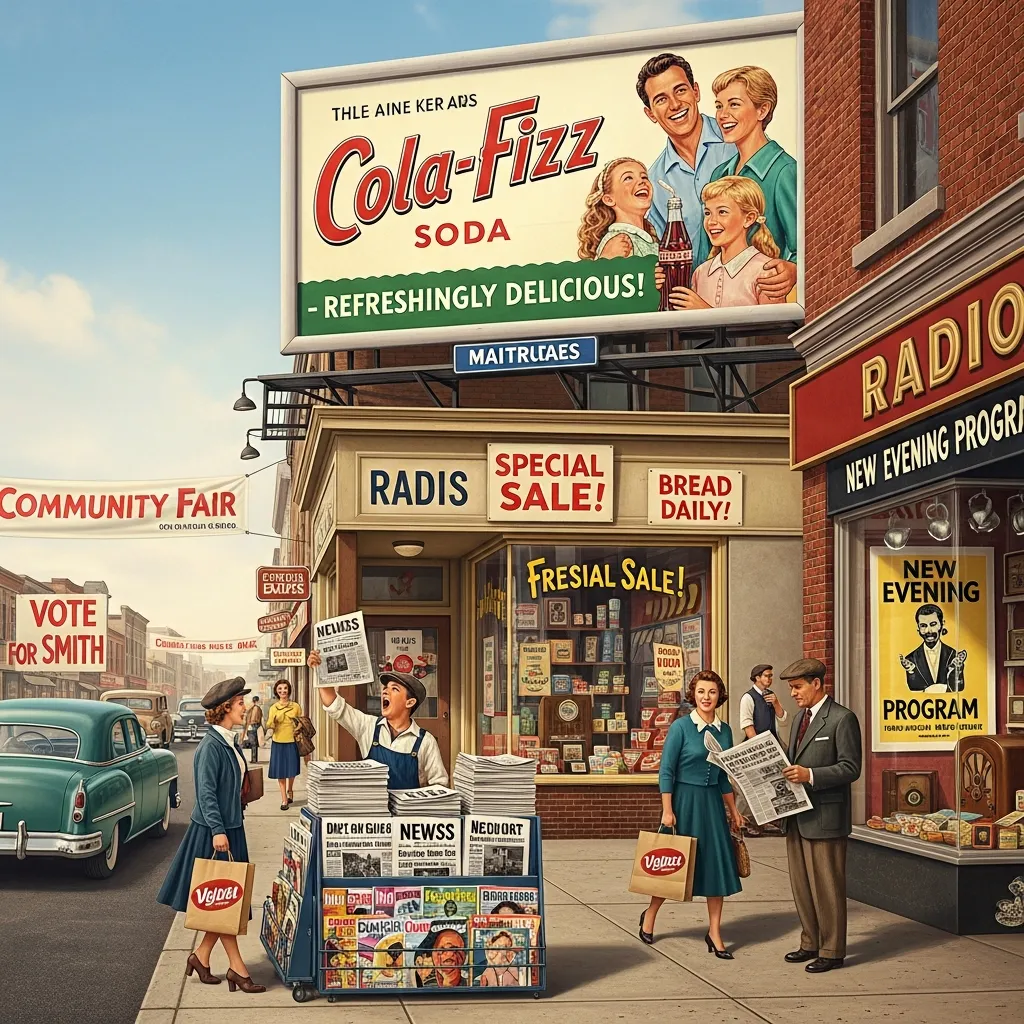 Traditional marketing covers every promotional method that existed before the internet. It relies on physical and broadcast media to put a brand message in front of large audiences.
The core principle is simple: reach as many people as possible through trusted, established channels. A company buys space or airtime, creates a polished message, and broadcasts it widely. The communication flows one way—from brand to consumer—with little room for direct response.
What are the main channels in traditional marketing?
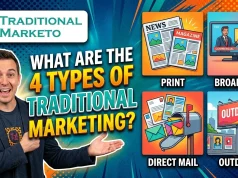
Traditional marketing spans several well-known formats:
- Print: Newspaper ads, magazine spreads, flyers, and brochures.
- Television: National and local TV commercials.
- Radio: Spots on AM, FM, and increasingly podcast networks.
- Outdoor: Billboards, transit ads, and posters.
- Direct mail: Postcards, catalogs, and letters sent to specific addresses.
- Telemarketing: Phone-based sales and outreach.
These traditional marketing channels remain especially effective for local branding, mass awareness campaigns, and audiences who spend less time online.
What are the advantages of traditional marketing?
Traditional marketing carries real strengths that digital channels struggle to match:
- Broad reach: A single TV spot during a popular program can reach millions at once.
- Tangibility: A printed magazine or direct mail piece is something people can hold, keep, and revisit.
- Trust: Consumers often view established media like newspapers and television as more credible than online ads.
- High recall: A memorable jingle or billboard can stick in someone’s mind for years.
What are the disadvantages of traditional marketing?
Traditional marketing also comes with clear drawbacks:
- High cost: Producing a TV commercial and buying airtime requires a significant budget.
- Limited targeting: You broadcast to everyone, not just your ideal buyer.
- Difficult measurement: Tracking exactly how many sales a billboard generated is nearly impossible.
- Slow to change: Once a print ad goes to press, you cannot edit it.
What is digital marketing and how does it work?
Digital marketing promotes products and services through online platforms and electronic devices. Instead of broadcasting to a crowd, it lets brands reach specific people based on their behavior, interests, and location.
The core principle here is interaction. Digital marketing creates a two-way conversation. Customers can comment, share, review, and respond, while brands collect data on every action. That data fuels constant optimization, so campaigns improve as they run.
What are the main channels in digital marketing?
Digital marketing covers a fast-growing set of channels:
- SEO (Search Engine Optimization): Earning organic visibility on Google and other search engines.
- SEM and PPC: Paid search ads that appear at the top of results.
- Social media marketing: Organic and paid campaigns on platforms like Instagram, Facebook, LinkedIn, and TikTok.
- Email marketing: Direct messages sent to subscribers.
- Content marketing: Blogs, videos, and guides that attract and educate audiences.
- Influencer and affiliate marketing: Partnerships that extend reach through trusted voices.
What are the advantages of digital marketing?
Digital marketing offers benefits that explain its rapid rise:
- Precise targeting: Reach people by age, gender, interests, location, and online behavior.
- Cost-effectiveness: A Facebook campaign can launch for a fraction of the cost of a TV ad.
- Measurable results: Track click-through rates, conversions, and traffic in real time.
- Global reach: Connect with audiences anywhere in the world instantly.
What are the disadvantages of digital marketing?
Digital marketing is powerful, but not perfect:
- Constant evolution: Algorithms and platforms change frequently, demanding ongoing learning.
- Technical complexity: Running effective campaigns requires specialized skills.
- Ad fatigue: Audiences increasingly ignore or block online ads.
- Privacy concerns: Tightening data regulations limit some targeting options.
How does digital marketing differ from traditional marketing?
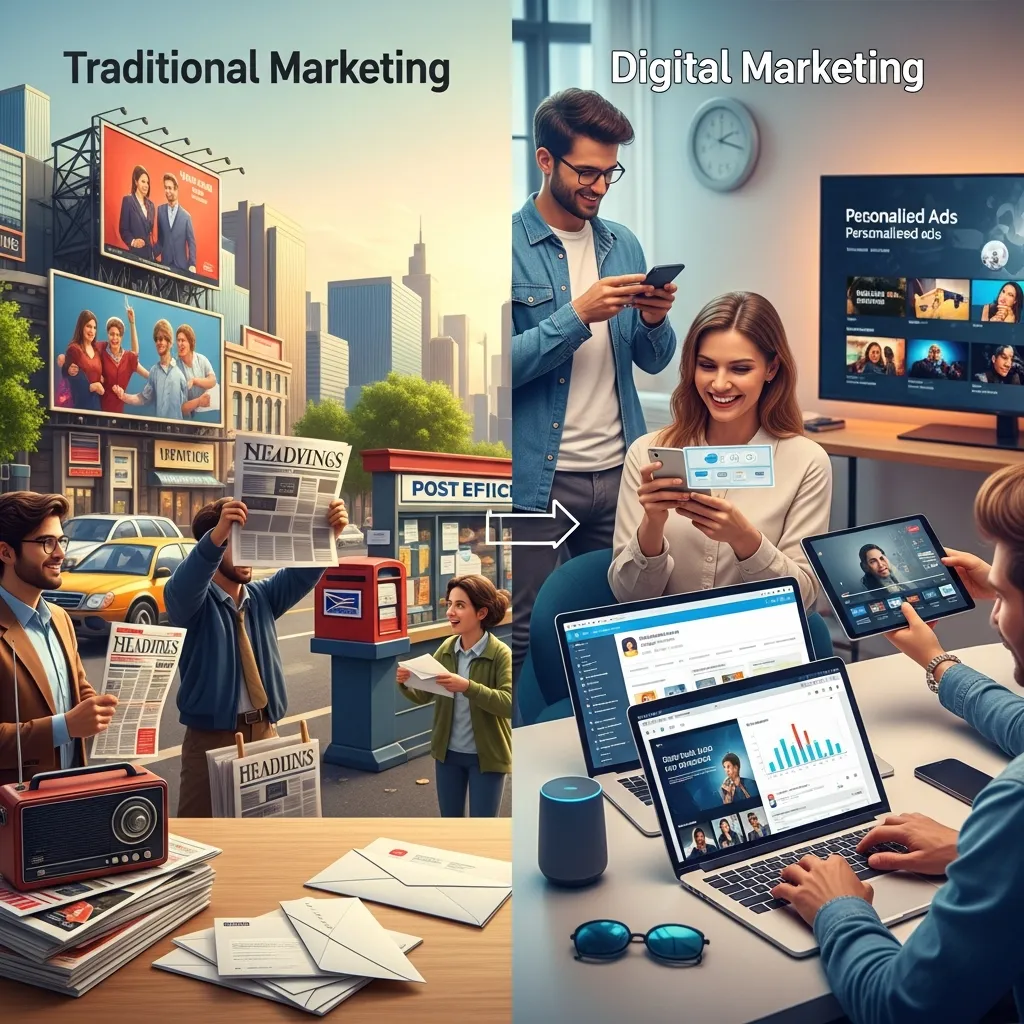 The clearest way to understand how digital marketing differs from traditional marketing is to compare them side by side across the factors that matter most to a business.
Reach and targeting
Traditional marketing reaches a broad, general audience within a specific geographic area. Digital marketing reaches a precisely defined audience anywhere in the world. If you sell handmade furniture to local customers, a billboard works well. If you sell software to a niche global market, digital targeting wins.
Cost and ROI
Traditional campaigns require heavy upfront investment in production and media placement. Digital campaigns can start small and scale up, which makes digital marketing more accessible for small businesses. A TV ad costs a fortune; a targeted Facebook ad costs a few dollars and reports its return.
Measurement and analytics
This is one of the biggest differences. Traditional marketing results are hard to measure with accuracy. Digital marketing provides real-time analytics—click-through rates, conversion rates, engagement metrics, and website traffic—so you always know what’s working.
Interaction and engagement
Traditional marketing is a one-way broadcast. Digital marketing invites two-way conversation through comments, reviews, social shares, and live chats. That dialogue builds relationships and gives brands instant feedback.
Adaptability and speed
A traditional campaign takes weeks to produce and cannot change once it’s live. A digital campaign can launch, pause, or adjust within minutes. This flexibility lets brands respond to trends and fix underperforming ads on the fly.
Longevity and impact
A TV ad disappears the moment it airs. A well-optimized blog post or video can keep attracting traffic for years. Digital content compounds in value over time, while traditional ads deliver a short, intense burst of exposure.
How can you blend traditional and digital marketing?
Choosing between the two approaches is the wrong framing. The smartest brands integrate both into a single, coordinated strategy. Learning to integrate traditional and digital marketing often delivers stronger results than relying on either one alone.
How traditional marketing supports digital
Offline channels can drive online action. A billboard with a QR code sends viewers straight to a landing page. A radio spot can promote a social media contest. A direct mail postcard can offer a discount code redeemable on your website. These tactics use the broad reach of traditional media to fuel measurable digital engagement.
How digital marketing enhances traditional
Digital tools sharpen offline campaigns too. Social media buzz can amplify a TV ad’s impact. Online analytics can reveal which zip codes respond best, helping you target direct mail more efficiently. Digital retargeting can follow up with people who saw your print ad and later visited your site.
This hybrid approach explains why traditional methods still deliver value. Many brands find that combining channels produces a higher return than either could achieve alone, which is why traditional marketing still delivers ROI when paired with digital strategy.
What do real-world examples teach us?
Real-world marketing campaigns clearly demonstrate how does digital marketing differ from traditional marketing by showing how each approach performs in practical, measurable situations. While traditional marketing relies on broad exposure and long-term brand building, digital marketing focuses on precision, engagement, and rapid scalability. Together, these examples highlight how both strategies can succeed depending on goals, audience, and execution.
Successful traditional campaigns
Traditional marketing has produced some of the most iconic and memorable campaigns in history. Decades of Super Bowl commercials, for example, prove that television advertising still has the power to generate massive awareness and cultural impact in a very short time. These campaigns are often designed to reach millions of viewers simultaneously, creating shared experiences and strong emotional connections.
Global brands like Coca-Cola and Nike built their dominance long before the digital era, relying heavily on print media, television ads, radio broadcasts, and outdoor billboards. Their success shows that when analyzing how does digital marketing differ from traditional marketing, traditional methods excel in building long-term brand identity and trust through repeated exposure and consistent messaging.
Successful digital campaigns
Digital marketing has introduced entirely new possibilities for rapid growth and global reach. One of the most famous examples is Dollar Shave Club, which gained massive attention almost overnight through a single viral video combined with smart social media distribution. This demonstrates the power of storytelling and platform targeting in digital ecosystems.
Another strong example is Spotify’s “Wrapped” campaign, which uses personalized user data to create highly shareable year-end summaries. Millions of users actively post their results on social media, turning customers into brand ambassadors without additional advertising costs.
These examples highlight how how does digital marketing differ from traditional marketing in terms of speed, personalization, and measurable engagement. Digital campaigns can scale quickly and adapt based on real-time audience behavior.
Hybrid success stories
The most powerful modern marketing strategies often combine both traditional and digital approaches. This hybrid model shows how how does digital marketing differ from traditional marketing is no longer about separation but integration.
For example, a B2B software company may publish in-depth blog content addressing industry problems to build trust and authority. Later, it can run retargeting ads to users who have engaged with multiple articles, guiding them toward conversion. In this case, content marketing builds credibility, while digital ads drive action.
Similarly, an apparel brand may sponsor a local community event, capturing photos and videos during the experience. This offline event becomes valuable digital content, which is then shared across social media platforms and repurposed into short-form ads. The physical experience creates authenticity, while digital channels amplify reach.
What’s next for marketing?
 The future of marketing is rapidly evolving, and understanding how does digital marketing differ from traditional marketing is becoming even more important as both approaches begin to merge through technology and innovation. Instead of functioning as separate systems, digital and traditional marketing are increasingly blending into a unified, experience-driven strategy that focuses on personalization, interactivity, and customer trust.
Several major trends are expected to shape how both digital and traditional marketing will evolve together in the coming years.
AI and personalization
Artificial intelligence is transforming modern marketing by analyzing massive amounts of consumer data to deliver highly personalized experiences. This plays a key role in how does digital marketing differ from traditional marketing, because traditional methods cannot adapt in real time based on user behavior.
AI-powered tools can:
- Predict customer preferences
- Automatically segment audiences
- Optimize ad targeting in real time
- Recommend personalized products or content
- Improve campaign performance continuously
As a result, marketing is becoming more intelligent, automated, and customer-focused. Brands can now deliver the right message to the right person at the right time, which was not possible in traditional marketing systems.
Augmented and virtual reality
Augmented reality (AR) and virtual reality (VR) are reshaping customer engagement by merging physical and digital experiences. When analyzing how does digital marketing differ from traditional marketing, AR and VR represent a bridge between the two worlds.
For example:
- A printed billboard can include a QR code that launches a 3D product demo
- Customers can virtually “try” products before buying
- Interactive store experiences can be created online and offline
This technology transforms passive advertising into immersive experiences, increasing engagement and emotional connection with brands.
Data privacy and ethics
Data privacy has become one of the most critical concerns in modern marketing. Governments and organizations worldwide are introducing strict regulations such as GDPR to ensure responsible data usage.
In the context of how does digital marketing differ from traditional marketing, digital marketing heavily depends on user data, while traditional marketing does not collect personal-level behavioral data.
Key trends include:
- Increased transparency in data collection
- Stronger user consent requirements
- Limited third-party tracking
- Ethical use of customer information
Brands that respect privacy and use data responsibly will build stronger trust and long-term customer loyalty.
The future is hybrid marketing
The biggest shift in how does digital marketing differ from traditional marketing is that the gap between them is closing. Instead of choosing one over the other, businesses are moving toward hybrid marketing strategies that combine offline presence with digital intelligence.
Examples include:
- TV ads integrated with social media campaigns
- Print ads driving traffic to websites via QR codes
- Event marketing combined with live streaming
This integration creates a seamless customer journey across both physical and digital spaces.
Final thoughts on building a balanced strategy
Understanding how digital marketing differs from traditional marketing helps you choose the right tools for your goals. Traditional marketing excels at broad awareness, tangibility, and trust. Digital marketing wins on precise targeting, cost-efficiency, measurability, and global reach.
The strongest strategy rarely picks one over the other. Instead, it combines the credibility and reach of traditional channels with the precision and analytics of digital tools. Start by clarifying your goals, knowing your audience, and testing both approaches. Measure what works, double down on it, and keep refining. For a deeper comparison tailored to your situation, explore our guide on digital marketing vs traditional marketing.
To research definitions and benchmarks further, resources like Investopedia’s digital marketing overview and Shopify’s digital marketing guide offer helpful context.




[…] For a broader comparison of offline and online approaches, see this guide to digital vs. traditional marketing. […]