Events used to force a choice: gather people in a room or stream to screens. That trade-off is gone. Hybrid event marketing strategies now let brands do both at once—filling a venue with engaged attendees while reaching thousands more online who never have to book a flight.
The shift matters because attendee expectations have changed. People want flexibility. Some prefer the energy of a live room; others want to join from a home office without losing access to the content, speakers, or networking. A well-built hybrid event serves both groups without making either feel like an afterthought.
This guide breaks down everything you need to know about how to market a hybrid event. You’ll learn what hybrid event marketing really means, how to craft promotion strategies that fill both your venue and your virtual stream, ways to keep every attendee engaged, the technology that holds it all together, and how to measure success accurately. By the end, you’ll have a practical framework you can apply to your next event.
What Is Hybrid Event Marketing?
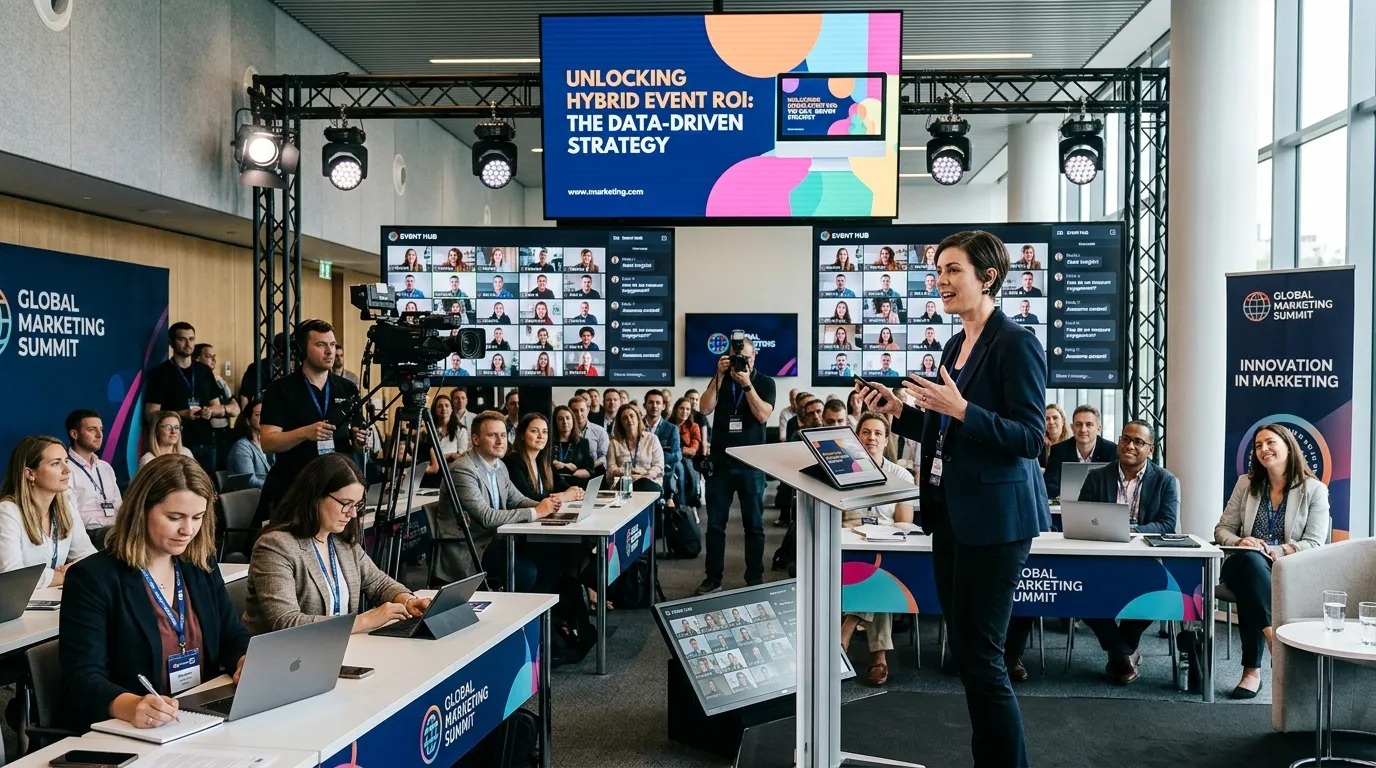
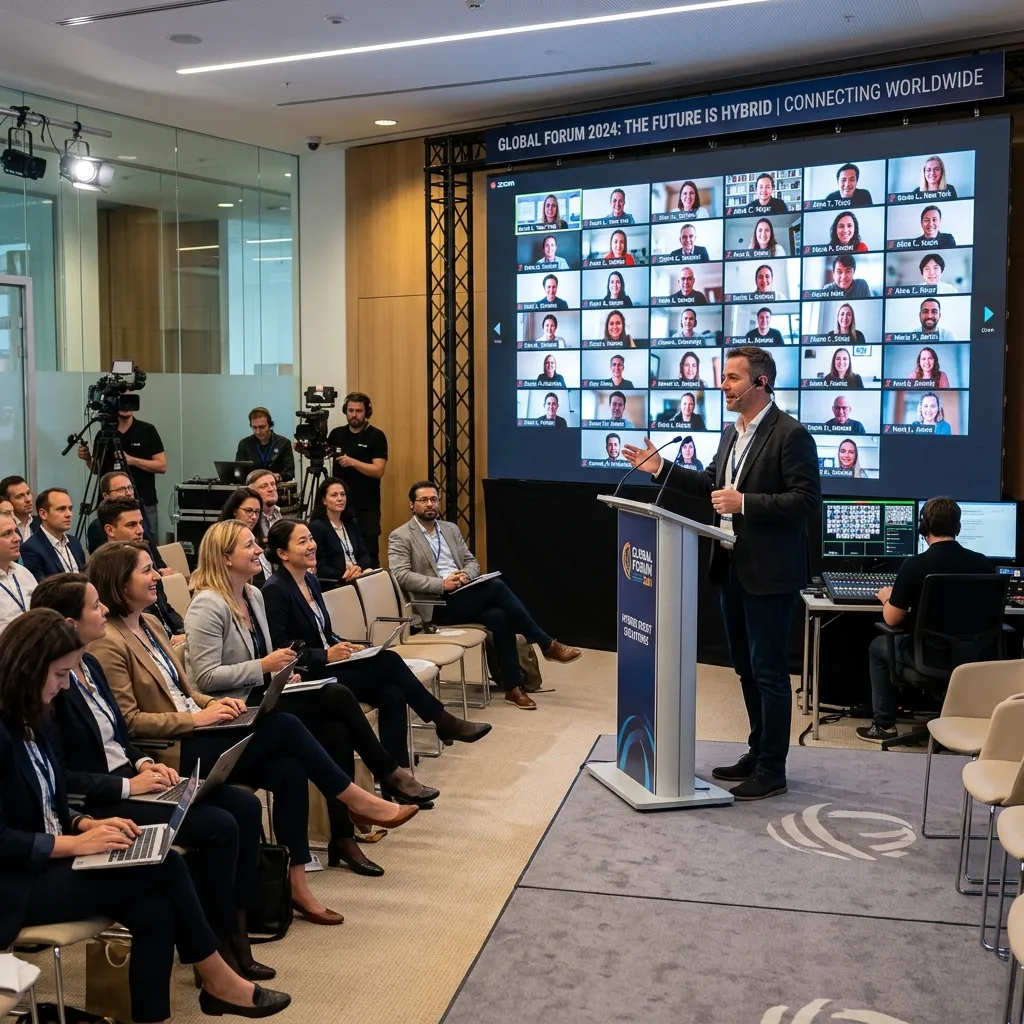 Hybrid event marketing is the practice of promoting, running, and measuring an event that combines a physical, in-person component with a virtual, online component. The two audiences experience the same event simultaneously—one from a venue, the other from a screen—and the marketing connects both into a single, consistent campaign.
The key word is “integrated.” Streaming a conference on YouTube while a live crowd watches isn’t a true hybrid event—that’s just a broadcast. Effective hybrid event marketing strategies design the in-person and virtual experiences to reinforce each other. A live keynote feeds a virtual Q&A. An on-site product demo triggers a digital follow-up sequence for remote viewers. Each component strengthens the other.
This approach mirrors the logic of broader integrated campaigns. As our guide on hybrid advertising in digital marketing explains, customers no longer separate their lives into “online” and “offline”—and neither should your events. According to Nielsen’s 2024 consumer research, buyers interact with brands across an average of six distinct touchpoints before making a purchase. A hybrid event delivers several of those touchpoints in a single, high-impact moment.
Understanding Hybrid Event Marketing
To build effective hybrid event marketing strategies, you first need to understand what makes the format different from a purely physical or purely virtual event.
Why Are Hybrid Events Becoming the Standard?
Hybrid events solve a problem that single-format events can’t. A purely in-person event is limited by venue capacity, travel budgets, and geography. A purely virtual event sacrifices the human connection, networking energy, and tactile brand experiences that physical gatherings deliver. The hybrid model captures the strengths of both while minimizing each format’s weaknesses.
Consider the math. A physical conference room might hold 300 people. Add a virtual component, and the same event can reach 3,000—or 30,000—without renting a larger venue. That expanded reach is the single biggest reason brands are adopting hybrid event marketing strategies as their default approach.
What Are the Core Benefits of a Hybrid Event?
A well-executed hybrid event delivers measurable advantages across several dimensions:
- Expanded reach: The virtual component removes geographic and capacity limits, letting you serve audiences worldwide.
- Richer data: Digital platforms track registrations, session attendance, poll responses, and engagement in ways physical events never could.
- Lower cost per attendee: Adding remote participants costs far less than scaling a physical venue.
- Greater flexibility: Attendees choose how they participate, which widens your potential audience.
- Extended content lifespan: Recorded sessions become evergreen marketing assets long after the event ends.
These benefits compound when paired with a strong promotional plan—which is where most events succeed or fail.
Crafting Your Hybrid Event Promotion Strategies
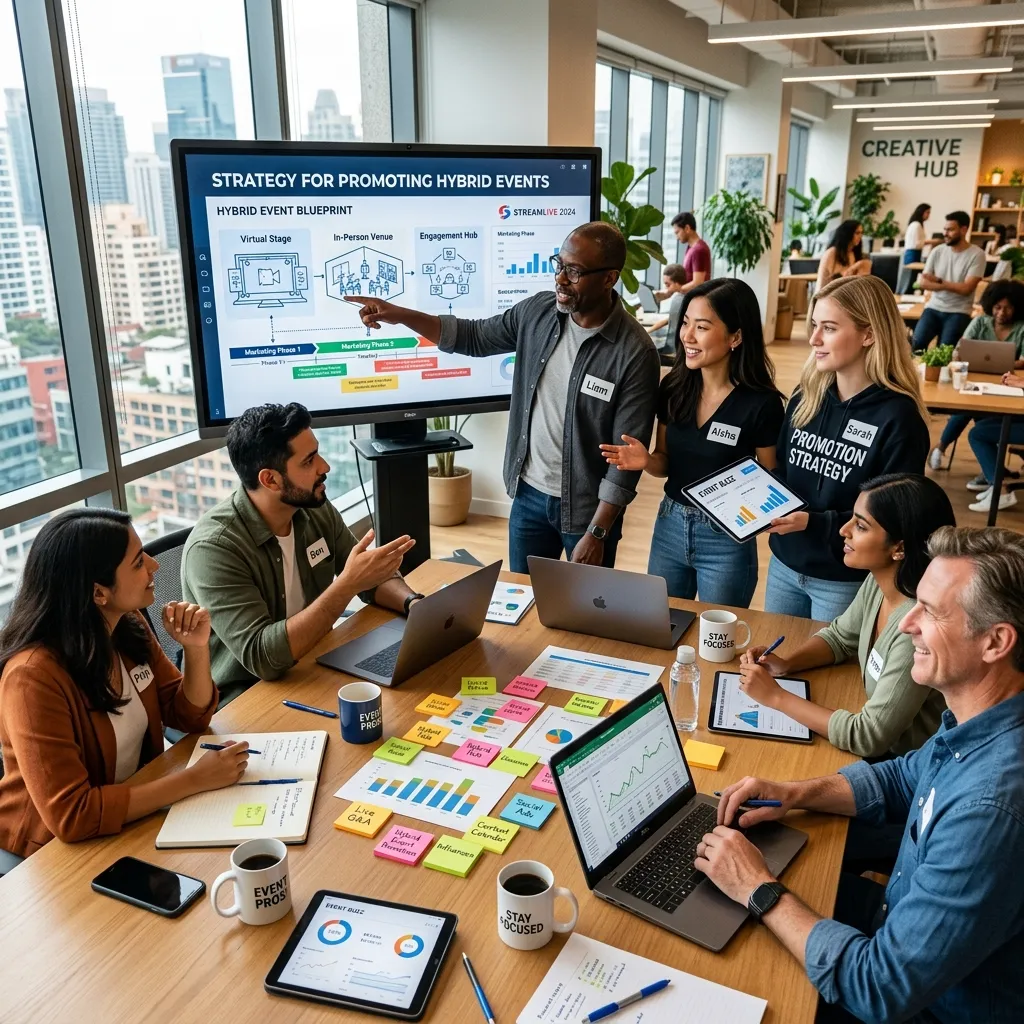 Strong hybrid event promotion strategies recognize a simple truth: you’re marketing to two distinct audiences with overlapping but different motivations. The in-person attendee weighs travel and time. The virtual attendee weighs convenience and content access. Your promotion must speak to both.
How Do You Promote to Both Audiences at Once?
Start by segmenting your messaging. Build separate registration paths for in-person and virtual tickets, then tailor the value proposition for each. Highlight networking, hands-on demos, and exclusive venue experiences for the physical audience. Emphasize accessibility, on-demand replays, and interactive digital features for the virtual audience.
A coordinated promotional mix works best. Combine email campaigns, social media, paid digital ads, and content marketing with offline tactics like direct mail invitations to high-value prospects. This blended approach reflects the principles behind a hybrid marketing channel strategy, where each channel reinforces the others rather than working in isolation.
Which Channels Drive the Most Event Registrations?
No single channel fills an event. The strongest hybrid event promotion strategies layer multiple touchpoints:
- Email marketing: Still one of the highest-ROI channels for driving registrations, especially with segmented, personalized sequences.
- Social media: Build anticipation with countdowns, speaker spotlights, and behind-the-scenes content across LinkedIn, Instagram, and Facebook.
- Paid search and social ads: Capture intent-driven prospects actively searching for events in your niche.
- Content marketing: Publish blog posts, guest articles, and videos that establish authority and funnel readers toward registration.
- Partner and speaker promotion: Equip speakers and sponsors with shareable assets to extend reach into their networks.
Reserve 15–20% of your promotional budget for testing new channel combinations, then shift spend toward whatever delivers the strongest registration numbers. This data-driven approach is a cornerstone of any effective hybrid marketing mix strategy.
How Do You Create Urgency Across Both Formats?
Scarcity drives action. Use early-bird pricing tiers, limited in-person seats, and countdown timers to push fence-sitters toward registration. For virtual attendees, offer exclusive perks—a private Q&A session, downloadable resources, or first access to recordings—that reward early sign-ups. The goal is to make waiting feel like missing out.
Maximizing Hybrid Event Audience Engagement
Driving registrations is only half the battle. The harder challenge is keeping both audiences engaged once the event begins—and hybrid event audience engagement requires deliberate design, not luck.
How Do You Keep Virtual Attendees from Tuning Out?
Remote attendees face constant distraction. Email, messages, and other browser tabs compete for their attention every second. To hold it, build interactivity directly into the virtual experience:
- Live polls and surveys that appear throughout sessions to keep viewers active.
- Dedicated chat channels where virtual attendees discuss content in real time.
- Q&A tools that let remote participants submit questions answered live on stage.
- Gamification like points, badges, and leaderboards that reward participation.
The most important principle: never make virtual attendees feel like second-class participants. When a speaker acknowledges online questions by name and responds in real time, remote viewers stay invested.
How Do You Connect In-Person and Virtual Audiences?
The magic of strong hybrid event audience engagement happens when both audiences interact with each other. Shared digital tools make this possible. Use a single event app or platform where in-person and virtual attendees post in the same feed, answer the same polls, and join the same networking sessions.
Practical tactics make this tangible. Display the virtual chat on screens in the physical venue so on-site attendees see remote contributions. Pair in-person and virtual attendees for one-on-one networking through matchmaking software. Run live competitions where both audiences compete together. These bridges turn two separate crowds into one connected community.
What Role Does Personalization Play in Engagement?
Personalization transforms a generic event into a relevant experience. Use registration data to recommend sessions, suggest networking connections, and deliver tailored content to each attendee. A virtual attendee in marketing should see different session recommendations than an in-person attendee in finance. This level of relevance keeps people engaged and signals that you understand their needs.
The Role of Technology in Hybrid Event Marketing
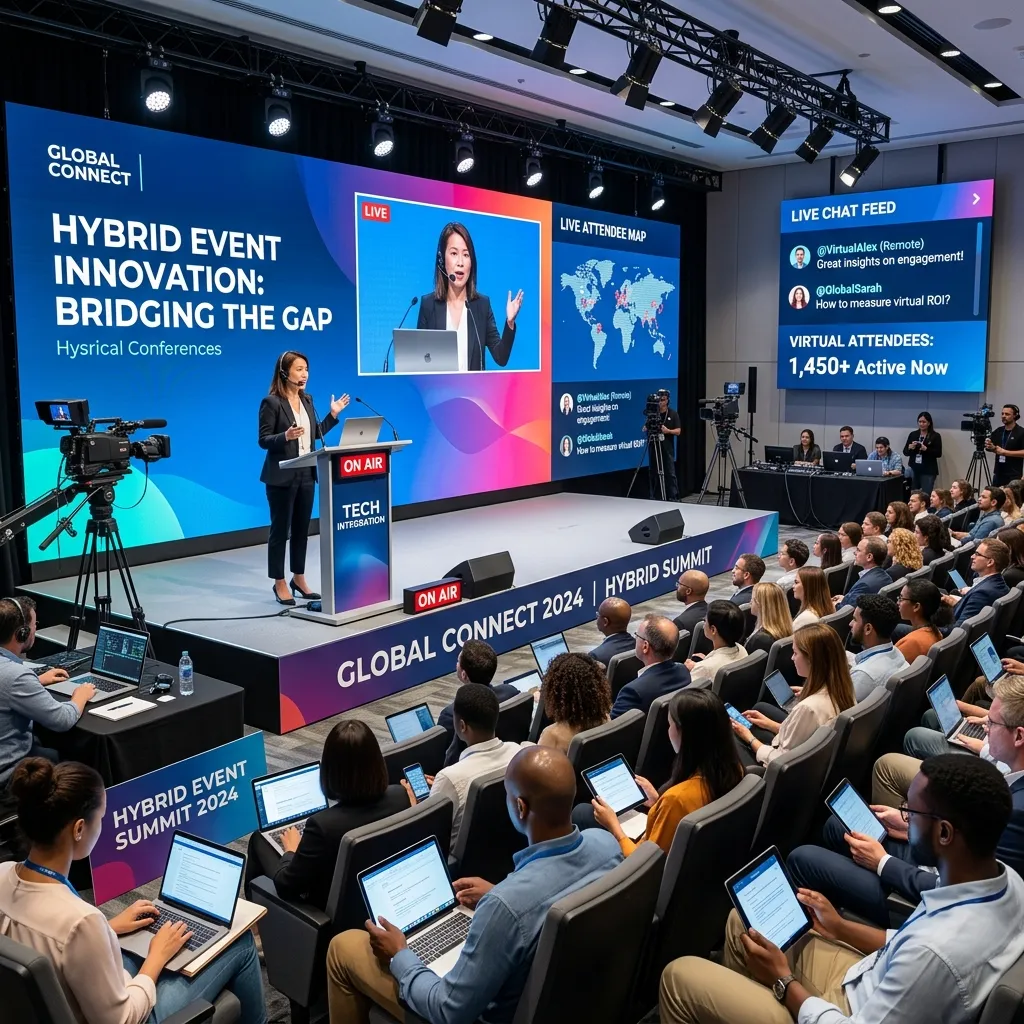 Technology is the connective tissue that makes hybrid events function as one unified experience rather than two parallel ones running side by side.
What Technology Do You Need to Run a Hybrid Event?
Several categories of tools form the backbone of any hybrid event:
- Event platforms like Hopin, Bizzabo, or Cvent that host virtual sessions, manage registrations, and unify both audiences in one interface.
- Streaming and AV equipment that delivers professional-quality video and audio to remote viewers.
- CRM systems like HubSpot or Salesforce that capture attendee data and feed it into your broader marketing efforts.
- Engagement tools for live polls, Q&A, networking, and gamification.
- Analytics dashboards that aggregate registration, attendance, and engagement data into one view.
The investment pays off in both attendee experience and the data quality you need to prove results. According to Forrester Research (2024), organizations using unified marketing measurement tools improve campaign effectiveness by up to 30%.
How Does AI Improve Hybrid Event Marketing?
Artificial intelligence is reshaping how brands run hybrid events. AI-powered tools enable real-time audience segmentation, predictive analytics that forecast attendance, and automated personalization at a scale no human team could match. AI matchmaking suggests relevant networking connections. AI chatbots answer attendee questions instantly. AI transcription makes sessions accessible and searchable. Each capability removes friction and deepens engagement.
Measuring Success and ROI in Hybrid Events
You can’t improve what you don’t measure—and hybrid events generate far more measurable data than traditional events ever could.
Which Metrics Actually Matter for Hybrid Events?
Track performance across both audiences and the event as a whole. The metrics that matter most include:
- Registration and attendance rates for in-person and virtual tickets separately.
- Engagement metrics like poll participation, chat activity, session dwell time, and Q&A submissions.
- Lead generation measured by qualified leads captured from both audiences.
- Conversion rate showing how many attendees took a desired action afterward.
- Cost per attendee comparing the economics of physical versus virtual participation.
How Do You Calculate the ROI of a Hybrid Event?
Calculate ROI by comparing total event revenue and pipeline value against total event cost. Hybrid events have a clear advantage here: the virtual component adds attendees at a fraction of the cost of expanding a physical venue, which improves your cost-per-lead and overall return.
Connect every touchpoint to your CRM so you can trace which attendees became leads and which leads became customers. Use unique registration links, post-event surveys, and tracked follow-up sequences to attribute outcomes accurately. According to research from McKinsey on consumer decision journeys, brands that measure cross-channel behavior consistently make better resource allocation decisions than those tracking efforts in isolation.
Future Trends in Hybrid Events
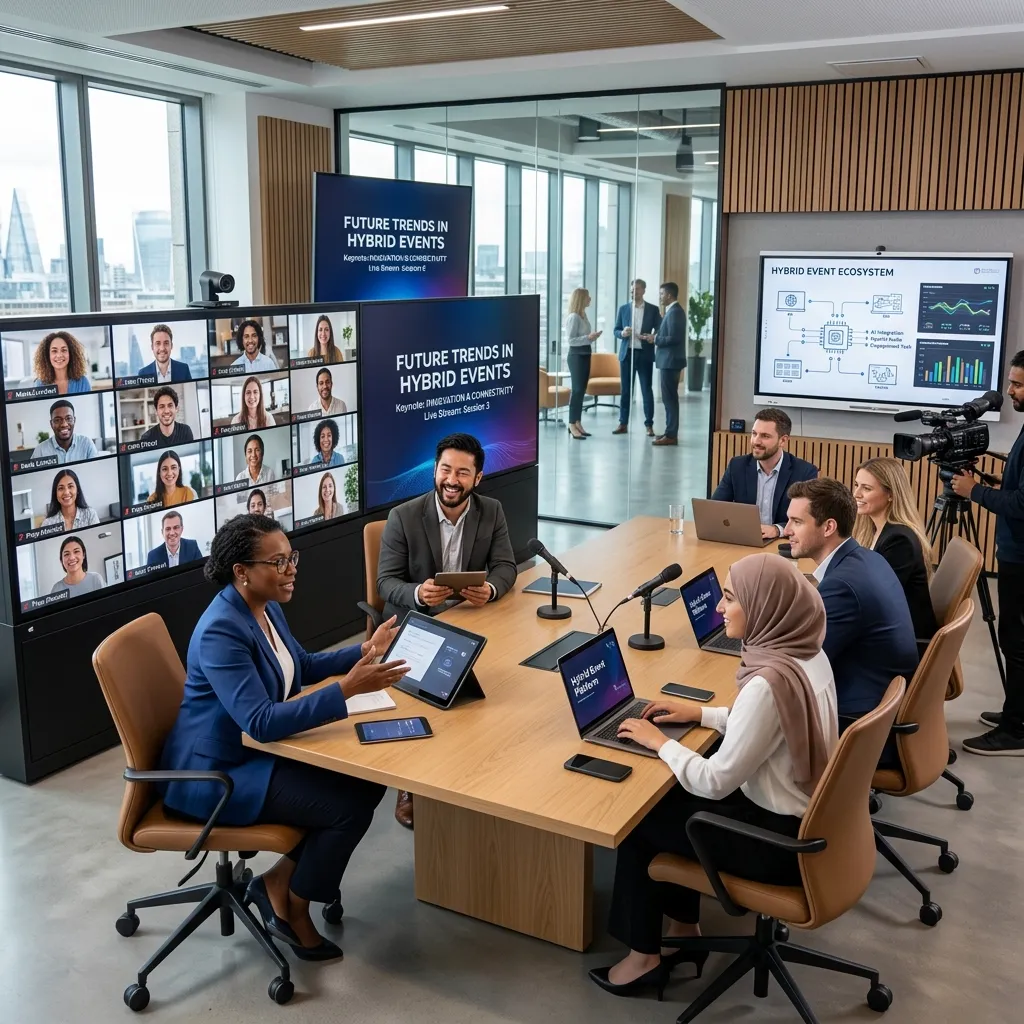 The line between physical and virtual event experiences will keep narrowing. Augmented Reality already lets remote attendees explore virtual venues and interact with 3D product displays from home. Virtual Reality is creating immersive networking spaces where avatars meet as if in person. These technologies will make the gap between in-person and virtual participation shrink further.
Hyper-personalization will define the next phase. Attendees will expect events tailored to their specific interests, roles, and goals—delivered through the channel they prefer. As the Data & Marketing Association continues to document, integrated campaigns consistently outperform isolated channel efforts, and hybrid events are among the most integrated experiences a brand can offer.
Expect AI to take on a larger role too, automating everything from content recommendations to real-time language translation that makes events truly global. The brands that invest in these capabilities now will be best positioned as hybrid becomes the default expectation rather than a premium add-on.
Conclusion
Hybrid event marketing strategies answer a simple truth: your audience doesn’t live in just one place, so your events can’t either. Brands that design in-person and virtual experiences to reinforce each other consistently outperform those treating the two as separate efforts.
Start by auditing your next planned event. Identify where you’re serving only one audience, where your promotion speaks to just one ticket type, and where your technology can’t connect both crowds. Those gaps are your most immediate opportunities. Close them, and the compounding effect of a truly integrated hybrid event will follow—wider reach, richer data, and stronger ROI.
For more on weaving offline and online efforts into one cohesive plan, explore our guide on what is hybrid marketing strategy.
Frequently Asked Questions
1. What is a hybrid event in marketing?
A hybrid event in marketing combines an in-person, physical experience with a virtual, online experience that runs at the same time. Both audiences access the same content, speakers, and networking opportunities, while the marketing connects both formats into one unified campaign.
2. How do you market a hybrid event effectively?
To market a hybrid event effectively, segment your messaging for in-person and virtual audiences, then promote through a coordinated mix of email, social media, paid ads, content marketing, and partner outreach. Tailor the value proposition for each ticket type and use urgency tactics like early-bird pricing to drive registrations.
3. What are the main benefits of hybrid event marketing strategies?
Hybrid event marketing strategies expand reach beyond venue capacity, capture richer attendee data, lower the cost per attendee, offer attendees greater flexibility, and extend content lifespan through recordings. Together, these advantages improve event ROI compared to single-format events.
4. How do you improve hybrid event audience engagement?
Improve hybrid event audience engagement with interactive tools like live polls, Q&A, chat, and gamification. Connect both audiences through shared platforms, display virtual contributions on venue screens, and use personalization to deliver relevant content. The key is treating virtual attendees as equal participants, not an afterthought.
5. What technology is needed to run a hybrid event?
Running a hybrid event requires an event platform (such as Hopin, Bizzabo, or Cvent), streaming and AV equipment, a CRM system, engagement tools for polls and networking, and analytics dashboards that unify data from both audiences into one view.
6. How do you measure the ROI of a hybrid event?
Measure hybrid event ROI by comparing total revenue and pipeline value against total event cost. Track registration, attendance, engagement, and conversion separately for in-person and virtual audiences, and connect every touchpoint to a CRM to attribute leads and sales accurately.
7. Are hybrid events more cost-effective than in-person events?
Yes, hybrid events are often more cost-effective. Adding virtual attendees costs far less than expanding a physical venue, which lowers the cost per attendee and improves overall ROI while still reaching a much larger audience.
8. How do you keep virtual attendees engaged during a hybrid event?
Keep virtual attendees engaged with live polls, dedicated chat channels, live Q&A, and gamification. Acknowledge online participants by name, respond to their questions in real time, and ensure they receive the same quality of content and interaction as in-person attendees.
9. Can small businesses run hybrid events?
Yes. A small business can run a hybrid event using an affordable event platform, a quality webcam and microphone, and a modest physical space. The hybrid model doesn’t require a large budget—it requires strategic integration of in-person and virtual experiences.
10. How far in advance should you start promoting a hybrid event?
Start promoting a hybrid event six to eight weeks in advance for smaller events, and three to four months ahead for larger conferences. Early promotion builds momentum, supports early-bird pricing tiers, and gives both in-person and virtual audiences time to plan their attendance.