
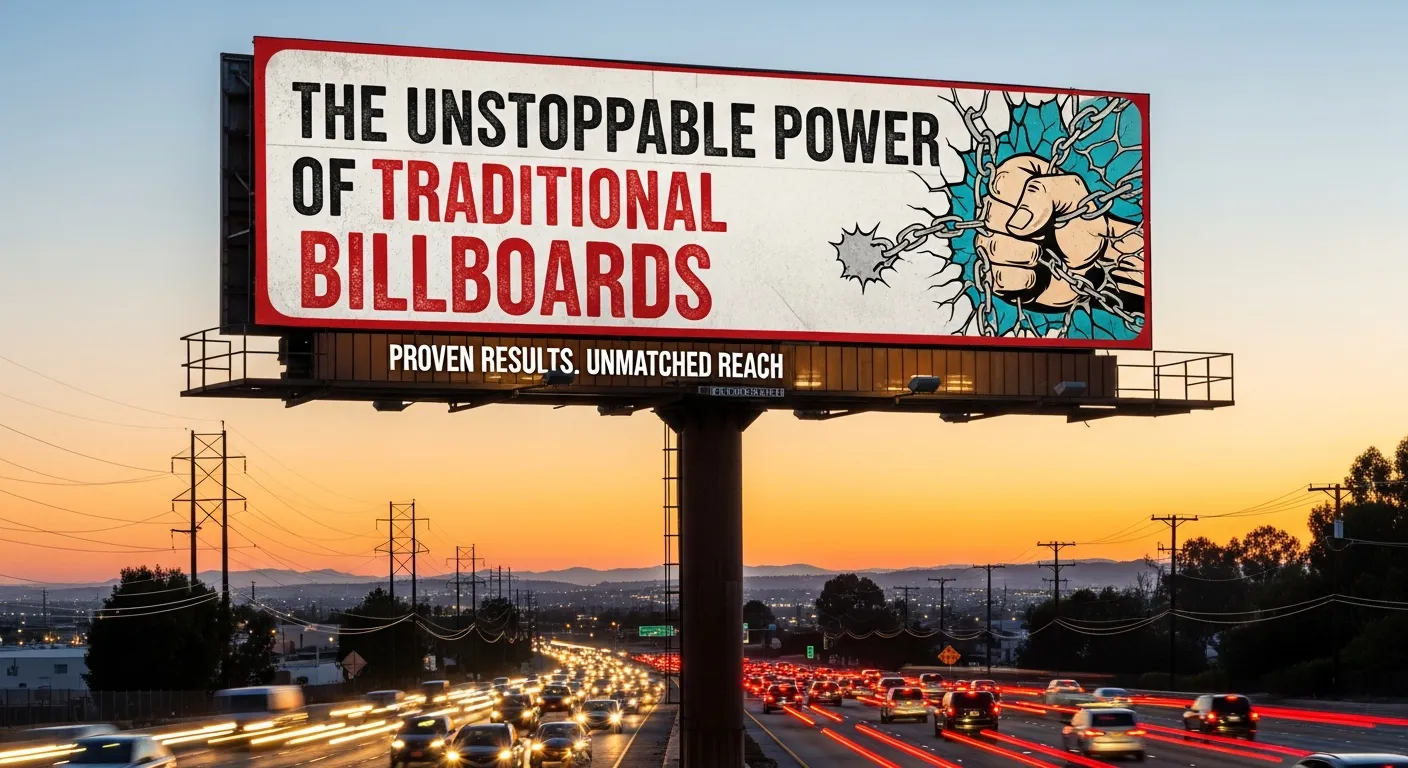
Traditional Billboard Advertising refers to large outdoor print ads placed in high-traffic locations such as highways, city centers, and busy streets. It is a form of offline marketing that helps businesses reach a wide audience through strong visual messaging. This advertising method is effective for building brand awareness, increasing visibility, and delivering simple, memorable promotional messages to mass audiences.
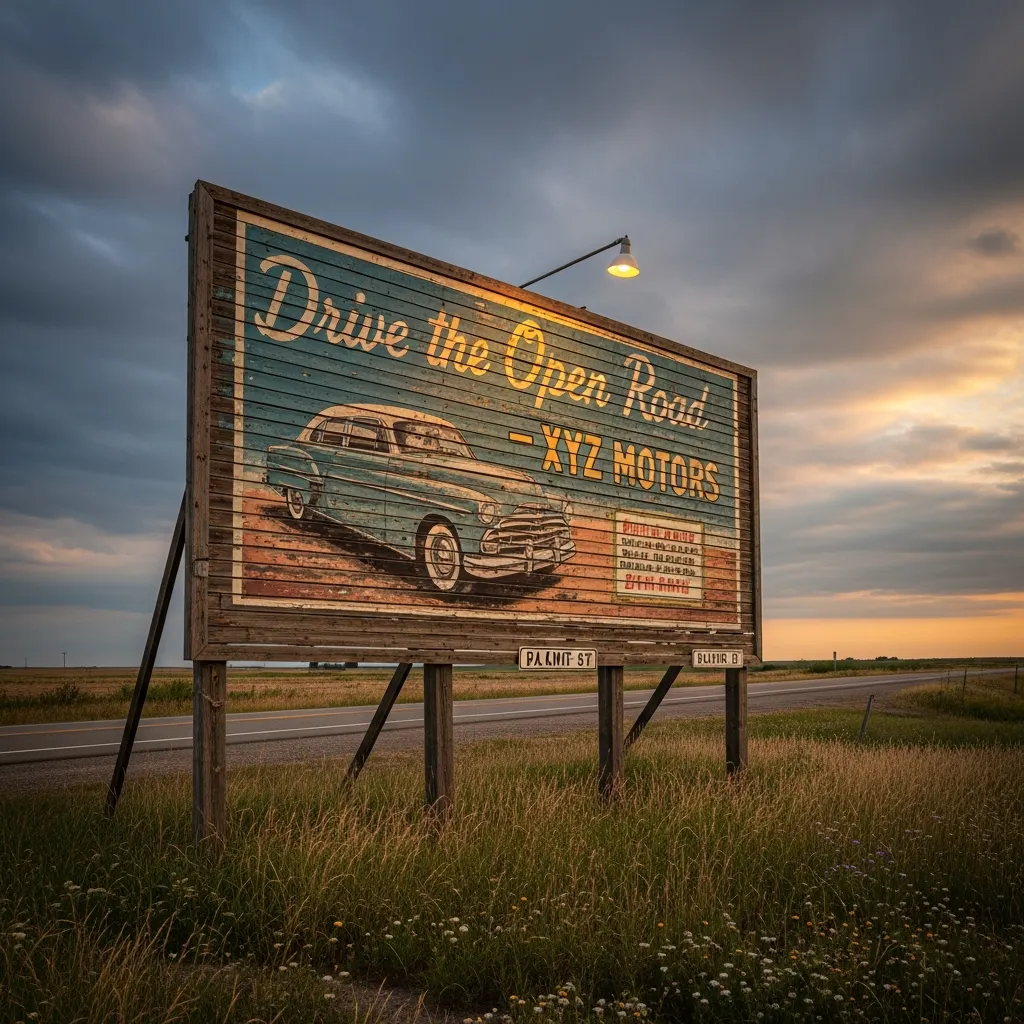 Billboards have a rich history that parallels the growth of modern commerce. Their evolution shows a remarkable ability to adapt to changing times while maintaining their core function.
A Brief History
The earliest forms of outdoor advertising were simple hand-painted signs plastered across the sides of buildings. Merchants in ancient towns used these visual markers to tell travelers what goods were available. As the automobile became a staple of everyday life in the 20th century, the modern highway system was born. This created a new opportunity for marketers. Massive boards were erected along busy roads to capture the attention of passing drivers.
Over the decades, the medium shifted from hand-painted artwork to printed canvases, allowing for faster production and consistent branding. Today, the landscape includes bright, high-resolution digital displays. Despite these technological upgrades, the fundamental concept remains the same: presenting a bold message to a captive, moving audience.
Why Billboards Persist
Many people wonder why these physical structures still thrive when companies can reach consumers directly on their phones. The answer lies in their unavoidable nature. You cannot install an ad-blocker on your morning commute. You cannot fast-forward through a massive sign towering over a traffic jam.
This medium provides a sense of permanence and scale that digital formats struggle to replicate. When a company invests in a large physical display, it signals stability and authority to the public. Consumers naturally associate these large-scale investments with established, trustworthy brands.
Strategic Advantages of Traditional Billboard Advertising
Investing in outdoor displays offers several unique benefits that help brands grow their market share. Understanding these advantages allows marketers to allocate their budgets more effectively.
High Visibility and Unavoidable Exposure
The most obvious benefit of a large outdoor sign is its visibility. It operates continuously, twenty-four hours a day, seven days a week.
Captive Audiences
Commuters, pedestrians, and travelers are essentially a captive audience. When stuck in rush hour traffic or waiting for a bus, people naturally look at their surroundings. A bright, clever advertisement provides a welcome distraction. This guarantees that your message receives actual human eyeballs, rather than just scrolling past a screen.
Large Format Impact
Size matters in marketing. A massive display towering over a city street creates visual dominance. The sheer scale of the artwork makes the product look larger than life. This physical size helps burn the brand image into the viewer’s memory, creating an impact that small mobile ads simply cannot match.
Brand Building and Awareness
If your goal is to make people remember your company, outdoor marketing is highly effective. It acts as a powerful anchor for your overall brand identity.
Consistent Exposure
People tend to drive the same routes to work, school, or the grocery store every single day. This means they will pass your advertisement repeatedly. Repetition is the cornerstone of memory. By seeing your logo and message consistently over a four-week campaign, consumers develop a strong familiarity with your business.
Credibility and Authority
Appearing on a large highway display carries a certain prestige. Consumers perceive companies that use traditional ads as highly credible. It shows that the business has the resources to invest in significant public placements, which naturally builds trust among potential buyers.
Geographic Targeting and Local Impact
Outdoor marketing allows for incredibly precise location-based targeting. You can place your message exactly where it will have the most impact.
Pinpointing Specific Demographics
You can select locations based on the demographics of a specific neighborhood. If you are selling luxury real estate, you can place a board in an affluent suburb. If you are promoting a new video game, you can secure a spot near a university campus. This ensures your message reaches the people most likely to buy your product.
Driving Local Foot Traffic
These signs act as giant directional markers. A restaurant can place an advertisement just one mile away from its highway exit, prompting hungry drivers to pull over. This strategy directly drives local foot traffic and generates immediate sales for brick-and-mortar businesses.
Cost-Effectiveness
While renting a massive sign might seem expensive upfront, it is often highly cost-effective when you break down the numbers.
Reach vs. Cost
When you calculate the Cost Per Mille (CPM), or the cost to reach one thousand people, outdoor displays are often cheaper than television or prime print placements. Because a busy highway location can generate hundreds of thousands of views per day, the cost per view drops significantly.
Long-Term Value
Digital ads disappear the moment your budget runs out. A physical board provides a constant, unyielding presence for the entire duration of your contract. This extended period of visibility provides excellent long-term value for your marketing dollar.
Types of Traditional Billboard Advertising
The industry offers several different formats to suit various budgets and campaign goals. Choosing the right type is crucial for your success.
Static Billboards
These are the classic, printed signs that remain unchanged for the duration of the campaign. They are reliable, highly visible, and offer a continuous presence.
Bulletins
Bulletins are the largest standard format available. They are typically found on major highways and expressways. Because of their massive size, they deliver the highest impact and are perfect for national branding campaigns.
Posters
Posters are slightly smaller and are usually located on primary and secondary arterial roads. They offer standardized sizes, making it easy to print multiple copies for a wider distribution across a city.
Junior Posters
These are the smallest of the static options. They are often placed in dense urban neighborhoods or near smaller local businesses. Junior posters are an affordable option for local shops looking to attract nearby residents.
Digital Billboards
Digital technology has completely transformed outdoor marketing, adding flexibility and brilliant illumination to the landscape.
Dynamic Content
Digital screens allow advertisers to change their artwork instantly. A coffee shop can advertise hot lattes in the freezing morning and switch to iced teas during a hot afternoon. This real-time updating keeps the message highly relevant.
Multiple Advertisers
Because digital screens rotate through multiple messages, the cost is shared among several companies. This provides an opportunity for smaller businesses to secure prime locations that might otherwise be too expensive as a static rental.
Specialty Billboards
For brands that want to push creative boundaries, specialty options provide a memorable, unconventional approach.
Three-Dimensional Extensions
Advertisers can build custom 3D props that extend beyond the standard rectangular frame of the board. A giant, sculpted coffee cup sticking out from the top of a sign instantly grabs attention and creates a highly memorable visual.
Hand-Painted Murals
In certain urban markets, brands are returning to hand-painted murals. These artistic installations blend marketing with street art. They feel authentic and often prompt pedestrians to stop and take photos.
Mobile Billboards
Instead of waiting for traffic to pass a sign, mobile boards put the sign in the traffic. These are large posters mounted on the sides of dedicated trucks that drive predetermined routes. They are perfect for reaching specific events, conventions, or highly congested downtown areas.
Crafting Effective Traditional Billboard Advertising Campaigns
 Having a great location is only half the battle. Your artwork must communicate your message instantly and effectively.
Design Principles for Impact
Drivers traveling at sixty miles per hour only have a few seconds to process your advertisement. Simplicity is mandatory.
Simplicity and Clarity
Do not clutter the canvas. Focus on one single, easily digestible idea. The viewer should understand exactly what you are selling the moment they glance at the board.
Bold Visuals and Minimal Text
Use high-contrast colors and large, readable fonts. Keep your word count to seven words or less. Rely on a single, striking image to do the heavy lifting. A captivating photo paired with a punchy headline is the most effective approach.
Strong Call to Action
Tell the viewer exactly what you want them to do. Whether it is an implicit suggestion like “Craving Pizza?” or an explicit command like “Take Exit 45,” a strong call to action guides consumer behavior.
Location, Location, Location: Strategic Placement
Where you place your message is just as important as what it says.
Traffic Patterns and Audience Demographics
Analyze the traffic flow. A sign placed at a busy intersection where cars frequently stop at a red light gives drivers more time to read your message. Ensure the location aligns with the demographics of the people who live or commute through that specific area.
Proximity to Point of Purchase
Whenever possible, place your ad near your physical storefront. Guiding consumers directly to a destination capitalizes on impulse buying and significantly increases the effectiveness of the campaign.
Measurement and ROI
Tracking the success of offline campaigns used to be difficult, but modern marketers have developed clever solutions to measure their return on investment.
Tracking Methods
You can use dedicated phone numbers, custom website URLs, or unique promo codes printed directly on the board. When a customer uses that specific code, you know exactly which sign generated the sale. Additionally, geo-fencing technology allows marketers to track mobile devices that pass near the sign and subsequently visit the store. You can learn more about measuring success across various advertising methods.
Brand Lift Studies
Companies also use surveys to measure awareness and recall before and after a campaign. If brand recognition increases significantly in the region where the boards were placed, the campaign is considered a success. You can view wider industry statistics on measurement and ROI through the Outdoor Advertising Association of America (OAAA).
Integrating Billboards into a Multi-Channel Marketing Strategy
Outdoor displays should not operate in isolation. They are most powerful when they work in harmony with your other marketing efforts.
Synergy with Digital Campaigns
You can bridge the physical and digital worlds easily. A clever outdoor sign can prompt people to search for your brand online. Adding a massive, scannable QR code to a pedestrian-level poster allows users to download an app or visit a landing page instantly. This combination captures broad awareness offline and drives immediate conversion online.
Reinforcing Broadcast and Print Media
If you are running a television commercial, use the same actors, colors, and slogans on your outdoor displays. This creates a cohesive narrative across all traditional marketing channels. When a consumer sees a familiar face on a highway sign that they previously saw on TV, it deeply reinforces the core message.
Supporting Experiential Marketing
If you are hosting a pop-up shop, a concert, or a major convention, outdoor signs act as excellent promotional tools. They build local buzz leading up to the event and guide attendees directly to the venue, ensuring high turnout and excitement.
Challenges and Considerations
Like any marketing strategy, outdoor displays come with specific hurdles that must be managed properly.
Environmental Impact
Large physical structures have an environmental footprint. Some communities worry about visual pollution blocking natural scenery. Additionally, digital screens consume significant amounts of electricity. Brands must be mindful of these concerns and seek out media companies that prioritize energy-efficient lighting and recyclable vinyl materials.
Regulatory Restrictions
You cannot simply build a massive sign wherever you want. Cities and municipalities enforce strict zoning laws and advertising codes. Some areas ban digital screens entirely due to distraction concerns. Always work with established vendors who understand local regulations to avoid costly fines.
Limited Information Transfer
Because drivers only have a few seconds to look at the sign, you cannot explain complex features or detailed pricing. Outdoor displays are strictly for broad awareness and simple messages. If your product requires a lengthy explanation, you will need to direct people to a website where they can learn more.
The Future of Traditional Billboard Advertising
The industry is not standing still. It continues to embrace new technology to remain highly competitive in the modern era.
Technological Advancements
We are seeing a rise in interactive displays that feature augmented reality and AI-driven content. Screens equipped with cameras can detect the make and model of the cars stopped at a traffic light and serve a specific ad tailored to that demographic. According to Statista, the global expenditure on digital out-of-home advertising continues to climb steadily as these technologies improve.
Data Integration
Data integration is making outdoor campaigns smarter. Marketers now use anonymized mobile location data to understand exactly who is driving past their signs at any given hour. This allows for incredibly precise targeting and accurate measurement, bridging the gap between physical visibility and digital analytics.
Creative Evolution
Creativity will continue to push the boundaries of what is possible. From 3D illusions on massive corner screens to signs that react to changes in the weather, the focus will remain on surprising and delighting the consumer. The canvas may be traditional, but the execution will become increasingly futuristic.
Maximizing Your Offline Potential
 Traditional Billboard Advertising stands as a testament to the enduring power of physical, real-world marketing. While digital campaigns excel at granular targeting and immediate tracking, they often struggle to match the sheer scale, prestige, and unavoidable visibility of a towering outdoor display. These massive signs cut through the noise of our daily lives, capturing attention when we step away from our screens.
By understanding the history, formats, and strategic placement of these displays, brands can craft campaigns that leave a lasting psychological imprint on consumers. When paired thoughtfully with digital and traditional advertising efforts, outdoor marketing creates a comprehensive, inescapable brand presence. Embrace the large canvas, keep your message incredibly simple, and watch as your physical presence drives real-world growth for your business.





[…] Billboards remain the most recognizable form of OOH — large-format static displays on highways, arterial roads, and busy intersections, built for broad visibility and strong recall through scale and repetition. For a deeper dive into planning, sizing, and messaging for this specific format, see our dedicated billboard advertising guide. […]