Most businesses today find themselves caught between two worlds. They know digital marketing delivers measurable results and precise targeting. But they also know that a well-placed billboard, a quality direct mail piece, or a television spot can build the kind of trust that no Instagram ad ever quite replicates. The question isn’t which world to choose—it’s how to operate effectively in both.
That’s exactly what a hybrid marketing channel strategy is designed to do. Rather than treating offline and online efforts as separate campaigns with separate budgets and separate teams, a hybrid approach weaves them into a single, coordinated system. Each channel amplifies the others. Traditional media fills the top of the funnel with broad awareness; digital channels capture and convert that awareness with surgical precision.
This guide covers everything you need to build, implement, and optimize a robust hybrid marketing channel. You’ll learn the core components of both digital and traditional channels, how to develop a hybrid marketing strategy that aligns with your business objectives, and how successful brands have used this model to drive measurable growth. By the end, you’ll have a practical framework ready to apply to your own organization.
What Is a Hybrid Marketing Channel?
 A hybrid marketing channel is a promotional framework that intentionally combines traditional offline marketing methods with digital online channels under one unified strategy and consistent brand message. The goal is to create a seamless customer experience across every touchpoint—physical and digital—so that each interaction reinforces the last.
The core insight behind a hybrid marketing channel is straightforward: your customers don’t separate their lives into “online” and “offline” categories. A prospect might see your brand on a billboard during their morning commute, Google your name over lunch, and complete a purchase through a retargeted social media ad that evening. If your marketing only covers one of those moments, you hand the sale to a competitor who covers all three.
For a deeper look at the definition and principles behind this approach, read our hybrid marketing strategy definition guide.
Understanding the Core Components of a Hybrid Marketing Channel
A strong hybrid marketing channel draws from two distinct categories of promotion: digital and traditional. Understanding what each contributes—and where each falls short—is the foundation of any effective hybrid marketing strategy.
What Are the Key Digital Marketing Channels in a Hybrid Model?
Digital marketing channels provide precision, speed, and measurable data. The primary digital components include:
- Search Engine Optimization (SEO): Earning organic visibility on Google and other search engines so your brand surfaces when buyers are actively searching for solutions. SEO delivers compounding returns—a well-optimized piece of content published today can drive traffic for years without additional spend.
- Social Media Marketing: Organic content and paid campaigns on platforms like LinkedIn, Instagram, Facebook, and TikTok allow brands to build communities, engage directly with audiences, and serve highly targeted advertisements based on demographics and behavior.
- Content Marketing: Blogs, videos, guides, and infographics attract and educate audiences, building trust over time while supporting SEO and social distribution.
- Email Marketing: Direct communication with a permission-based subscriber list consistently delivers some of the highest ROI of any digital channel, particularly when combined with personalization and automation.
- Paid Advertising (PPC): Pay-per-click campaigns on Google Ads and social platforms generate immediate, targeted traffic. PPC is the right choice when you need fast results—a product launch, a seasonal promotion, or a time-sensitive offer.
What Are the Key Traditional Marketing Channels in a Hybrid Model?
Traditional marketing channels build broad awareness and establish deep credibility. The primary traditional components include:
- Print Media: Newspapers, magazines, and direct mail catalogs offer tangible credibility. A full-page spread in a respected industry publication signals authority in ways that digital ads simply cannot replicate.
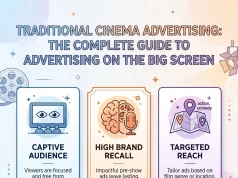
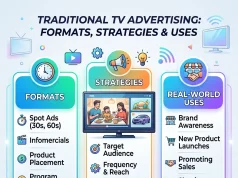
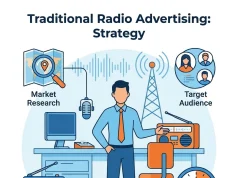
- Broadcast Media: Television and radio reach mass audiences simultaneously. According to Nielsen (2024), television and radio continue to reach the vast majority of adults on a weekly basis, even among younger demographics.
- Direct Mail: Physical postcards and catalogs achieve response rates that consistently outperform email for certain audience segments, according to the Data & Marketing Association. Direct mail stands out in an era of overcrowded digital inboxes.
- Outdoor Advertising: Billboards and transit signage create memorable brand recognition within specific geographic boundaries. A QR code on a billboard, for example, transforms offline reach into trackable online action.
To explore why these offline channels continue to deliver strong results alongside digital efforts, read our analysis of traditional marketing channels.
What Is the “Hybrid” Element: Integration and Synergy?
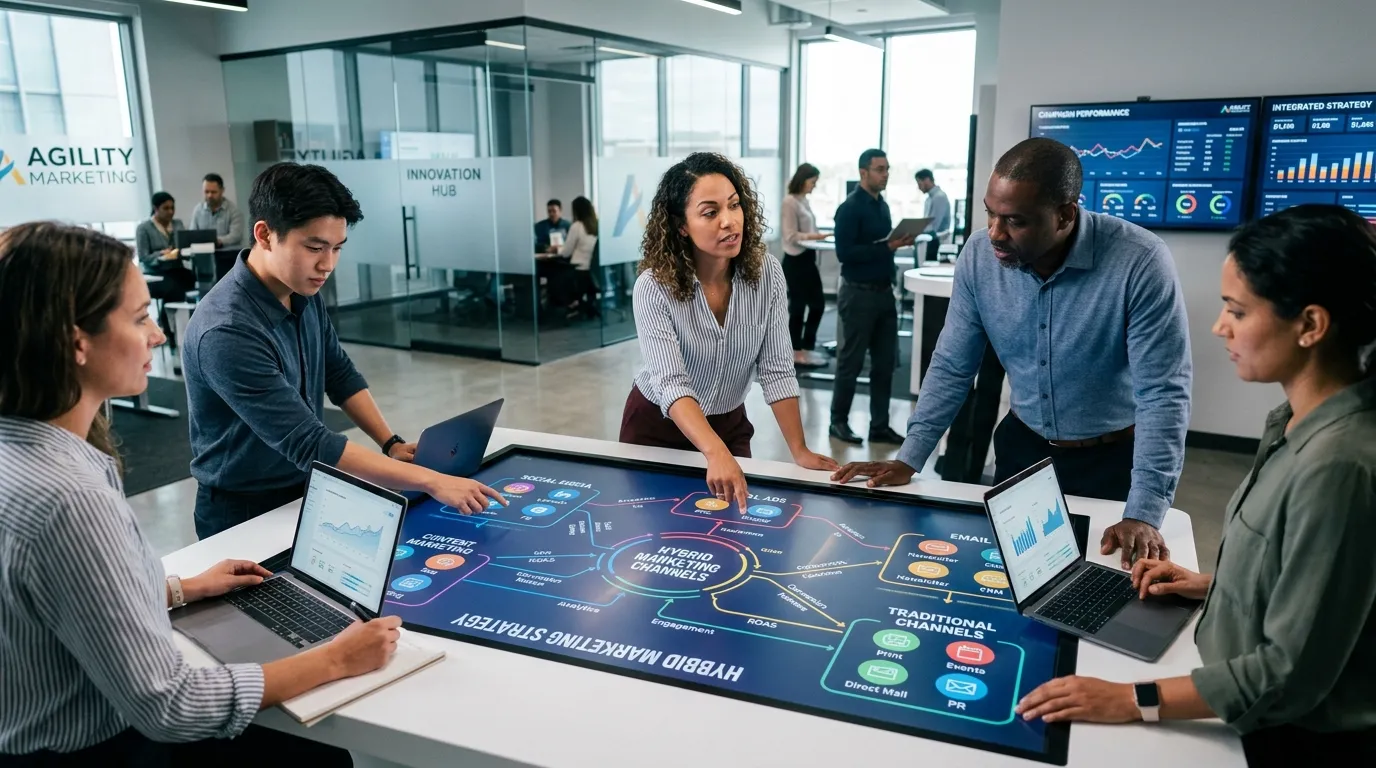
The hybrid element isn’t simply running both types of campaigns at the same time. True hybrid marketing channel strategy means designing traditional and digital efforts to actively reinforce each other. Traditional media drives awareness at scale; digital media captures and converts that awareness with precision.
A direct mail postcard with a QR code generates both offline tactile engagement and trackable online traffic. A radio spot promotes a social media giveaway, turning broadcast reach into measurable digital engagement. A billboard builds geographic brand recognition, while a geofencing campaign serves mobile ads to everyone who walks past it. This interplay creates a customer journey that is far more resilient—and more effective—than any single-channel approach.
How to Develop a Hybrid Marketing Strategy
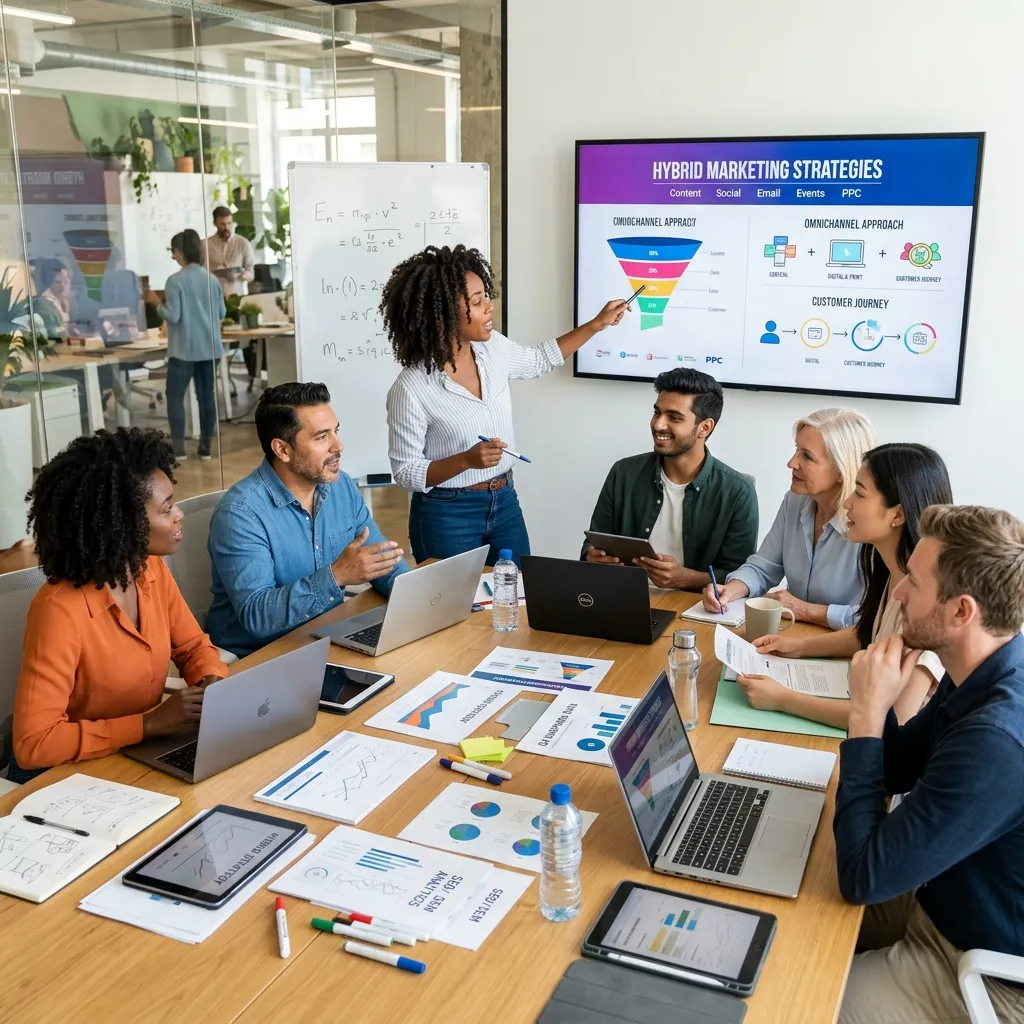
 Building a hybrid marketing strategy requires systematic planning across four key areas: audience identification, objective setting, channel selection, and brand messaging.
How Do You Identify Your Target Audience for a Hybrid Marketing Channel?
Every effective hybrid marketing strategy begins with audience clarity. Build detailed buyer personas that capture your ideal customer’s demographics, psychographics, media consumption habits, and preferred channels. A 55-year-old executive who reads industry trade publications requires a fundamentally different channel mix than a 28-year-old small business owner who consumes content primarily through LinkedIn and short-form video.
Customer journey mapping is equally important. Chart every touchpoint a prospect encounters before making a purchase—from first awareness through to conversion and retention. This map reveals which channels matter most at each stage and where your current strategy leaves gaps.
What Objectives Should a Hybrid Marketing Strategy Target?
Clear objectives determine which blend of channels will deliver the best return. Common goals for a hybrid marketing channel strategy include:
- Brand Awareness: Reach new audiences who don’t yet know your brand. Traditional broadcast media and outdoor advertising excel here.
- Lead Generation: Capture contact information from interested prospects. Digital channels—PPC, social media advertising, and gated content—are most effective.
- Sales Conversion: Move qualified prospects to a purchase decision. Retargeted digital ads and personalized email sequences drive conversion.
- Customer Retention: Keep existing customers engaged and loyal. A mix of email, social media, and occasional direct mail works well for long-term retention.
How Should You Allocate Budget Across a Hybrid Marketing Channel?
Budget allocation in a hybrid marketing model should follow your primary business goals, not arbitrary percentages. Organizations focused on mass brand awareness should weight spending toward traditional broadcast and outdoor channels. Businesses prioritizing immediate lead generation should allocate more heavily toward PPC and social media advertising.
A practical starting point: reserve 15–20% of your total marketing budget for testing new channels and refining what works. As data accumulates, shift resources toward the combinations that deliver the strongest results.
How Do You Craft a Cohesive Brand Message Across All Channels?
A hybrid marketing channel strategy fails when messaging feels disconnected. The visual identity, tone of voice, and core value proposition must remain identical—whether a customer encounters a physical billboard or a digital Instagram story. Inconsistency creates cognitive friction that slows purchasing decisions.
Establish a clear brand style guide before launching any hybrid campaign. This document should govern every element of your brand’s appearance and voice across all physical and digital touchpoints.
Implementing a Hybrid Marketing Channel Effectively
 Execution requires the right technology, a commitment to data-driven decision-making, and a plan for overcoming the common operational challenges that derail hybrid marketing efforts.
What Technology and Tools Support a Hybrid Marketing Channel?
Technology is the connective tissue that makes a hybrid marketing channel function as a unified system rather than a collection of separate campaigns. Three categories of tools are essential:
- CRM Systems: Platforms like HubSpot or Salesforce track leads from both offline and online sources, providing a single view of the customer journey across all channels.
- Marketing Automation Platforms: Automation tools enable personalized, timely communication at scale—welcome sequences, abandoned cart recovery, re-engagement campaigns—without requiring manual effort for each interaction.
- Analytics Dashboards: Unified analytics platforms pull data from digital channels and offline tracking mechanisms into one view. According to Forrester Research (2024), agencies and marketing teams that use unified marketing measurement tools improve campaign effectiveness by up to 30%.
How Do You Make Data-Driven Decisions in a Hybrid Marketing Channel?
Tracking offline performance requires creative solutions. Use unique promotional codes printed on direct mail pieces, custom vanity URLs on billboards, and dedicated phone numbers in radio spots to connect offline exposure to digital conversion events. A/B testing—running two versions of an ad, email subject line, or landing page to see which performs better—should be standard practice across every channel where it’s feasible.
For a comprehensive look at how to evaluate offline and online efforts together, our guide on the hybrid approach vs. traditional approach provides useful decision criteria.
What Are the Biggest Challenges of Implementing a Hybrid Marketing Channel?
Three operational challenges consistently derail hybrid marketing efforts:
Siloed Departments: Traditional PR teams and digital SEO teams often operate independently, with different KPIs and limited cross-functional communication. The solution is to create unified teams with shared performance goals and integrated reporting dashboards.
Budget Constraints: Running campaigns across multiple channels requires capital. Organizations with limited resources should start with a focused hybrid approach—pairing one traditional channel with two digital channels—and expand as results justify increased investment.
Measuring ROI Across Diverse Channels: Connecting offline brand exposure to online conversion events is technically complex. Address this by establishing strict attribution models from the outset, using QR codes, unique URLs, and custom promo codes to bridge the gap between physical and digital data.
Benefits of a Robust Hybrid Marketing Channel
The investment required to build a hybrid marketing channel pays off across four measurable dimensions.
Enhanced Customer Experience: Consumers who encounter a brand across multiple touchpoints—both physical and digital—develop higher purchase intent and stronger long-term loyalty. A hybrid channel ensures the brand remains visible and relevant throughout the entire, complex buying journey.
Increased Reach and Brand Visibility: Campaigns that utilize five or more channels generate significantly higher brand recall than single-channel campaigns. Each additional touchpoint reinforces recognition, making the brand more likely to surface in a consumer’s mind at the moment of purchase.
Improved ROI and Efficiency: Traditional media fills the top of the sales funnel with broad awareness. Digital media then captures and converts those prospects through precise retargeting. The combination reduces overall customer acquisition costs and improves the return on every marketing dollar spent.
Adaptability to Market Changes: A hybrid marketing channel is more resilient than a single-channel strategy. When one channel underperforms due to algorithm changes, rising costs, or shifting consumer behavior, the others continue working. This diversification protects marketing performance against volatility.
Case Studies: Successful Hybrid Marketing Channel Examples
 Coca-Cola’s “Share a Coke” Campaign: Coca-Cola printed popular consumer names on physical bottles—a traditional product-marketing tactic—while simultaneously launching a digital push encouraging buyers to photograph their personalized bottles and share them using a branded hashtag. The physical product drove digital engagement. Sales increased across every market where the campaign ran. This campaign demonstrates how a traditional marketing element can fuel a digital engagement cycle.
Regional Furniture Retailer Geo-Fencing Strategy: A regional furniture retailer mailed high-quality printed catalogs to targeted postal codes. Simultaneously, the retailer used geo-fencing technology to serve Facebook and Instagram advertisements to mobile devices located within those same postal codes. Consumers received both a physical catalog and a digital ad within the same timeframe. The dual exposure built familiarity and drove measurable foot traffic to physical showrooms, proving the multiplier effect of a coordinated hybrid marketing channel.
The Future of Hybrid Marketing
The trajectory of the hybrid marketing channel is clear: the line separating traditional and digital marketing will continue to narrow. Augmented Reality (AR) already allows consumers to point smartphone cameras at physical print advertisements to trigger interactive 3D product experiences. Connected TV blends the mass reach of traditional television with the household-level targeting precision of digital advertising.
Artificial intelligence is accelerating this convergence further. AI-powered tools enable real-time audience segmentation, predictive analytics, and automated personalization at a scale impossible a decade ago. Integrating AI capabilities into a hybrid marketing channel strategy allows brands to serve the right message—through the right channel, online or offline—at precisely the right moment.
According to Nielsen’s 2024 consumer research, buyers increasingly expect personalized, cross-channel experiences that feel seamless regardless of whether they encounter a brand online or offline. Organizations that invest in building a true hybrid marketing channel now will be substantially better positioned to meet those expectations as the technology matures. For a broader view of these evolving trends, McKinsey’s insights on consumer decision journeys provide helpful context. Additionally, Nielsen’s research on cross-channel measurement reinforces the case for integrated attribution.
Conclusion
A hybrid marketing channel helps businesses combine the strengths of traditional and digital marketing to create a more effective and balanced strategy. By reaching customers across multiple touchpoints, brands can improve engagement, build stronger relationships, and maximize their marketing ROI. As consumer behavior continues to evolve, adopting a hybrid approach can provide the flexibility and reach needed for long-term success in a competitive marketplace.
Frequently Asked Questions
1. What is a hybrid marketing channel in simple terms?
A hybrid marketing channel is a promotional approach that combines traditional offline methods—such as print, TV, radio, and direct mail—with digital channels like SEO, social media, and email into one coordinated strategy. The goal is to reach customers across multiple touchpoints and ensure each channel reinforces the others.
2. How does a hybrid marketing strategy differ from multi-channel marketing?
Multi-channel marketing means using multiple channels, which may all be digital. A hybrid marketing strategy specifically integrates both offline (traditional) and online (digital) channels. The hybrid model always spans the physical-digital divide, while multi-channel marketing may not.
3. Why is omnichannel marketing crucial for a hybrid approach?
Omnichannel marketing ensures a seamless, consistent customer experience across every touchpoint—physical store, website, social media, or direct mail. A hybrid marketing channel strategy without omnichannel execution risks delivering fragmented messaging that confuses buyers and slows purchasing decisions.
4. What are some examples of traditional marketing channels in a hybrid strategy?
Traditional channels used in a hybrid marketing strategy include print media (newspapers, magazines, brochures), broadcast media (TV and radio), direct mail, outdoor advertising (billboards), and event marketing. Each contributes broad reach and tangible credibility that digital channels find difficult to replicate on their own.
5. How can I measure the effectiveness of my hybrid marketing channel?
Measure hybrid marketing effectiveness by embedding digital tracking mechanisms into offline materials—unique QR codes, custom vanity URLs, and dedicated promotional codes. Feed all offline and online data into a centralized CRM platform to evaluate total campaign performance and calculate ROI across every channel.
6. What are the biggest challenges in implementing a hybrid marketing strategy?
The three most common challenges are siloed marketing departments (traditional and digital teams operating independently), budget constraints (maintaining quality across multiple channels simultaneously), and attribution complexity (accurately connecting offline brand exposure to online conversions).
7. Can small businesses effectively use a hybrid marketing channel?
Yes. A local business can combine affordable printed flyers or community event sponsorships with targeted local Facebook or Google ads to build strong neighborhood visibility at a relatively low cost. A hybrid marketing channel does not require a large budget—it requires strategic integration of whatever channels you use.
8. How does AI play a role in optimizing a hybrid marketing channel?
AI optimizes a hybrid marketing channel by automating audience segmentation, enabling real-time personalization, predicting consumer behavior, and optimizing ad targeting across both digital and physical touchpoints. AI-powered CRM platforms can identify which combination of offline and online exposures most reliably leads to conversion.
9. What is the difference between a hybrid marketing channel and an integrated marketing campaign?
An integrated marketing campaign refers to a single campaign that uses consistent messaging across multiple channels. A hybrid marketing channel is the broader strategic framework—the permanent infrastructure of traditional and digital channels a business maintains. Integrated campaigns are individual executions within that hybrid framework.
10. How often should a hybrid marketing strategy be reviewed and updated?
A hybrid marketing strategy should be reviewed at minimum on a quarterly basis and adjusted annually to account for shifts in consumer behavior, platform algorithm changes, and new channel opportunities. Digital elements should be monitored in real time; traditional elements should be evaluated at the end of each campaign cycle.