
Marketing and PR (Public Relations) work together to build brand awareness, manage reputation, and connect businesses with their target audience. While marketing focuses on promoting products and driving sales, PR builds trust through media coverage, storytelling, and public communication. Together, they create a strong strategy that enhances visibility, credibility, and long-term brand success.
For decades, business leaders treated marketing and public relations as entirely separate departments. The marketing team focused strictly on driving sales and generating leads. Meanwhile, the public relations department handled corporate reputation, media requests, and crisis management. This separation often led to disconnected brand messaging and missed opportunities for growth.
Modern businesses can no longer afford to keep these functions isolated. The boundaries between advertising, social media, and media relations have dissolved. A viral social media post can turn into a major news story overnight. A positive product review in a major publication can drive more immediate sales than an expensive advertising campaign.
When you align marketing and PR, you create a powerful symbiotic relationship. Public relations builds the trust and credibility necessary for consumers to listen to your promotional messages. Marketing provides the budget, tools, and analytics to amplify the goodwill generated by your public relations efforts.
This comprehensive guide explores the essential relationship between marketing and PR. You will learn how these disciplines have evolved, where their core functions overlap, and how to integrate them effectively. By uniting these two powerful forces, your business can maximize its visibility, establish unshakable credibility, and drive sustainable long-term revenue.
The Evolution of Marketing and PR in the Digital Age
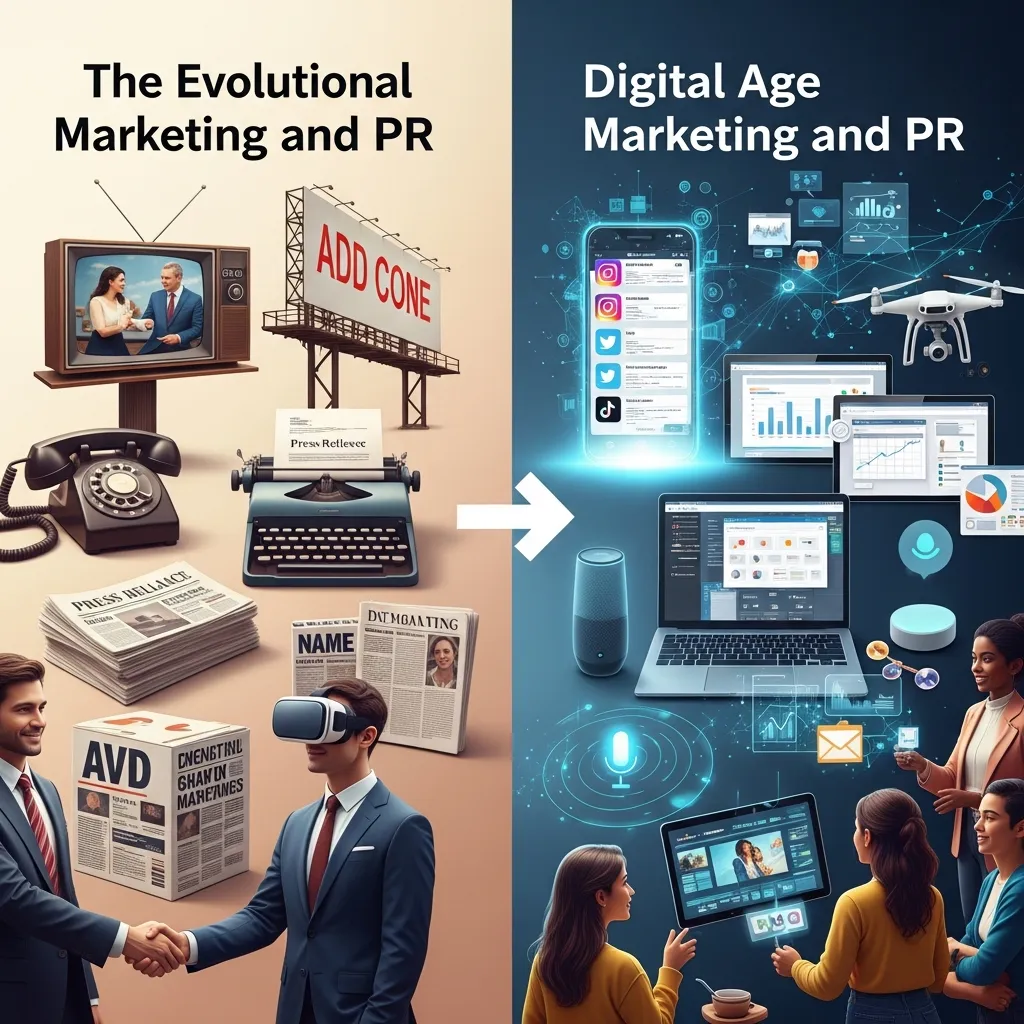 Historically, the tools available to marketing and PR professionals were distinct and strictly defined. Marketers bought space in newspapers, paid for television commercials, and sent out direct mail catalogs. Public relations experts built personal relationships with journalists, pitched story ideas, and drafted formal press releases. The audience consumed this information passively through traditional media formats.
The internet disrupted this traditional model completely. Social media platforms, search engines, and digital publishing transformed how consumers interact with brands. Customers now have a direct line of communication with companies, demanding transparency and authenticity. This shift forced the evolution of both disciplines.
Today, a single piece of content often serves both marketing and PR goals. An informative blog post can rank well on search engines to attract new customers while establishing the company’s leadership as industry experts. Traditional marketing mastery now requires blending these established offline advertising methods with modern digital storytelling.
Consumers actively research brands before making a purchase. They read online reviews, look for news articles, and evaluate a company’s social responsibility. A brilliant marketing campaign will fail if a quick search reveals poor public relations and a damaged corporate reputation. The digital age has proven that what you sell and how the public perceives your company are permanently intertwined.
Key Differences and Overlaps Between Marketing and PR
To effectively integrate these departments, you must first understand their unique strengths and primary objectives. While they share the ultimate goal of supporting the business, they approach this objective from different angles.
Understanding the Core Functions
Marketing focuses on promoting specific products or services to generate direct revenue. The primary metrics for success include customer acquisition cost, return on ad spend, and overall sales volume. Marketers rely heavily on paid media—such as social media ads, search engine marketing, and sponsored content—to guarantee precise audience targeting. They want consumers to take a specific action, like signing up for a newsletter or completing a checkout process.
Public relations, conversely, focuses on maintaining a positive public image and building strong relationships with stakeholders. PR professionals seek out earned media. They pitch stories to journalists, secure speaking engagements for executives, and manage corporate communications. The primary metrics for success include brand sentiment, share of voice, and media placements. PR campaigns aim to foster long-term goodwill rather than immediate, trackable sales.
Where the Disciplines Intersect
Despite their differences, the overlap between marketing and PR grows larger every year. Both disciplines heavily rely on excellent storytelling to capture audience attention.
Content marketing serves as a major intersection point. When a company publishes a comprehensive research report, the marketing team uses it to capture email leads. Simultaneously, the PR team pitches the report’s findings to industry journalists to secure high-quality backlinks and media coverage.
Another significant overlap occurs during live brand activations. Hosting a large community gathering or product launch naturally serves both departments. For a detailed look at how these live interactions function, explore our guide on public relations events marketing. The PR team uses the event to generate media buzz, while the marketing team uses the physical space to distribute promotional materials and capture customer data.
How to Integrate Marketing and PR for Maximum Impact
 Combining these two departments requires structural changes and a commitment to open communication. When marketing and PR teams collaborate, their combined efforts amplify your brand’s reach significantly.
Aligning Goals and Messaging
The first step toward integration is establishing unified business objectives. Both teams must work from the same brand style guide, utilizing consistent messaging, tone, and core values. If the marketing team promotes a fun, lighthearted product campaign, the PR team should not simultaneously release dry, overly corporate press releases.
Hold joint strategy meetings at the beginning of every quarter. Outline major product launches, upcoming corporate milestones, and key seasonal promotions. This allows both teams to map out how they can support each other. According to guidelines provided by the Public Relations Society of America (PRSA), maintaining a consistent corporate narrative across all public-facing channels is essential for establishing long-term brand credibility.
Leveraging Content Across Channels
Stop creating single-use content. When you integrate marketing and PR, you can stretch your resources much further.
If your PR team secures a fantastic feature article in a major publication, your marketing team should immediately amplify that success. They can turn quotes from the article into social media graphics, feature the publication’s logo on your website to build trust, and run paid advertisements targeting the publication’s core audience.
Conversely, if the marketing team discovers a highly successful customer testimonial, they should share it with the PR team. PR professionals can use that authentic customer story as the foundation for a compelling media pitch. This cross-departmental sharing ensures that every great idea reaches its maximum potential audience.
Case Studies of Successful Integrated Marketing and PR Campaigns
Examining real-world applications helps illustrate exactly how this integration works in practice. Successful brands use the credibility of PR to fuel the reach of their marketing.
Consider a popular outdoor apparel brand launching a new line of sustainable hiking gear. Instead of simply running digital ads, they decided to combine their efforts. The PR team organized a massive community park cleanup event, inviting local environmental journalists and eco-conscious influencers. This generated significant earned media coverage praising the brand’s commitment to the environment.
Simultaneously, the marketing team captured high-quality video footage of the cleanup. They used this authentic footage to create compelling television commercials and targeted social media ads. The positive press coverage built immense trust, which dramatically increased the conversion rates of the paid marketing materials. To understand the foundational mechanics behind these broad offline campaigns, reviewing effective traditional marketing strategies offers valuable insights.
Another excellent example involves a B2B software company releasing an industry data report. The PR team pitched the unique statistics to major business publications, securing mentions in several top-tier financial magazines. The marketing team then launched an email campaign pointing current leads to the news coverage. Seeing the company featured in respected publications gave hesitant buyers the confidence they needed to sign large enterprise contracts.
Measuring the Effectiveness of Marketing and PR Efforts
Tracking performance can be challenging when combining paid promotions with earned media. However, establishing clear metrics is vital for determining your return on investment.
You must track how PR placements influence direct traffic to your website. When a news article about your company goes live, monitor your web analytics for spikes in referral traffic and branded search volume. Use tracking links whenever possible to trace exactly how many users clicked through a press mention and subsequently made a purchase.
Additionally, analyze how earned media affects your advertising costs. High-quality PR improves brand trust, which frequently leads to higher click-through rates on your paid advertisements. As your click-through rates increase, your overall customer acquisition costs typically decrease.
Data from consumer behavior research groups like Nielsen consistently shows that earned media and editorial content carry higher trust levels than standard advertisements. By measuring the combined impact of brand sentiment and direct conversions, businesses can accurately assess the total value of their integrated marketing and PR campaigns.
Future Trends in Marketing and PR
 The landscape of brand communication changes rapidly. Staying ahead of the curve requires adapting to emerging technologies and shifting consumer expectations.
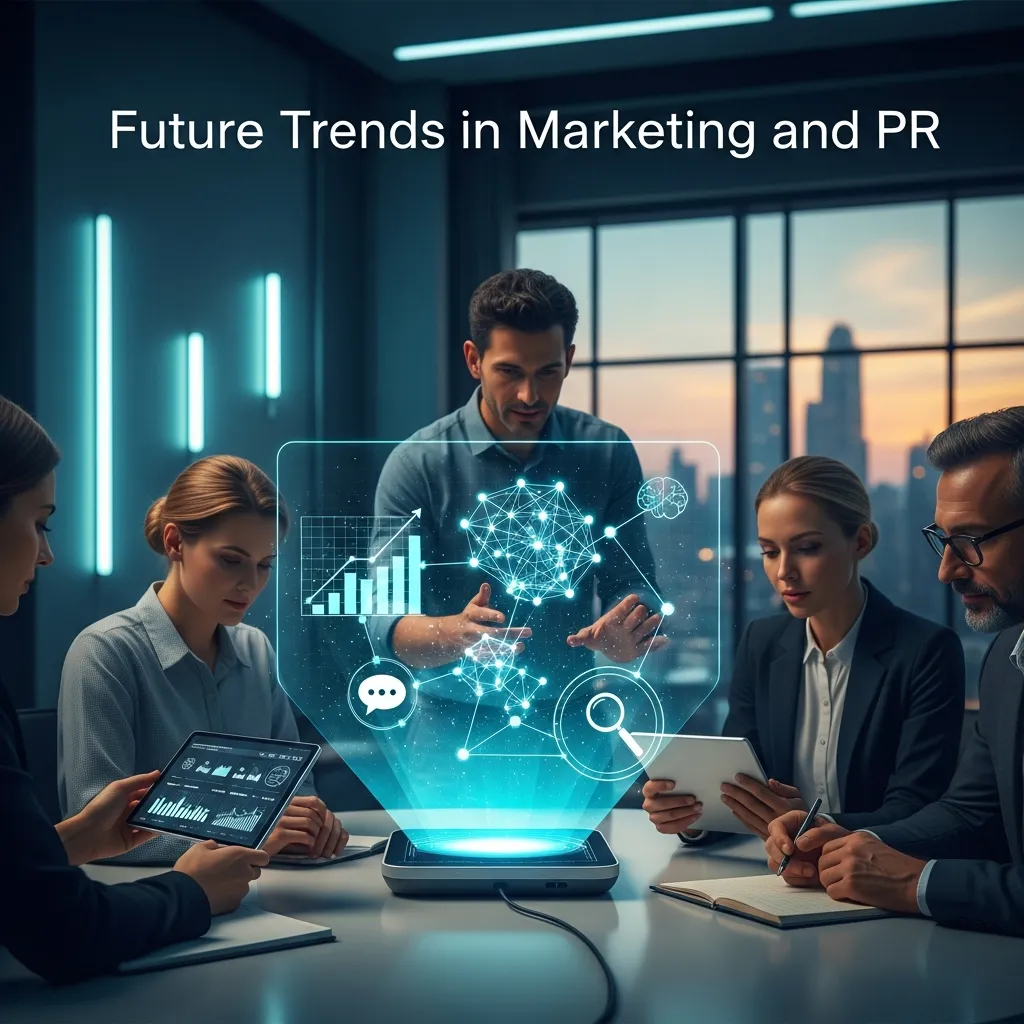
Artificial intelligence continues to transform both fields. PR professionals use AI tools to monitor global news sentiment in real-time, identifying potential crises before they escalate. Marketers use similar algorithms to optimize ad bidding and personalize content delivery. Moving forward, AI will help teams analyze massive datasets to identify the exact journalists and influencers who will resonate most with a specific target audience.
Consumers increasingly demand corporate transparency and social responsibility. Empty marketing promises no longer work. Buyers expect companies to take genuine stances on important social and environmental issues. This requires PR and marketing to work closer than ever. The PR team must ensure corporate actions align with public values, while the marketing team communicates those actions authentically without appearing opportunistic.
Finally, the debate over choosing offline or online channels will become obsolete. For a detailed breakdown of this shifting dynamic, read our analysis on digital marketing vs traditional marketing and what’s best for you. The future belongs to brands that provide a seamless, integrated experience across all physical and digital touchpoints.
The Indispensable Duo for Modern Business Success
The separation of marketing and PR is a relic of the past. In an era where brand reputation directly dictates sales performance, maintaining isolated departments only hinders business growth.
Marketing provides the fuel required to reach massive audiences and drive measurable conversions. Public relations provides the authentic storytelling and third-party credibility necessary for consumers to trust your brand in the first place. When you align their goals, share their content, and measure their combined impact, you create an unstoppable promotional engine.
Break down the internal silos within your organization. Encourage your promotional teams to share data, coordinate their messaging calendars, and support each other’s campaigns. By fully embracing the integration of marketing and PR, you establish a resilient, highly trusted brand capable of dominating the modern business landscape.
Conclusion
Integrating marketing and PR creates a powerful strategy that combines promotion with reputation building. When both functions work together, businesses achieve stronger brand awareness, improved customer trust, and higher engagement. A well-aligned approach ensures consistent messaging across all channels and maximizes overall impact, making marketing and PR integration essential for sustainable business growth.
Frequently Asked Questions (FAQ)
1.What is the main difference between marketing and PR?
Marketing focuses on promoting products to drive direct sales and generate revenue, typically using paid advertising. PR focuses on managing a company’s reputation, building brand trust, and securing earned media coverage through relationship building.
2.Why is it important to integrate marketing and PR?
Integrating these departments ensures consistent brand messaging across all channels. PR builds credibility, while marketing amplifies that credibility to reach a larger audience.
3.How can a small business afford both marketing and PR?
Small businesses can combine efforts through content marketing, social media, community engagement, and media outreach without requiring a large budget.
4.How do you measure the success of an integrated campaign?
Success is measured using both PR metrics (media coverage, brand sentiment) and marketing metrics (traffic, leads, conversions).
5.Can traditional offline methods still support modern PR strategy?
Yes. Offline channels like events, print media, and interviews can strengthen credibility and be amplified through digital platforms.
6.How does content marketing support both marketing and PR?
Content marketing bridges the gap by providing valuable content that attracts customers while also strengthening brand reputation and media interest.
7.What role does social media play in marketing and PR integration?
Social media helps distribute messages quickly, engage audiences directly, and amplify both promotional and reputational content.
8.How can storytelling improve marketing and PR efforts?
Storytelling makes brand messages more emotional and relatable, helping build trust and improve audience engagement.
9.What tools are used to manage marketing and PR together?
Common tools include analytics platforms, CRM systems, social media schedulers, and media monitoring tools.
10.What is the biggest benefit of integrating marketing and PR?
The biggest benefit is a unified brand strategy that increases trust, visibility, and long-term customer loyalty.







[…] builds credibility that a standalone ad can’t achieve on its own. This overview of marketing and PR explains how the two disciplines work together effectively in traditional […]