Running Instagram ads as an e-commerce brand can feel like throwing money into a black hole. You create beautiful visuals, craft compelling copy, and launch campaigns—only to see mediocre results and dwindling ad spend with little to show for it.
The truth is, most e-commerce brands approach Instagram advertising with a “spray and pray” mentality. They create one or two ad sets, target broad audiences, and expect immediate results. When those results don’t materialize, they either abandon the platform entirely or continue burning through budget without a clear strategy.
But Instagram remains one of the most powerful platforms for e-commerce success. With over 2 billion monthly active users and proven shopping features, it offers unparalleled opportunities to reach and convert your ideal customers. The key lies in developing a comprehensive strategy that goes beyond pretty pictures and generic targeting.
Understanding Instagram’s E-Commerce Advantage
Instagram wasn’t always the shopping powerhouse it is today. The platform has evolved from a simple photo-sharing app into a sophisticated e-commerce ecosystem. Features like Instagram Shopping, product tags, and integrated checkout have transformed how brands sell and how consumers discover and purchase products.
The visual nature of Instagram makes it particularly effective for e-commerce. Unlike text-based platforms, Instagram allows you to showcase your products in context, demonstrate their benefits, and create emotional connections with potential customers. This visual storytelling capability is crucial for driving purchase decisions.
Recent data shows that 70% of shopping enthusiasts turn to Instagram for product discovery. More importantly, users who discover products on Instagram are significantly more likely to make purchases compared to other social platforms. This purchasing intent, combined with Instagram’s sophisticated targeting capabilities, creates the perfect storm for e-commerce success.
Building Your Instagram Ads Funnel
Successful Instagram advertising for e-commerce requires a full-funnel approach. Rather than focusing solely on direct sales, you need to guide potential customers through awareness, consideration, and conversion stages.
Top of Funnel: Awareness and Interest
Your awareness campaigns should focus on introducing your brand and products to new audiences. These ads work best when they feel native to the platform—less salesy, more inspirational. Think lifestyle content that showcases your products in use rather than traditional product shots.
Video content performs exceptionally well at this stage. Short, engaging videos that demonstrate product benefits or show behind-the-scenes content help build brand affinity. User-generated content also works brilliantly here, as it provides social proof while feeling authentic to the Instagram experience.
Targeting for awareness campaigns should be broader but strategic. Use interests, behaviors, and lookalike audiences based on your existing customers. Avoid the temptation to target everyone—even broad targeting should be relevant to your product category.
Middle of Funnel: Consideration and Engagement
Once users have shown initial interest in your brand, you need to nurture that interest into serious consideration. This is where retargeting becomes crucial. Create custom audiences based on website visitors, video viewers, and users who have engaged with your previous ads.
Middle-funnel content should provide more detailed product information while addressing common objections or questions. Carousel ads work particularly well here, allowing you to showcase multiple products or highlight different features of a single product.
Social proof becomes increasingly important at this stage. Incorporate customer reviews, testimonials, and user-generated content into your ads. Show your products being used by real customers to build trust and credibility.
Bottom of Funnel: Conversion and Sales
Your conversion campaigns should focus on users who are close to making a purchase decision. These audiences might include people who have added items to their cart, viewed specific product pages, or spent significant time on your website.
Dynamic product ads excel at this stage, automatically showing users the exact products they’ve viewed or similar items based on their browsing behavior. These personalized ads significantly improve conversion rates by showing highly relevant products at the right moment.
Create urgency through limited-time offers, exclusive discounts, or inventory alerts. However, avoid overusing these tactics, as they can diminish their effectiveness and potentially harm your brand perception.
Creative Strategies That Drive Results
The creative element of your Instagram ads can make or break your campaigns. With users scrolling through hundreds of posts daily, your ads need to stop the scroll and compel action within seconds.
Visual Consistency and Brand Recognition
Develop a consistent visual style that makes your ads instantly recognizable, even without your logo. This might include specific color schemes, typography, photography styles, or graphic elements. Consistency builds brand recognition and trust over time.
However, consistency shouldn’t mean boring. Create templates or style guides that allow for variation while maintaining your brand identity. This approach ensures your ads feel fresh while building recognition.
Product Photography and Video
High-quality product photography remains fundamental to e-commerce success on Instagram. Invest in professional photography that shows your products from multiple angles, in different contexts, and being used by real people.
Video content consistently outperforms static images on Instagram. Create short, engaging videos that demonstrate product benefits, show products in use, or tell your brand story. Stop-motion videos, time-lapse content, and user-generated video testimonials all perform well.
Consider the technical aspects of your creative. Use high-resolution images, ensure text is readable on mobile devices, and optimize video files for fast loading. Poor technical quality can undermine even the best creative concepts.
User-Generated Content and Social Proof
User-generated content (UGC) provides authentic social proof that can significantly improve ad performance. Encourage customers to share photos and videos of your products in use, then incorporate this content into your ad campaigns.
UGC works because it feels authentic rather than promotional. Potential customers can envision themselves using your products when they see real people doing so. This authenticity is particularly valuable on Instagram, where users are increasingly skeptical of overly polished advertising content.
Create campaigns specifically designed to generate UGC. Run contests, create branded hashtags, or simply ask customers to share their experiences. The content you collect can fuel your advertising efforts for months.
Advanced Targeting and Audience Strategies
Instagram’s targeting capabilities extend far beyond basic demographics. Advanced audience strategies can dramatically improve your campaign performance while reducing wasted ad spend.
Custom Audiences and Retargeting
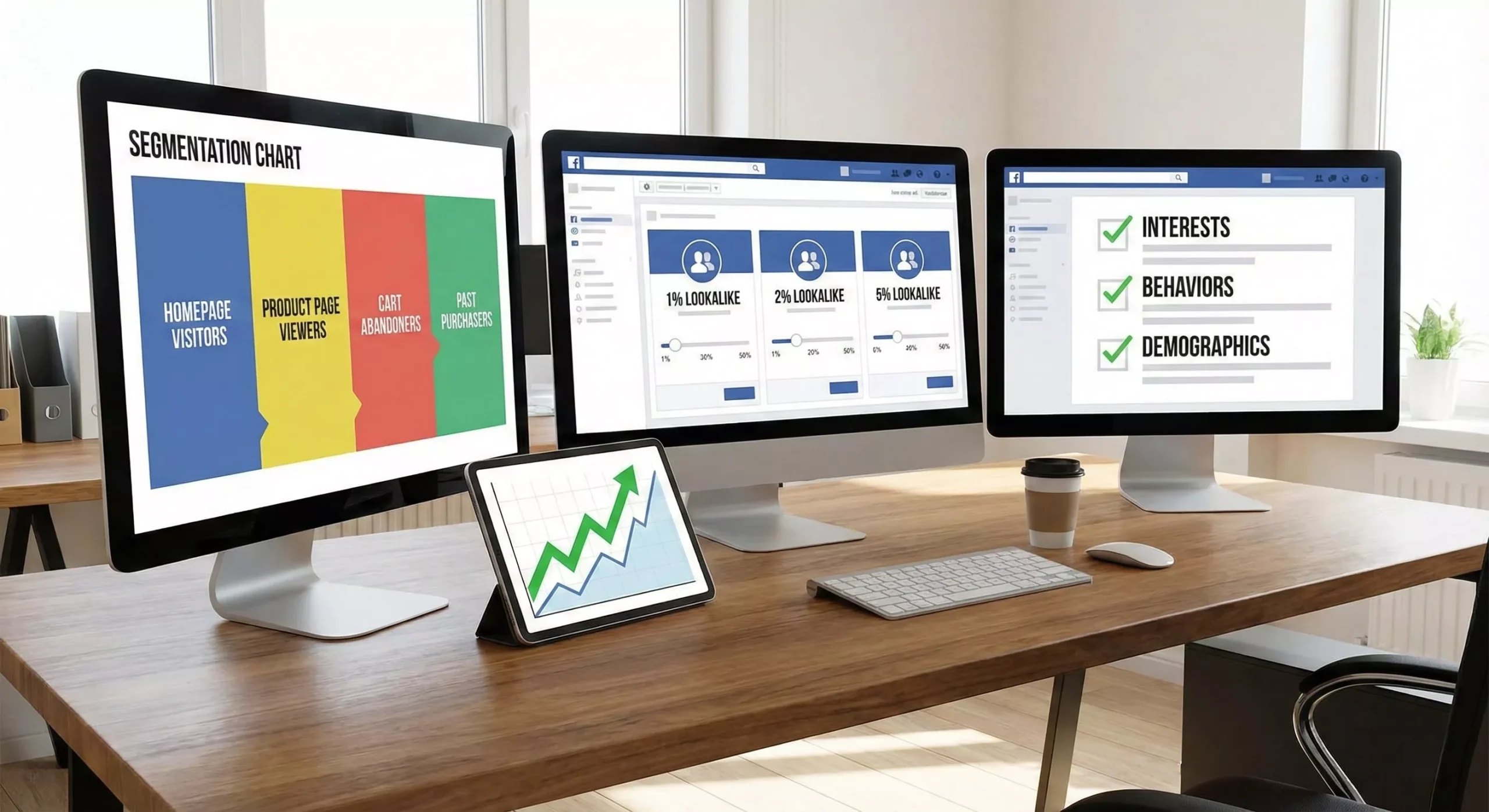
Build comprehensive custom audiences based on website behavior, email lists, and app activity. Create specific segments for different stages of the customer journey. For example, separate audiences for homepage visitors, product page viewers, cart abandoners, and past purchasers.
Layer your custom audiences to create highly specific targeting. Combine website behavior with demographic information or interests to create laser-focused audience segments. These smaller, more targeted audiences often produce better results than broad targeting.
Set appropriate lookback windows for your custom audiences. While Facebook allows up to 180 days, shorter windows (30-60 days) often perform better for e-commerce as they capture users with more recent purchase intent.
Lookalike Audiences
Lookalike audiences help you find new customers who share characteristics with your best existing customers. Create multiple lookalike audiences based on different source audiences—website visitors, email subscribers, and past purchasers will each produce different lookalike audiences.
Experiment with different lookalike percentages. While 1% lookalikes are most similar to your source audience, 2-5% lookalikes might offer better scale while maintaining relevance. Test different percentages to find the sweet spot for your business.
Update your source audiences regularly to ensure your lookalike audiences reflect current customer behavior. Quarterly updates are generally sufficient, though rapidly growing brands might benefit from monthly updates.
Interest and Behavior Targeting
When targeting interests and behaviors, think beyond obvious product categories. Consider lifestyle interests, complementary products, and life events that might indicate purchase intent.
Use Facebook’s Audience Insights tool to understand your existing customers better. This data can reveal unexpected interests and behaviors that you can target in your campaigns.
Layer multiple targeting criteria carefully. While detailed targeting can improve relevance, over-targeting can severely limit your reach and increase costs. Test different combinations to find the right balance.
Budget Allocation and Campaign Structure
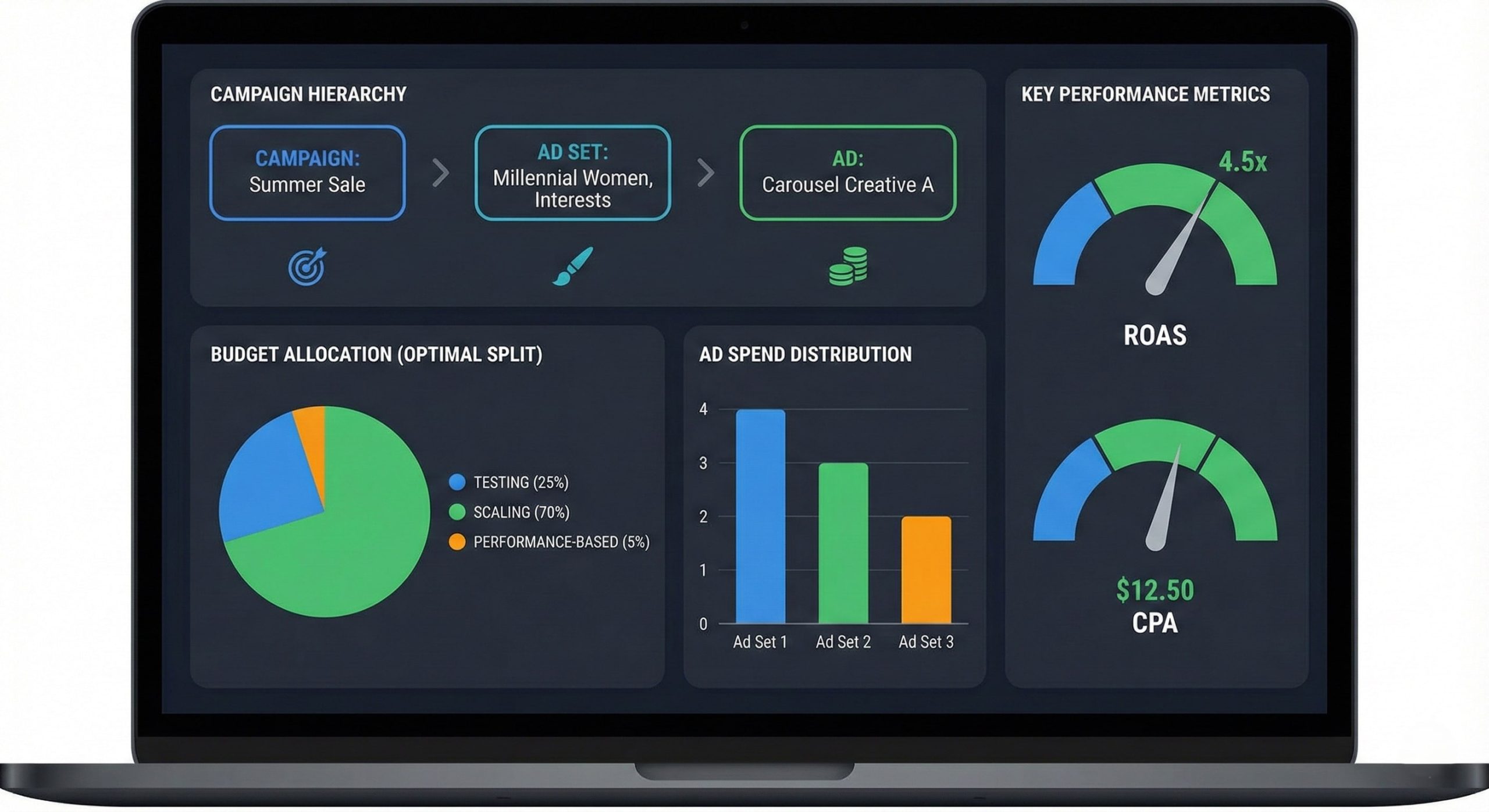
How you structure and fund your campaigns significantly impacts their success. Poor campaign structure can waste budget on the wrong audiences while missing opportunities for profitable scaling.
Campaign Budget Optimization
Campaign Budget Optimization (CBO) allows Facebook to automatically distribute your budget across ad sets based on performance. For most e-commerce brands, CBO produces better results than ad set budgets by allowing the algorithm to invest more heavily in top-performing audiences.
Set appropriate minimum and maximum spend limits for individual ad sets when using CBO. This prevents the algorithm from concentrating all spending on a single ad set while ensuring adequate testing budgets for all audiences.
Monitor CBO performance closely, especially in the first few days of campaign launch. The algorithm needs time to learn and optimize, so don’t make hasty changes based on initial performance.
Testing Budget Allocation
Allocate 20-30% of your total ad budget to testing new audiences, creative concepts, and campaign strategies. This testing budget is crucial for long-term success, as it helps you discover new opportunities for growth.
Structure your testing systematically. Test one variable at a time to clearly understand what drives performance improvements. Whether testing new audiences or creative concepts, isolated testing provides clearer insights.
Document your testing results and apply learnings to future campaigns. Build a knowledge base of what works (and what doesn’t) for your specific business and audience.
Scaling Successful Campaigns
When you identify winning campaigns, scale them gradually to maintain performance. Sudden budget increases can disrupt the algorithm’s learning and decrease performance.
Increase budgets by no more than 20-50% at a time, depending on current spend levels. Larger budget increases require longer optimization periods and may initially decrease performance.
Create new ad sets with winning creative and audiences rather than continually increasing existing budgets. This approach provides more control and allows for continued testing while scaling successful elements.
Instagram Ads Strategy for E-Commerce Brands: Measuring Success and Optimization
An effective Instagram Ads Strategy for E-Commerce Brands goes beyond clicks and impressions. To drive real growth, e-commerce businesses must track metrics that directly impact revenue and profitability.
Key Performance Indicators (KPIs)
For a successful Instagram Ads Strategy for E-Commerce Brands, these KPIs are crucial:
- Return on Ad Spend (ROAS): This remains the most critical metric. However, don’t rely solely on platform-reported ROAS, as attribution windows may miss parts of the customer journey.
- Customer Lifetime Value (CLV): Track CLV to understand the long-term impact of Instagram advertising. Customers acquired through Instagram may have unique CLV patterns compared to other channels.
- Cost Per Acquisition (CPA): Monitor CPA across campaign objectives and audience segments. Identifying which audiences and creatives yield the lowest CPA helps optimize budget allocation.
Attribution and Tracking
Accurate measurement is a cornerstone of any Instagram Ads Strategy for E-Commerce Brands. Implement robust tracking systems such as:
- Facebook Pixel
- Google Analytics
- Native e-commerce platform tracking
Keep privacy changes in mind—like iOS 14.5 updates—which can affect tracking accuracy. Using Conversions API and first-party data ensures continued measurement reliability. Also, set attribution windows that reflect your typical customer journey; 7-day click attribution often gives a more realistic view than 1-day click attribution.
Continuous Optimization
Continuous optimization is key to maintaining a high-performing Instagram Ads Strategy for E-Commerce Brands:
- Weekly performance reviews: Make adjustments based on data trends rather than daily fluctuations.
- Pause underperforming ads: Allow 3–7 days for ad sets to optimize before deciding.
- Refresh creative: Prevent ad fatigue by updating visuals and messaging regularly.
By combining accurate measurement, smart attribution, and ongoing optimization, e-commerce brands can ensure their Instagram Ads Strategy drives meaningful growth and maximizes ROI.
Advanced Strategies for Competitive Advantage

Once you’ve mastered the fundamentals, advanced strategies can provide significant competitive advantages and improved performance.
Seasonal and Event-Based Campaigns
Advertising Planning & Market around seasonal trends, holidays, and industry events. Create content calendars that align with peak shopping periods and customer behavior patterns.
Build seasonal audiences based on historical purchase data. Customers who purchased during last year’s holiday season are likely to shop again during similar periods.
Adjust your creative and messaging to reflect seasonal themes and shopping motivations. Holiday shoppers have different motivations than regular purchasers, and your ads should reflect these differences.
Cross-Platform Integration
Integrate your Instagram advertising with other marketing channels for maximum impact. Use email marketing to nurture Instagram ad traffic, and incorporate Instagram content into your email campaigns.
Create consistent messaging across all marketing channels while adapting content for each platform’s unique characteristics. Instagram users expect visual, engaging content, while email subscribers might prefer more detailed information.
Use Instagram ads to support other marketing initiatives like product launches, sales events, or content marketing campaigns. Coordinated marketing efforts typically produce better results than isolated channel strategies.
Taking Your Instagram Strategy to the Next Level
FAQs – Instagram Ads Strategy for E-Commerce Brands
1.What is an Instagram Ads Strategy for E-Commerce Brands?
It’s a structured plan to attract, engage, and convert Instagram users into paying customers using full-funnel advertising, targeting, creatives, and optimization.
2.Why is Instagram effective for e-commerce brands?
Instagram’s visual storytelling, shopping features, and over 2 billion active users make it ideal for product discovery and driving conversions.
3.What does a full-funnel Instagram Ads Strategy look like?
It includes awareness campaigns at the top, engagement and consideration in the middle, and conversion-focused ads at the bottom, guiding customers from interest to purchase.
4.How can e-commerce brands target the right audience?
Use custom audiences, retargeting, lookalike audiences, and behavior/interests targeting for precise, high-intent segmentation.
5.Why is user-generated content important?
UGC builds authenticity and social proof, showing real people using products, which increases trust and ad engagement.
6.How should budget be allocated in Instagram ads?
Allocate 20-30% to testing new audiences and creatives, use Campaign Budget Optimization (CBO) for efficiency, and gradually scale winning campaigns.
7.Which KPIs matter most for e-commerce Instagram ads?
Track ROAS, CPA, and Customer Lifetime Value (CLV) to measure direct business impact and optimize campaigns.
8.How can creative strategy improve Instagram ads?
Use consistent visuals, professional photography, short videos, and storytelling that stops the scroll and drives engagement.
9.What role do seasonal campaigns play?
Seasonal campaigns align with holidays and industry trends, leveraging historical purchase data to increase sales during peak periods.
10.How can cross-platform integration enhance results?
Combine Instagram ads with email, content marketing, and other channels to nurture leads, boost conversions, and reinforce messaging.
11.How often should ads be optimized?
Review performance weekly, pause underperforming ads after 3-7 days, refresh creatives regularly, and adjust targeting based on data.
12.Can Instagram ads deliver long-term growth?
Yes, a systematic Instagram Ads Strategy for E-Commerce Brands builds brand awareness, engages customers, drives repeat sales, and supports scalable growth.