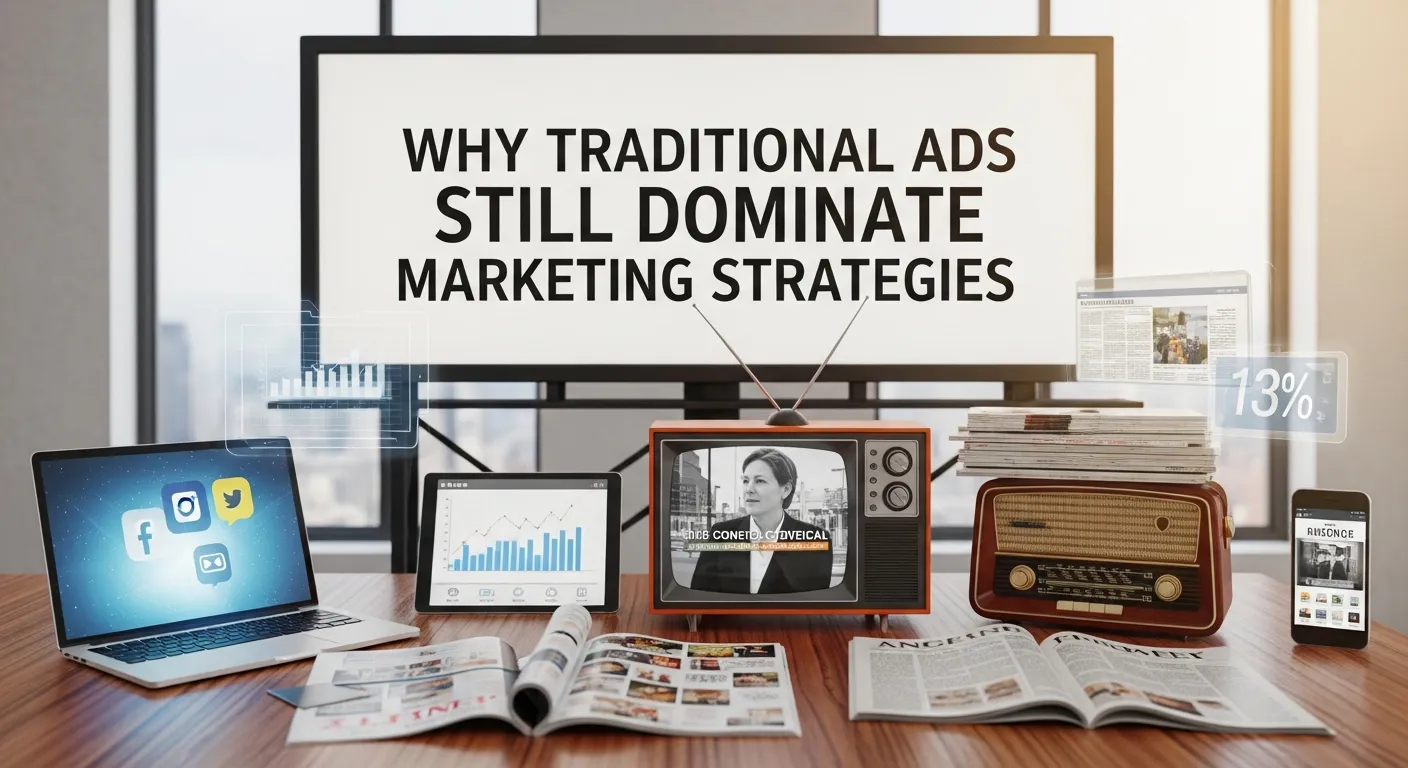
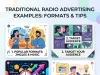
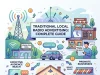
Traditional Ads refer to conventional marketing methods such as TV commercials, radio ads, newspaper ads, magazines, billboards, and flyers. These advertising techniques focus on reaching a broad audience through offline channels. Although digital marketing is growing rapidly, traditional ads still play an important role in brand awareness, especially for local and mass-market campaigns.
The Core Components of Traditional Advertising
Offline marketing relies on a few proven channels to deliver messages. Each category offers unique benefits and reaches consumers in distinct ways.
Print Media: Newspapers, Magazines, Brochures
Print media includes daily newspapers, glossy magazines, brochures, and local newsletters. Advertisers purchase space based on a publication’s total circulation and reader demographics.
Magazines cater to highly specific interests. A company selling hiking gear can easily reach dedicated outdoor enthusiasts by purchasing a full-page spread in a camping magazine. Newspapers, on the other hand, provide broad and highly localized reach, making them ideal for regional business announcements or store openings.
Print formats offer tangibility and credibility. Holding a thick, glossy magazine engages the senses. Readers tend to spend focused time consuming printed content, which gives the accompanying advertisements far more attention compared to fast-scrolling social media feeds. You can learn more about the broader scope of these methods in this guide to traditional advertising.
Broadcast Media: TV and Radio Ads
Television and radio represent the core of broadcast media. These channels push content to a mass audience simultaneously, creating shared cultural moments.
Television commercials remain one of the most powerful tools for storytelling. They allow brands to evoke strong emotions through a combination of sight, sound, and motion. Broad reach is guaranteed, especially during live sports or popular prime-time events.
Radio ads target listeners during specific daily routines, such as morning commutes or afternoon work shifts. Audio messaging builds familiarity through repetition, catchy jingles, and recognizable voiceovers. Listeners often develop strong loyalties to specific radio hosts, and an endorsement from a trusted voice can drive significant local sales.
Out-of-Home (OOH) Advertising: Billboards, Transit, and Street Furniture
Out-of-home media captures consumers while they navigate the physical world. This category includes massive highway billboards, transit posters on city buses, subway advertisements, and digital displays in busy shopping malls.
OOH marketing provides unskippable visibility. Commuters pass the exact same billboards every day on their way to work, which solidifies brand recall. You cannot use an ad-blocker on a physical poster. Modern digital billboards even allow advertisers to change messages dynamically based on the time of day, local traffic conditions, or the weather. According to data from Statista, spending on out-of-home advertising continues to grow as brands recognize the value of capturing captive audiences in public spaces.
Direct Mail: Postcards, Letters, Catalogs
Direct mail places a physical piece of promotional material directly into a consumer’s hands. Brands send heavy catalogs, vibrant postcards, and personalized letters to specific residential addresses.
Physical mail boasts an incredibly high open rate. A well-designed product catalog can sit on a living room coffee table for weeks, providing continuous brand exposure to everyone in the household. Furthermore, direct mail allows for excellent personalization. Businesses can segment their mailing lists based on past purchasing behavior to send highly relevant offers. To dive deeper into optimizing these campaigns, review this direct mail marketing guide.
The Strategic Advantages of Traditional Ads in Today’s Landscape
 Even with the dominance of search engines and social media platforms, Traditional Ads continue to play a powerful role in modern marketing strategies. Offline advertising methods still offer unique advantages that help brands build credibility, reach wider audiences, and strengthen long-term recognition.
Building Brand Awareness and Trust
One of the strongest benefits of Traditional Ads is their ability to build trust and authority. Consumers often perceive offline media such as television, newspapers, and billboards as more credible compared to online ads. This is because Traditional Ads require higher investment, which signals brand stability and legitimacy.
For example, appearing on TV commercials, radio stations, or large outdoor billboards creates a strong impression of reliability. This helps businesses build brand awareness through Traditional Ads and establish long-term trust with their audience.
Traditional Ads also reach audiences who are less active online. People reading newspapers or listening to radio broadcasts are usually more focused on the content, making them more receptive to marketing messages. Studies from trusted research organizations, including Nielsen, show that consumers often trust offline advertising formats like TV and print more than digital banner ads, increasing the effectiveness of Traditional Ads campaigns.
Complementing Digital Campaigns
Modern marketing is most effective when Traditional Ads and digital strategies work together. Instead of replacing one with the other, businesses combine both to create a unified customer journey.
For instance, marketers use Traditional Ads such as flyers, billboards, and direct mail to drive users toward online platforms. QR codes are commonly added to print ads and posters, allowing customers to instantly visit websites, landing pages, or promotional offers using their smartphones. This helps bridge offline marketing with digital marketing strategies.
Similarly, television and radio ads often include hashtags or website links to encourage online engagement. This integration shows how Traditional Ads continue to support and enhance digital marketing performance, making them a valuable part of any modern advertising strategy. For more on this approach, explore the benefits of integrating traditional and digital marketing.
Targeting Specific Demographics
While digital marketing offers highly precise behavioral targeting, Traditional Ads excel at reaching specific demographic groups that may be less active online or less digitally native. This makes Traditional Ads especially valuable for businesses targeting audiences based on age, location, or lifestyle habits.
Older populations, for example, still consume a high volume of print newspapers, magazines, radio, and broadcast television. If a product or service is designed for senior citizens, Traditional Ads marketing strategies such as newspaper placements or TV commercials can deliver stronger engagement than many online-only campaigns.
Traditional Ads are also highly effective for localized marketing. Small and medium businesses, such as neighborhood restaurants, clinics, or retail shops, benefit greatly from community-based advertising like local newspapers, radio sponsorships, flyers, and direct mail campaigns. These methods help improve local brand awareness through Traditional Ads and attract nearby customers more effectively.
Memorable and Impactful Experiences
One of the strongest advantages of Traditional Ads is their physical and emotional impact. Unlike digital ads that are often scrolled past or skipped, offline advertisements create real-world experiences that leave a lasting impression.
Physical marketing materials such as brochures, posters, billboards, and magazines engage multiple senses. The texture of printed paper, the visual scale of a billboard, or the sound and motion of a cinema advertisement all contribute to stronger memory retention. This sensory engagement makes Traditional Ads more memorable compared to many digital formats.
Another key benefit is reduced ad fatigue. In today’s digital world, users are exposed to thousands of online ads daily, many of which are ignored or blocked. Traditional Ads help break this cycle by offering a less crowded and more focused environment, allowing brand messages to stand out more clearly and effectively.
As a result, Traditional Ads strategies continue to play an important role in creating meaningful, memorable, and high-impact brand experiences.
Measuring the Effectiveness of Traditional Ads
 A common criticism of offline marketing is the difficulty of tracking performance. However, modern measurement techniques have evolved, allowing businesses to accurately gauge their return on investment.
Challenges and Solutions
The modern consumer takes a complex, multi-touchpoint journey before making a purchase. A person might hear a radio ad, see a billboard, and then finally search for the brand on their mobile phone days later. If a business only tracks the final digital click, they completely miss the offline interaction that sparked the initial awareness.
Marketers overcome this by using specific tracking methods. Unique phone numbers assigned only to a radio campaign allow businesses to see exactly how many calls originated from that station. Custom vanity URLs printed on billboards track web traffic directly tied to the physical ad. Additionally, brand lift studies and consumer surveys help determine if a specific campaign increased overall brand recognition in a targeted region. Understanding traditional marketing effectiveness requires blending these offline identifiers with digital analytics.
ROI in Traditional Advertising
When evaluating the return on investment (ROI) in Traditional Ads, businesses must look beyond immediate conversions and consider long-term brand growth. Unlike digital campaigns that often focus on quick clicks and direct responses, Traditional Ads are designed to build lasting brand awareness and emotional connection over time.
One of the key strengths of Traditional Ads is their ability to generate strong brand recall. A television commercial, radio spot, or billboard may not always lead to an instant purchase, but it creates a mental association in the consumer’s mind. Over time, this repeated exposure increases trust and familiarity, which often leads to future conversions when the customer is ready to buy.
This is where Traditional Ads ROI becomes more strategic rather than purely immediate. Instead of tracking only short-term sales, marketers measure how offline exposure contributes to long-term customer behavior and brand recognition.
Market Mix Modeling (MMM) is a powerful analytical approach used to evaluate the effectiveness of Traditional Ads strategies alongside digital channels. It helps businesses analyze historical data and understand how different marketing efforts contribute to overall sales performance over time.
Using MMM, companies can identify how Traditional Ads like TV, print, radio, and outdoor advertising influence customer journeys, even if the final purchase happens online. This proves that offline marketing still plays a measurable and cost-effective role in modern marketing ecosystems.
Ultimately, Traditional Ads deliver strong long-term ROI by building brand equity, increasing recall value, and supporting multi-channel marketing strategies that drive sustainable business growth.
Case Studies: Modern Success with Traditional Ads
Examining real-world applications shows how Traditional Ads continue to create powerful engagement and drive both offline and online consumer behavior. Even in a digital-first world, offline marketing campaigns can spark global attention when combined with strong creative strategy.
One of the most famous examples is the “Share a Coke” campaign by Coca-Cola. The brand replaced its iconic logo on bottles and cans with popular first names. This physical product personalization was supported by Traditional Ads strategies such as television commercials, print advertisements, and large-scale billboard placements.
Consumers were encouraged to search stores for bottles featuring their own names or the names of friends and family. This simple offline idea created emotional engagement and personal connection. People then shared photos of these bottles on social media, turning a physical product into a viral digital trend. This is a clear example of how Traditional Ads can directly drive online engagement and increase brand visibility.
Another strong example is Spotify Wrapped. While the core experience is digital, Spotify uses Traditional Ads and outdoor marketing campaigns to amplify its reach. Every year, the company places large, creative billboards in major cities showcasing unique and humorous user listening statistics.
These physical billboards attract public attention in real-world environments, encouraging people to take photos and share them on social platforms. This blend of offline visibility and digital sharing demonstrates how Traditional Ads can extend digital campaigns into physical spaces, increasing overall brand impact.
These case studies highlight that Traditional Ads are not outdated. Instead, when combined with modern digital strategies, they remain a powerful tool for storytelling, engagement, and viral marketing success.
The Future is Integrated
 Offline marketing is not disappearing. Instead, it is adapting to new consumer behaviors and technological advancements.
Digital billboards now allow for programmatic ad buying in physical spaces. Print publications are focusing on high-quality, premium tactile experiences that give readers a luxurious escape from screens. Traditional ads provide a level of trust, permanence, and mass visibility that digital channels simply struggle to achieve on their own.
A blended marketing strategy is essential for modern business growth. Relying entirely on digital clicks leaves your brand vulnerable to algorithm changes and screen fatigue. By incorporating print, broadcast, direct mail, and out-of-home advertising into your marketing mix, you build a more resilient and visible brand.
Review your current promotional budget and look for opportunities to step outside the digital sphere. A well-placed physical advertisement might just be the exact catalyst your brand needs to capture a whole new audience.
FAQs
1. What is ROI in Traditional Ads?
ROI in Traditional Ads refers to measuring the return gained from offline marketing like TV, radio, print, and billboards.
It focuses on both sales impact and brand awareness over time.
2. Are Traditional Ads profitable?
Yes, Traditional Ads can be highly profitable for long-term brand building.
They may not always give instant results but improve trust and recognition.
3. How is Traditional Ads ROI measured?
It is measured using sales data, brand recall, and Market Mix Modeling (MMM).
These tools analyze how offline ads influence overall performance.
4. Do Traditional Ads give instant results?
Usually no, Traditional Ads focus more on long-term impact.
They build awareness that leads to future conversions.
5. Why are Traditional Ads still important?
They create strong brand credibility and reach wide audiences.
They are effective for mass communication and trust building.
6. What is Market Mix Modeling (MMM)?
MMM is an analytical method used to evaluate marketing performance.
It shows how Traditional Ads contribute to overall sales.
7. Which Traditional Ads give best ROI?
TV ads, outdoor billboards, and targeted print campaigns often perform well.
ROI depends on audience and campaign strategy.
8. Can small businesses use Traditional Ads effectively?
Yes, local newspapers, flyers, and radio ads work well for small businesses.
They help reach nearby customers efficiently.
9. Are Traditional Ads better than digital ads?
Neither is better universally; both serve different purposes.
Traditional Ads focus on trust, digital ads focus on instant action.
10. How do Traditional Ads impact brand awareness?
They increase visibility through repeated exposure in daily life.
This helps customers remember the brand over time.
Conclusion
Traditional Ads remain a powerful marketing tool for building long-term brand awareness and trust. While they may not always deliver immediate results, their impact on customer perception and recall is strong. When combined with modern analytics like Market Mix Modeling, businesses can clearly understand their value and optimize overall marketing performance for sustainable growth.