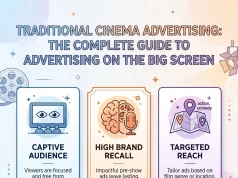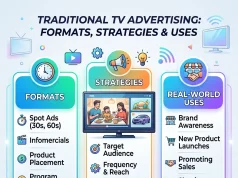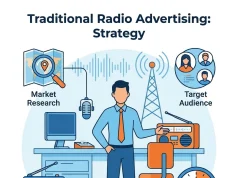
The traditional marketing awareness stage focuses on introducing a brand to a wide audience using offline channels like billboards, print media, and events. It builds visibility, recognition, and trust, forming the foundation for moving potential customers through the marketing funnel.
What is the Traditional Marketing Awareness Stage?
The traditional marketing awareness stage is the first and most important step in the marketing funnel, where businesses aim to introduce their brand, product, or service to a broad audience. At this stage, the primary goal is not immediate sales but visibility, recognition, and initial engagement.
In traditional marketing, this stage relies heavily on offline channels such as billboards, print media, radio, flyers, and local events to reach potential customers. These methods help businesses create a strong first impression and establish brand presence in the market.
Beyond simple exposure, this stage is about making your brand memorable. Since consumers are often exposed to many advertisements daily, the challenge is to stand out with clear messaging and consistent branding. A well-executed awareness strategy ensures that your audience not only sees your brand but also remembers it when a need arises.
Why the Awareness Stage Matters in Traditional Marketing
 The traditional marketing awareness stage lays the foundation for the entire customer journey. Without awareness, potential customers cannot move to the next stages like interest, consideration, or conversion.
This stage is essential because it:
- Introduces your brand to a new audience
- Builds familiarity and trust over time
- Expands reach within local or targeted markets
- Supports long-term brand recall
A strong awareness strategy ensures that your brand stays in the minds of consumers when they are ready to make a purchasing decision.
In addition, this stage helps create emotional and psychological connections with the audience. Repeated exposure through offline channels builds credibility and makes your brand feel more reliable and recognizable. Over time, this familiarity reduces hesitation and increases the likelihood that customers will choose your brand over competitors.
Moreover, the effectiveness of later funnel stages depends heavily on how well the awareness stage is executed. If the initial exposure is weak or inconsistent, it becomes much harder to generate interest or drive conversions. This is why investing in a strong and well-planned awareness strategy is critical for long-term marketing success.
Key Objectives of the Awareness Stage
The focus during the traditional marketing awareness stage is not on selling but on making people aware of your existence and value in a clear, simple, and memorable way. At this stage, businesses aim to build the first point of contact with potential customers and ensure that their brand enters the audience’s mind effectively.
A strong awareness stage is all about creating visibility in the right places, at the right time, and with the right message so that people start recognizing and remembering the brand over time.
Main objectives include:
- Increasing brand visibility
- Reaching a wider audience
- Creating curiosity and interest
- Establishing brand identity
- Positioning your business in the market
Achieving these objectives helps create a smooth transition into the next stages of the marketing funnel.
Extended Explanation of Objectives
Increasing brand visibility means ensuring that your brand is seen frequently across different traditional channels such as billboards, newspapers, radio ads, and community events. The more often people see your brand, the more familiar it becomes, which is a key factor in building trust.
Reaching a wider audience is important because traditional marketing often targets large, local, or regional populations. The goal is to maximize exposure so that even people who are not actively looking for your product become aware of it.
Creating curiosity and interest helps move the audience from passive awareness to active attention. When people start wondering about your brand or product, they are more likely to engage with future marketing messages.
Establishing brand identity ensures that your audience can recognize your brand instantly through consistent visuals, tone, and messaging. This consistency builds a strong and reliable image in the minds of consumers.
Positioning your business in the market is about defining where your brand stands compared to competitors. It helps customers understand what makes your business different and why they should remember it.
Overall Impact
When these objectives are achieved effectively, they create a strong foundation for the entire marketing funnel. A well-built awareness stage not only increases recognition but also makes the later stages—interest, consideration, and conversion—much more effective and easier to achieve.
Best Channels for Traditional Marketing Awareness Stage
 Traditional marketing uses a variety of offline channels to create awareness, and each channel plays a unique role in reaching audiences at scale, building familiarity, and strengthening brand recall. The effectiveness of each channel depends on the target audience, location, budget, and overall marketing goals.
At the awareness stage, the main focus of these channels is to maximize exposure and ensure that the brand message is seen or heard repeatedly by potential customers.
1. Billboard Advertising
Billboards are one of the most powerful tools in traditional marketing for building instant visibility and long-term brand recall. They are usually placed in high-traffic areas such as highways, city centers, bus stops, and commercial zones where thousands of people pass by daily.
Because billboards are large, visually engaging, and repeatedly seen, they help create strong subconscious brand recognition. Even a few seconds of exposure can leave a lasting impression if the design and message are simple, bold, and memorable. This makes billboard advertising especially effective for large-scale brand awareness campaigns.
2. Print Media
Print media includes newspapers, magazines, brochures, and newsletters, and it is highly effective for delivering more detailed and informative brand messages. Unlike quick visual ads, print media allows businesses to explain their offerings in a structured and trustworthy format.
Newspapers are ideal for reaching a broad and local audience, while magazines are more targeted and often focus on specific industries or interests. Brochures and flyers can be used for both general awareness and product-specific promotions. Print media also helps build credibility because it is often seen as more reliable and established compared to digital ads.
3. Radio Advertising
Radio advertising remains a strong traditional marketing channel, especially for local and regional audience targeting. It allows businesses to reach people during their daily routines such as commuting, working, or relaxing at home.
The strength of radio lies in repetition and audio branding. A well-crafted radio message, jingle, or slogan can significantly improve brand recall over time. Since listeners often hear ads multiple times, it helps reinforce the brand message and build familiarity without visual distraction.
4. Flyers and Leaflets
Flyers and leaflets are one of the most direct and cost-effective traditional marketing tools for creating awareness, especially for small and local businesses. They are typically distributed in public places, residential areas, events, or through door-to-door campaigns.
These printed materials are designed to quickly capture attention and communicate key information such as offers, services, or brand introductions. When well-designed, flyers can generate immediate interest and drive foot traffic to stores, events, or service locations.
5. Event Marketing
Event marketing involves sponsoring, hosting, or participating in local events, exhibitions, trade fairs, or community programs. This channel is highly effective for building personal connections with potential customers.
Unlike passive advertising, events allow face-to-face interaction, which helps build trust and emotional connection with the audience. People can experience the brand directly, ask questions, and engage with products or services in real time. This makes event marketing one of the strongest tools for creating meaningful brand awareness and long-term relationships.
Overall Impact of Awareness Channels
When used strategically together, these traditional marketing channels create a powerful awareness system that ensures maximum exposure across different touchpoints. Each channel supports the other by reinforcing the same brand message in multiple formats, helping businesses build strong recognition, trust, and recall in the early stage of the marketing funnel.
How to Build an Effective Awareness Strategy

Creating a successful traditional marketing awareness stage requires careful planning, audience understanding, and consistent execution across multiple offline channels. The goal is not just to show your brand once, but to build repeated exposure that leads to recognition, trust, and long-term recall.
A strong awareness strategy ensures that your brand is visible in the right places, delivers a clear message, and stays consistent across every touchpoint.
Identify Your Target Audience
The first and most important step is understanding exactly who you want to reach. Without a clear target audience, even the best marketing efforts can fail to deliver results.
You need to define your audience based on factors such as age, location, income level, interests, and buying behavior. For example, a local restaurant will focus on nearby residents, while a service-based business may target a specific city or region.
When you know your audience clearly, it becomes much easier to select the right traditional marketing channels such as local newspapers, radio stations, or community events. This ensures that your message reaches people who are actually interested in your product or service.
Focus on Clear Messaging
In the traditional marketing awareness stage, your message should be extremely simple, direct, and easy to understand within a few seconds. People often see billboards or hear radio ads briefly, so complex messaging does not work.
A strong awareness message usually includes:
- A clear brand name
- A simple value statement
- A memorable slogan or tagline
- A strong visual or emotional hook
The goal is not to explain everything about your business but to create curiosity and recognition. If people can remember your message after a short exposure, your awareness strategy is working effectively.
Use Consistent Branding
Consistency is one of the most important factors in building brand recognition. When your logo, colors, fonts, and tone remain the same across all traditional marketing channels, people begin to associate those elements with your business.
For example, if someone sees your billboard, then hears your radio ad, and later receives a flyer, the consistent branding helps them instantly recognize that all messages are from the same company.
Consistent branding builds trust over time and strengthens your brand identity in the minds of consumers, making it easier for them to remember you when they need your product or service.
Choose the Right Locations
Location plays a critical role in traditional marketing success. Even the best advertisement will fail if it is placed in the wrong area where your target audience is not present.
High-traffic locations such as busy roads, shopping centers, public transport hubs, and community gathering points are ideal for billboards and posters. Similarly, local newspapers and radio stations should be selected based on audience reach and relevance.
Choosing the right location ensures that your marketing message is seen repeatedly by the right people, increasing both visibility and effectiveness.
Repeat Your Message
Repetition is one of the core principles of traditional marketing. Unlike digital ads that can be targeted precisely, traditional marketing relies heavily on repeated exposure to build awareness.
When people see or hear your brand multiple times across different channels, it strengthens memory retention and increases familiarity. This repeated exposure helps your brand move from being “unknown” to “recognized” and eventually “trusted.”
Repetition can be achieved through:
- Continuous billboard placements
- Regular newspaper or magazine ads
- Frequent radio mentions
- Ongoing flyer distribution
- Consistent event participation
The more often people encounter your brand, the more likely they are to remember it when making a purchase decision.
Examples of Awareness Stage in Traditional Marketing
Real-world examples help clearly understand how the traditional marketing awareness stage works in practice and how businesses use offline channels to introduce their brand to the public effectively.
A new restaurant distributing flyers in nearby neighborhoods helps create immediate local awareness by directly reaching people who live or work close to the business location, increasing the chance of first-time visits and curiosity about the brand.
A brand placing billboards on busy roads focuses on mass visibility, where thousands of commuters see the advertisement daily, building repeated exposure that strengthens brand recall even without active engagement.
A company advertising on local radio stations uses audio messaging to reach people during their daily routines, such as commuting or working, which helps reinforce brand name recognition through repetition and storytelling.
A business sponsoring community events creates strong local presence and emotional connection by interacting directly with people, which increases trust and makes the brand feel more relatable and familiar.
These activities focus primarily on making people aware of the brand rather than pushing immediate sales, which is the core purpose of the awareness stage in traditional marketing.
Common Mistakes to Avoid
Many businesses fail at the awareness stage due to simple but critical mistakes that reduce the effectiveness of their traditional marketing efforts and waste valuable resources.
Focusing too much on selling instead of awareness can reduce impact because people at this stage are not ready to buy yet, and aggressive sales messaging often pushes them away instead of building interest.
Using unclear or complex messaging makes it difficult for audiences to quickly understand the brand, especially in formats like billboards or radio ads where attention time is very short.
Targeting the wrong audience leads to poor results because even strong marketing messages will fail if they are shown to people who have no interest or need for the product or service.
Inconsistent branding across channels weakens recognition, as customers may not connect different advertisements to the same business if visual identity and tone are not uniform.
Lack of repetition in campaigns reduces memory retention, because people need multiple exposures to remember a brand in traditional marketing environments.
Avoiding these mistakes significantly improves overall marketing effectiveness and helps build a stronger awareness foundation.
How to Measure Awareness Stage Performance
Although traditional marketing is offline, performance can still be measured using indirect indicators that reflect how well the brand is being recognized and remembered by the target audience.
An increase in brand recognition can be observed when more people become familiar with the brand name or can identify it without prompts.
Higher foot traffic in stores indicates that awareness campaigns are successfully driving people to visit physical locations after seeing advertisements.
Growth in inquiries or calls shows that potential customers are engaging with the business after being exposed to awareness-stage marketing efforts.
Customer feedback and surveys provide direct insights into how people heard about the brand and whether they remember its messaging.
Improved recall in local markets reflects stronger brand presence, meaning more people can remember the business when asked about products or services in that category.
Tracking these metrics consistently helps businesses refine their awareness strategy, improve channel selection, and strengthen overall performance in the traditional marketing funnel.
Role of Awareness Stage in the Marketing Funnel
 The traditional marketing awareness stage is the entry point of the funnel, where potential customers first come into contact with a brand. It is the foundation that supports every other stage in the customer journey, because without awareness, no further engagement or conversion can happen.
At this stage, businesses focus on visibility and recognition rather than direct selling. The goal is to ensure that the target audience becomes familiar with the brand through repeated exposure in offline channels such as billboards, print ads, radio, flyers, and events.
The awareness stage connects directly to the next stages of the funnel in a structured flow:
Awareness → Interest → Consideration → Conversion
Each step depends on the strength of the previous one. When awareness is strong, it naturally leads to curiosity, then evaluation, and finally purchase decisions. However, if awareness is weak or inconsistent, the entire funnel becomes less effective, as fewer people move forward into deeper engagement stages.
This stage also plays a long-term role in brand building. Even if customers do not act immediately, repeated exposure helps create familiarity, trust, and recall. When the need arises, they are more likely to remember and choose the brand they have seen multiple times.
Because of this, businesses must invest time, strategy, and resources into building a solid awareness foundation. A well-executed awareness stage not only improves funnel performance but also strengthens overall brand presence in the market over time.
FAQs:
1. What is the traditional marketing awareness stage?
The traditional marketing awareness stage is the first step of the marketing funnel where a business introduces its brand, product, or service to a wide audience using offline channels like TV, radio, print media, flyers, and billboards. In the traditional marketing awareness stage, the main goal is visibility and recognition rather than immediate sales.
2. Why is the traditional marketing awareness stage important?
The traditional marketing awareness stage is important because it builds the foundation for the entire customer journey. Without a strong awareness stage, potential customers cannot move to interest, consideration, or conversion stages. It helps create brand familiarity and long-term recall in the market.
3. What channels are used in the traditional marketing awareness stage?
Common channels in the traditional marketing awareness stage include billboards, newspapers, magazines, radio advertising, flyers, brochures, and community events. These offline channels help businesses reach a large audience and create repeated exposure.
4. Is the traditional marketing awareness stage focused on sales?
No, the traditional marketing awareness stage is not focused on direct sales. Instead, it focuses on introducing the brand and building recognition so that future marketing efforts can convert the audience into customers.
5. How does traditional marketing build awareness?
Traditional marketing builds awareness through repeated exposure across offline media. In the traditional marketing awareness stage, seeing or hearing a brand multiple times helps people remember it and increases familiarity over time.
6. How long does the traditional marketing awareness stage take to work?
The effectiveness of the traditional marketing awareness stage depends on campaign type, budget, and reach. Some awareness campaigns show results in weeks, while strong brand recognition may take months of consistent exposure.
7. What is the biggest challenge in the awareness stage?
The biggest challenge in the traditional marketing awareness stage is capturing attention in a highly competitive market. Since people are exposed to many ads daily, businesses must deliver simple, clear, and memorable messages.
8. Can small businesses use the awareness stage effectively?
Yes, small businesses can effectively use the traditional marketing awareness stage through local newspapers, flyers, radio ads, and community events to build strong local visibility even with a limited budget.
9. How is success measured in the awareness stage?
Success in the traditional marketing awareness stage is measured through brand recall, increased inquiries, higher foot traffic, customer surveys, and overall recognition in the target market.
10. What happens after the awareness stage?
After the traditional marketing awareness stage, customers move into the interest stage, where they begin learning more about the product or service, followed by consideration and eventually conversion.
Conclusion
The traditional marketing awareness stage is a critical part of building a successful marketing funnel. It helps businesses introduce their brand, reach new audiences, and create a strong and lasting first impression.
By using the right channels, clear messaging, and consistent branding, businesses can effectively capture attention in the traditional marketing awareness stage and prepare potential customers for the next steps of the journey. A strong awareness strategy not only increases visibility but also builds trust and long-term brand value.