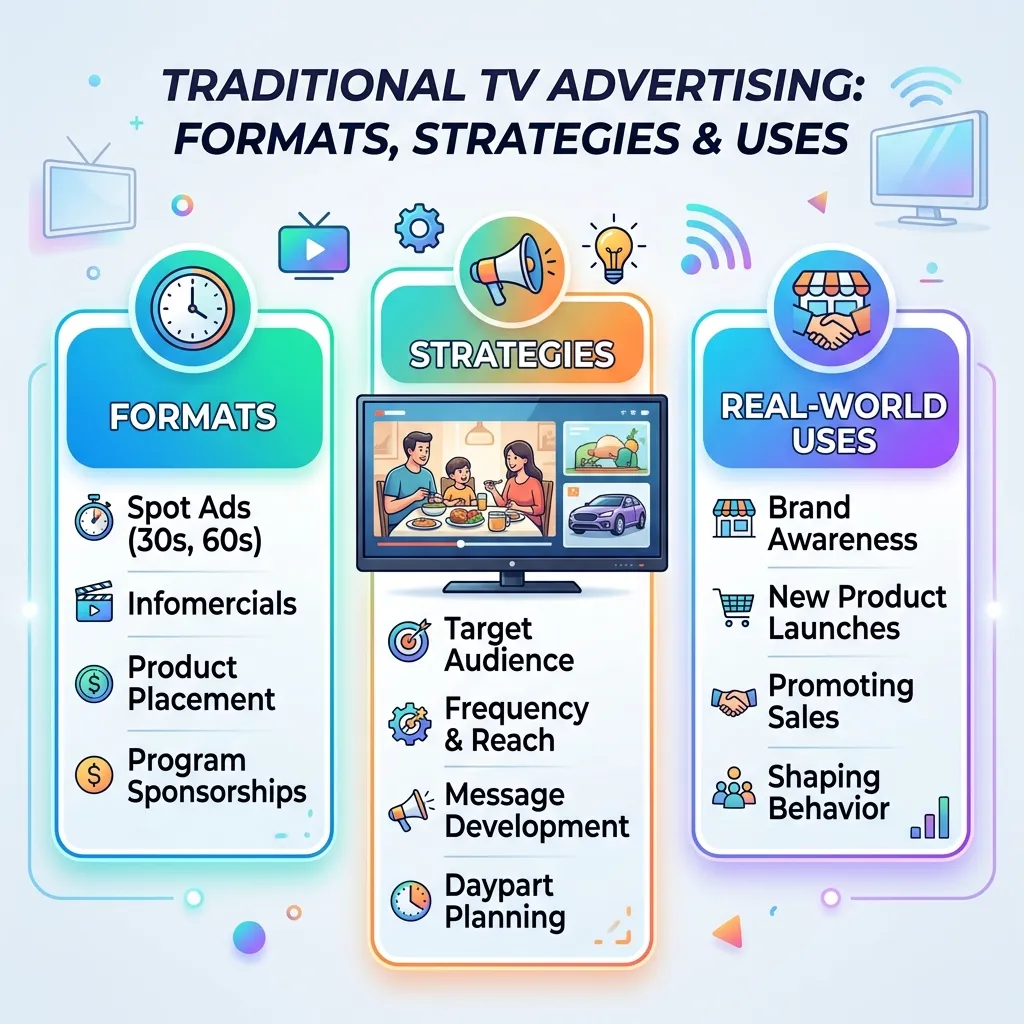
From product demonstrations to jingle-driven brand spots, traditional TV advertising examples show just how many different approaches have worked for decades to build trust, drive sales, and create lasting brand recognition. This guide walks through the most common traditional TV advertising examples, why each format works, and how businesses today can still apply these lessons.
Long before targeted ads and algorithmic feeds, television commercials were the primary way brands reached mass audiences — and many of the techniques developed decades ago still shape advertising today. Looking at traditional TV advertising examples isn’t just a history lesson; it’s a practical way to understand why certain creative approaches keep working, campaign after campaign, industry after industry.
In this guide, we’ll walk through the most common traditional TV advertising examples by format, explain the psychology behind each one, and show how these approaches continue to influence modern television campaigns. If you want a broader foundation first, our complete guide to traditional TV advertising covers the basics before diving into specific formats.
Why Traditional TV Advertising Examples Still Matter
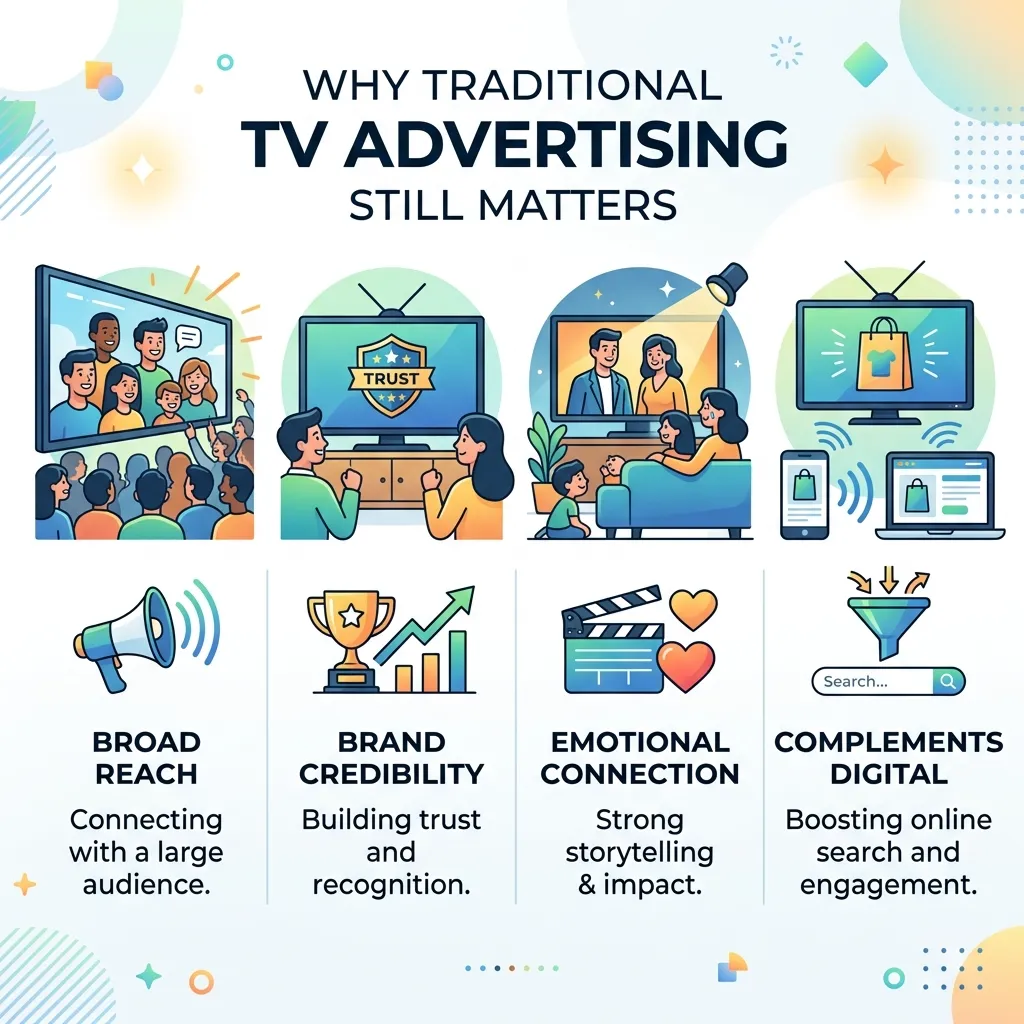
Some marketers assume older advertising formats are outdated, but the truth is more nuanced. Many traditional TV advertising examples succeeded because they tapped into consistent human psychology — trust, repetition, emotion, and clarity — principles that don’t change even as media consumption habits do. Understanding these traditional TV advertising examples gives modern marketers a proven playbook rather than requiring them to reinvent creative strategy from scratch.
Our article on why traditional advertising still works explores this staying power in more detail, and it’s a useful companion to the format-by-format breakdown below.
Testimonial-Based Advertising
One of the most enduring traditional TV advertising examples is the customer testimonial ad. These commercials feature real or actor-portrayed customers describing their positive experience with a product, often in an unscripted or conversational tone designed to feel authentic. Testimonial ads work because of social proof — viewers are more likely to trust a peer’s endorsement than a brand’s own claims about itself.
This format has been widely used across industries from cleaning products to insurance, and it remains one of the most cost-effective traditional TV advertising examples for small and mid-sized businesses that can’t afford elaborate production but can film genuine customer reactions.
Product Demonstration Ads
Another classic among traditional TV advertising examples is the product demonstration — showing exactly how a product works, often solving a relatable problem in real time. Infomercials built an entire business model around this format, using extended airtime to walk through a product’s features step by step, often including a “before and after” comparison to make the benefit undeniable.
This format succeeds because it removes doubt. Rather than simply claiming a product works, demonstration ads show it working, which is why kitchen gadgets, cleaning products, and fitness equipment have relied on this approach for decades.
Jingle-Driven Brand Recognition
Few traditional TV advertising examples are as instantly recognizable as the branded jingle. A short, catchy musical phrase tied to a logo or slogan creates what marketers call an “earworm” — a piece of audio that sticks in memory far longer than a spoken sentence would. Fast food chains, insurance companies, and retail brands have all used jingles to build recognition that outlasts any single ad campaign.
The psychological principle behind this format is repetition paired with emotion; music activates memory in a way plain narration often doesn’t, which is part of why so many jingle-based traditional TV advertising examples remain recognizable years after the campaigns themselves ended.
Celebrity Endorsement Advertising
Pairing a well-known face with a product is one of the most widely used traditional TV advertising examples across nearly every industry, from sports drinks to financial services. Celebrity endorsements borrow the trust, likability, and aspirational quality audiences already associate with the celebrity and transfer it to the product itself.
This format works best when there’s a believable connection between the celebrity and the product category — an athlete endorsing sports gear feels natural, while a mismatched pairing can undermine credibility instead of building it.
Humor-Based Commercials
Comedy has powered some of the most memorable traditional TV advertising examples in the industry’s history. Humor lowers viewers’ defenses, makes an ad more shareable around water coolers (and later, online), and creates a positive emotional association with the brand simply through the enjoyment of watching it. Beer brands, snack companies, and insurance providers have all leaned heavily into humor-driven campaigns.
The risk with this format is that humor can overshadow the actual product message if it isn’t tied carefully back to a clear benefit, which is why the most successful humor-based traditional TV advertising examples always circle back to a specific product or brand takeaway by the end of the spot.
Emotional Storytelling Ads
On the opposite end of the emotional spectrum, storytelling-driven traditional TV advertising examples rely on narrative arcs — a family reuniting, a personal triumph, a moment of relief after hardship — to create a deep emotional connection with the brand. These ads are especially common in insurance, automotive, and holiday-season campaigns, where the goal is less about immediate conversion and more about long-term brand affinity.
Our detailed breakdown of what makes a traditional advertising campaign explains how storytelling fits into broader campaign structure, since emotional ads often work best as part of a longer, multi-touchpoint strategy rather than a single standalone spot.
Problem-Solution Advertising
Among the most practical traditional TV advertising examples is the straightforward problem-solution format: present a relatable frustration, then introduce the product as the clear fix. Laundry stain removers, pain relief medication, and home repair products have used this structure for decades because it mirrors how people naturally think about purchases — I have a problem, and I need a solution.
This format’s simplicity is its strength. Unlike storytelling or humor-based ads, problem-solution commercials don’t require an emotional buildup; they get straight to a benefit that’s immediately understandable, even to a viewer who’s only half paying attention.
Comparison Advertising
Some of the boldest traditional TV advertising examples directly compare one brand against a competitor, highlighting specific advantages in price, performance, or features. This format requires confidence, since it invites direct scrutiny, but when done well it can quickly and effectively position a brand as the superior choice in a crowded category.
Telecom, automotive, and consumer electronics brands have used this format extensively, often through side-by-side demonstrations or blind taste and performance tests designed to make the comparison feel objective rather than purely promotional.
Seasonal and Holiday Advertising
Many of the most fondly remembered traditional TV advertising examples are tied to specific times of year — holiday-themed spots that lean into nostalgia, family togetherness, or gift-giving traditions. Retailers, beverage brands, and toy companies have long treated seasonal advertising as a distinct creative category, often producing their most emotionally resonant work specifically for these windows.
This format works because it aligns brand messaging with a moment when audiences are already primed for warmth and emotional receptivity, making seasonal traditional TV advertising examples some of the most consistently effective in terms of brand recall.
Direct Response Advertising
Direct response ads represent a more transactional category among traditional TV advertising examples, built around an immediate call to action — “call now,” “order today,” or a limited-time offer designed to prompt instant purchase. Unlike brand-building formats focused on long-term recognition, direct response ads are built for measurable, short-term conversion, often including a specific phone number or promo code to track performance.
This format remains common in categories like subscription services, as-seen-on-TV products, and local businesses that need a clear, trackable return on their advertising spend.
Local Business Advertising
Not every one of the traditional TV advertising examples worth studying comes from a national brand. Local business ads — car dealerships, law firms, and regional retailers — represent some of the most widely aired traditional TV advertising examples on local television, often relying on straightforward messaging, a memorable local phone number, and frequent repetition within a specific market rather than the polished production values of national campaigns.
Our guide on traditional local TV advertising covers how smaller businesses can apply these same lessons on a realistic local advertising budget.
What Modern Marketers Can Learn From These Formats

Studying traditional TV advertising examples isn’t just about nostalgia — it offers real strategic value for brands advertising today, including on newer platforms like connected TV and streaming. The core lessons remain consistent:
- Clarity beats cleverness when the goal is immediate understanding.
- Repetition builds recognition, whether through a jingle, a tagline, or a consistent visual style.
- Emotional connection outlasts feature lists in categories where trust matters more than specifications.
- Format should match the goal — direct response for immediate conversion, storytelling for long-term brand equity.
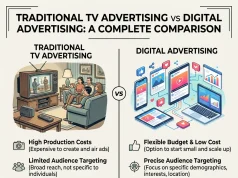
Comparing traditional TV advertising to digital advertising shows that while distribution has changed dramatically, the underlying creative principles behind these traditional TV advertising examples remain remarkably relevant.
How These Examples Apply Across Industries
Different industries tend to gravitate toward different traditional TV advertising examples based on their specific trust and purchase dynamics. Insurance and financial brands often rely on storytelling and testimonial formats, as covered in how financial companies master TV advertising, while fast-moving consumer goods lean more heavily on jingles and humor to build quick recognition. Understanding why TV advertising still matters across categories helps explain why no single format dominates — each serves a different strategic purpose depending on the product and audience.
It’s also worth noting how these approaches compare to modern digital-first strategies; our external resource on digital vs traditional marketing offers useful context on how the two approaches complement rather than replace one another in a well-rounded strategy.
Common Mistakes When Reviving Classic TV Ad Formats
Brands attempting to draw inspiration from traditional TV advertising examples sometimes run into avoidable issues:
- Copying the format without the underlying strategy, resulting in a jingle or testimonial ad that feels dated rather than timeless.
- Ignoring modern production quality expectations, since audiences today expect higher visual polish even in nostalgic formats.
- Overusing humor without a clear product tie-in, leaving viewers entertained but unable to recall what was actually being sold.
- Misjudging platform fit, since a format built for 30-second broadcast slots may need adjustment for connected TV or streaming placements.
Public Service and Political Advertising
Not all traditional TV advertising examples exist to sell a product — some of the most memorable spots in television history were built to change behavior or opinion rather than drive a purchase. Public service announcements addressing topics like road safety, health awareness, or environmental responsibility often rely on the same emotional storytelling and problem-solution structures used in commercial advertising, but with a civic rather than commercial goal.
Political advertising represents another distinct category among traditional TV advertising examples, typically falling into two broad types: positive ads that build a candidate’s image through personal stories and accomplishments, and contrast ads that directly compare a candidate against an opponent. Both formats borrow heavily from commercial advertising techniques — testimonials from supporters, direct-to-camera messaging, and repetition of a core message across a media buy designed to maximize reach within a specific voting population.
What makes these traditional TV advertising examples worth studying alongside commercial ones is that they demonstrate how the same core formats — testimonial, storytelling, comparison, direct response — apply just as effectively outside of traditional product marketing, reinforcing how universal these creative principles really are.
Traditional TV Advertising Examples in the Streaming and Connected TV Era
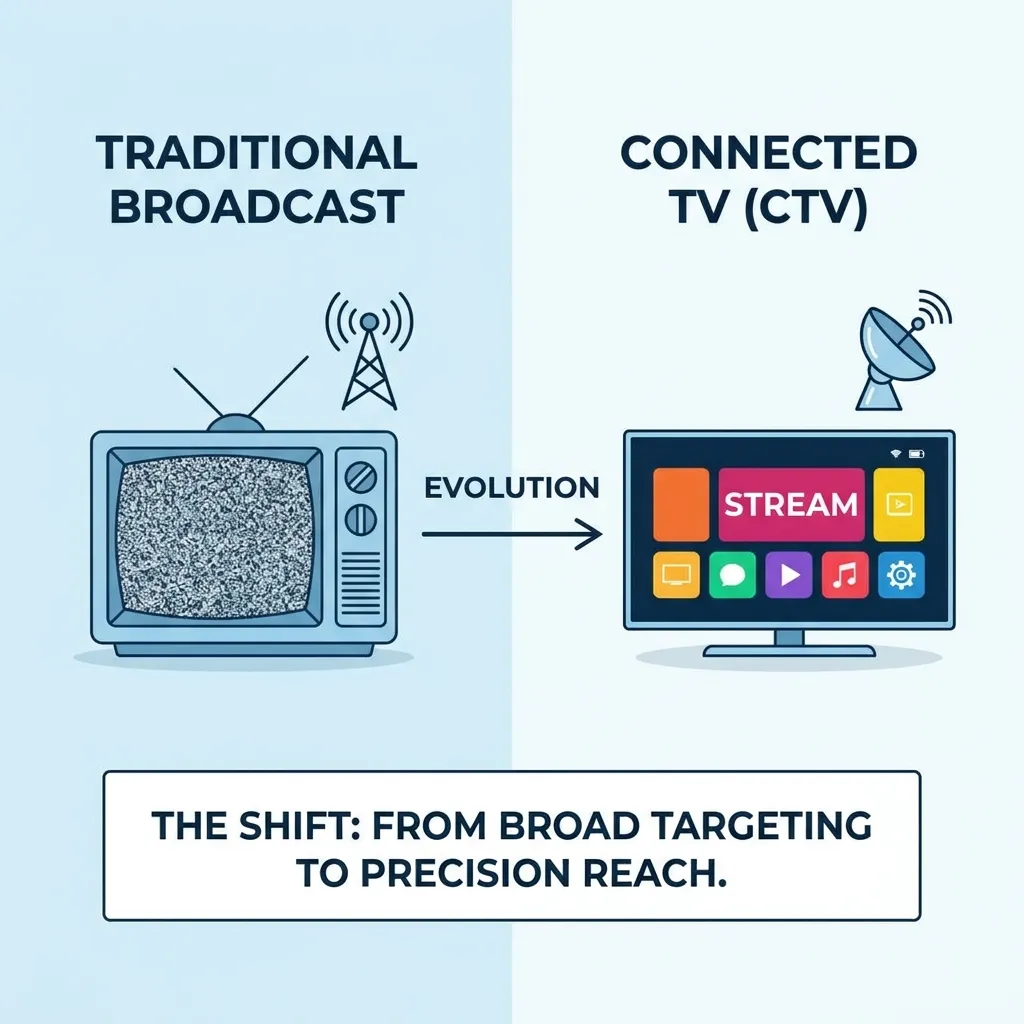
As viewing habits shift toward streaming platforms, many classic traditional TV advertising examples are being adapted rather than abandoned. Connected TV allows for many of the same formats — testimonials, product demonstrations, storytelling arcs — to be delivered with added precision, since streaming platforms often support better audience targeting than traditional broadcast buys ever could.
This evolution doesn’t replace the lessons found in older traditional TV advertising examples; it simply gives them a more efficient delivery mechanism. A well-structured testimonial ad or emotional storytelling spot performs just as effectively on a streaming platform as it did on broadcast television decades ago, provided the core creative principles are respected. Brands that treat connected TV purely as a technical upgrade — without adapting pacing or format slightly for a more personalized viewing context — often miss opportunities that a deeper understanding of these traditional TV advertising examples would otherwise reveal.
Conclusion
From testimonial ads and jingles to storytelling and direct response, traditional TV advertising examples offer a genuinely useful playbook for modern marketers — not because television hasn’t changed, but because human attention and trust still respond to the same fundamental creative principles. Whether a brand is building long-term recognition or driving immediate conversions, studying these traditional TV advertising examples provides a proven foundation to build smarter, more effective campaigns today.
Frequently Asked Questions (FAQs)
1. What are the most common traditional TV advertising examples?
Common formats include testimonial ads, product demonstrations, jingle-driven spots, celebrity endorsements, humor-based commercials, and direct response ads.
2. Why do jingles work so well in traditional TV advertising?
Jingles pair music with branding, which activates memory more effectively than spoken narration alone, helping brands stay recognizable for years.
3. Are testimonial ads still effective today?
Yes. Testimonial-style traditional TV advertising examples remain effective because they rely on social proof, which continues to influence purchasing decisions across any media format.
4. What’s the difference between brand-building and direct response TV ads?
Brand-building ads focus on long-term recognition and emotional connection, while direct response ads are designed for immediate, trackable action like a phone call or online order.
5. Why do insurance and financial brands often use storytelling ads?
Because these purchases depend heavily on trust, storytelling helps build emotional credibility that statistics or feature lists alone can’t achieve.
6. Can small businesses use the same formats as national brands?
Yes. Local business advertising is one of the most widely used traditional TV advertising examples, often relying on simple, repetitive messaging rather than high production budgets.
7. Why is humor a common approach in TV advertising?
Humor lowers viewer defenses and creates a positive association with the brand, making the ad more memorable and shareable.
8. What makes comparison advertising risky?
Comparison ads invite direct scrutiny from competitors and viewers alike, so they require strong, defensible claims to avoid damaging brand credibility.
9. Do seasonal ads perform better than year-round campaigns?
Not universally, but seasonal traditional TV advertising examples often achieve stronger emotional recall because they align with moments when audiences are already primed for nostalgia and warmth.
10. How has digital advertising changed the relevance of these traditional formats?
Distribution channels have expanded, but the core creative principles behind traditional TV advertising examples still apply directly to connected TV, streaming, and even digital video ads.
11. What’s the biggest mistake brands make when reviving old-style TV ad formats?
Copying the surface style of a classic format without the underlying strategic reasoning often results in ads that feel dated rather than genuinely effective.
12. Which traditional TV advertising format is best for a new business?
It depends on the goal — direct response formats work well for immediate leads and sales, while testimonial or storytelling formats work better for building longer-term brand trust.