
Digital products for entrepreneurs offer an accessible way to start an online business, share expertise, and generate revenue without managing physical inventory. From online courses and e-books to templates, software, and digital planners, these products can help business owners serve customers worldwide. With the right product idea, a clear target audience, and a practical marketing strategy, entrepreneurs can build a flexible business that grows over time.
Digital Products to Sell Online
Digital products to sell online include downloadable resources, educational materials, creative assets, and digital tools that customers can purchase and access through the internet. Unlike physical products, these items do not require warehousing, packaging, or shipping, making them attractive to entrepreneurs who want to reduce operational expenses.
Popular options include e-books, printable planners, website templates, stock photographs, graphic design assets, and online courses. For example, a freelance designer can sell social media templates, while a fitness coach can create workout guides and meal-planning resources. These digital products for entrepreneurs can be developed around existing skills, professional experience, or customer needs.
Choosing the right product begins with understanding your audience. Research common problems, explore competitor offerings, and identify gaps in the market. A product that solves a specific problem is generally easier to position and promote than a generic resource with no clear purpose.
Best Digital Products for Entrepreneurs
The best digital products for entrepreneurs combine customer demand, practical value, and manageable production costs. E-books work well for sharing specialized knowledge, while online courses allow experts to provide structured learning experiences. Templates and downloadable worksheets are useful for customers who want ready-made solutions instead of creating everything from scratch.
Business owners can also sell subscription-based resources, membership access, and premium digital communities. These models may provide recurring revenue when customers receive consistent value. However, subscriptions usually require ongoing updates, customer support, or fresh content.
Before choosing a product, consider your expertise, available time, and intended audience. A marketing consultant might create a campaign planning toolkit, whereas a small-business accountant could offer budgeting spreadsheets. Selecting a product that matches your strengths makes it easier to create reliable resources and build customer trust.
Profitable Digital Product Ideas
Profitable digital product ideas often emerge from everyday problems that people are willing to pay to solve. Entrepreneurs can create resume templates, business proposal documents, financial trackers, content calendars, productivity planners, or industry-specific checklists. Specialized resources can be especially valuable because they address the needs of a clearly defined audience.
For instance, a new business owner may need a startup budget spreadsheet, while an online seller might benefit from product description templates. These digital products for entrepreneurs can save time, reduce confusion, and help customers complete tasks more efficiently.
Profitability depends on more than the initial price. Production expenses, platform fees, advertising costs, customer support, and refund rates all affect earnings. Validate your idea by interviewing potential buyers, sharing a sample, or launching a minimum viable product before investing heavily in development.
Entrepreneurs researching additional opportunities can also explore profitable online business ideas to understand how digital products fit into the broader online business landscape.
Digital Products for Small Businesses
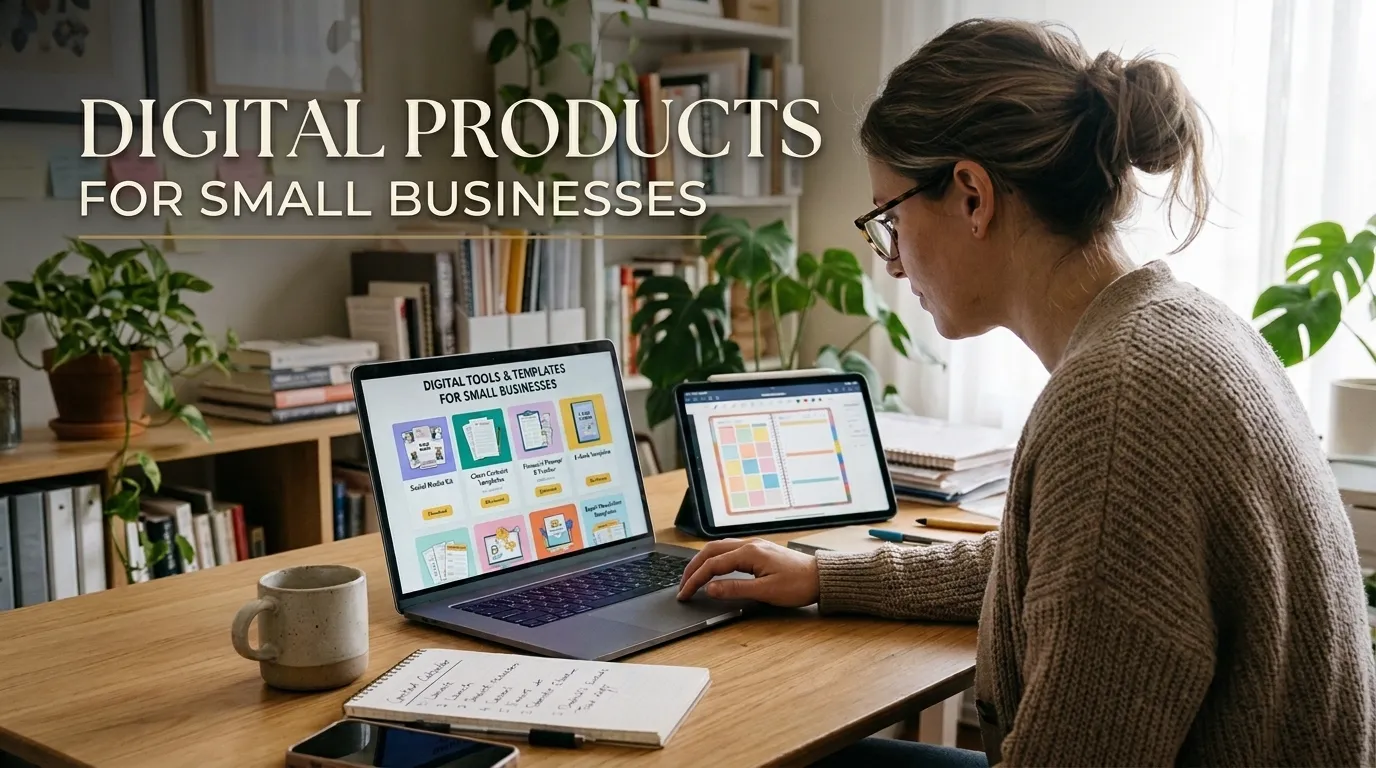 Digital products for small businesses can improve daily operations while creating new income opportunities. Business owners can develop invoice templates, employee onboarding documents, social media calendars, inventory spreadsheets, customer service scripts, and brand identity kits.
These resources are useful because small businesses often operate with limited budgets and staff. A well-designed template can help them organize tasks without hiring additional professionals. Entrepreneurs can package related resources into a comprehensive toolkit and offer different pricing levels according to customer needs.
Marketing is essential for reaching the right buyers. Businesses selling downloadable products should build an online presence, publish helpful content, and explain how their resources solve real problems. A practical online store marketing strategy can help attract relevant visitors, improve product visibility, and encourage more customers to complete purchases. The strongest digital products for entrepreneurs serving small businesses are easy to use, professionally presented, and regularly improved using customer feedback.
How to Create Digital Products
Creating digital products begins with identifying a specific audience and understanding its challenges. Research online communities, customer reviews, search queries, and competitor products to discover what people need. Then define a clear outcome your product will help customers achieve.
Next, select an appropriate format. An e-book may suit detailed instructions, a spreadsheet may be ideal for calculations, and a video course may work better for practical demonstrations. Create an initial version, test it with a small group, and improve the design, instructions, and usability before launching.
Choose a platform that supports your product format, payment processing, and automatic delivery. Make sure customers understand what they will receive, which file formats are included, and whether updates or support are available.
Once the product is ready, develop a marketing plan. A helpful social media marketing strategy guide can provide ideas for selecting channels, planning content, and building relationships with potential buyers. Successful digital products for entrepreneurs are not necessarily complicated. They are useful, clearly presented, and designed around a genuine customer need.
Online Business Ideas for Entrepreneurs
Online business ideas for entrepreneurs extend beyond selling individual downloads. You can build a digital education business, offer paid memberships, sell website themes, develop niche software, or combine digital products with consulting services.
For example, a career coach could sell interview preparation guides before offering premium coaching sessions. A web designer could sell website templates alongside customization services. This approach creates multiple ways to serve customers with different budgets and requirements.
Entrepreneurs should evaluate the demand, competition, startup costs, and long-term workload associated with each model. Some businesses depend on constant content creation, while others require regular technical maintenance or customer assistance.
A focused niche can make positioning easier. Instead of creating resources for everyone, consider serving a particular profession, industry, or customer group. This helps you communicate your value more clearly and develop digital products for entrepreneurs that address specific business challenges.
Passive Income Digital Products
 Passive income digital products can generate sales without requiring the seller to deliver each purchase manually. E-books, printable planners, downloadable templates, and recorded courses are common examples. Once created, these products can often be sold repeatedly through automated checkout and delivery systems.
However, passive income does not mean completely effortless income. Entrepreneurs still need to promote their products, answer customer questions, fix technical problems, update outdated information, and monitor performance. Advertising and platform expenses may also reduce profits.
To make the process more efficient, automate order confirmation, file delivery, customer onboarding, and routine email communication. Create clear instructions and a frequently asked questions section to reduce repetitive support requests.
Content marketing can help attract customers over time. Entrepreneurs may also benefit from understanding social media viral trends to discover timely content opportunities without relying entirely on unpredictable viral success. The long-term potential of digital products for entrepreneurs depends on product quality, customer satisfaction, and consistent marketing rather than automation alone.
Digital Product Business Ideas
Digital product business ideas can be tailored to different skills, budgets, and professional backgrounds. Writers can sell content templates and e-books, designers can offer illustrations and brand kits, and educators can develop online lessons. Technically skilled entrepreneurs might build niche applications, plugins, or digital tools.
Another option is creating bundles. A single template may offer limited value, but a complete business starter pack containing planning documents, marketing calendars, and financial trackers can provide a more comprehensive solution. Bundling can also help increase average order value when the combined resources genuinely complement one another.
Before launching, establish a recognizable brand, write clear product descriptions, and use realistic previews to demonstrate what customers receive. Set prices that reflect the value provided while remaining appropriate for your target market.
Entrepreneurs offering digital products for entrepreneurs should also review licensing requirements, copyright ownership, privacy obligations, and refund policies. Original work and transparent terms help protect the business and strengthen customer confidence.
Selling Digital Products Online
Selling digital products online requires a straightforward purchasing experience and a reliable way to deliver files. Entrepreneurs can use their own websites, digital marketplaces, or specialized e-commerce platforms. The right choice depends on budget, product type, customization needs, and the level of control desired.
A successful product page should explain the problem the product solves, its key features, included files, compatibility, and intended audience. Include helpful previews, clear pricing, and answers to common questions. Avoid exaggerated promises because trust plays an important role in repeat purchases.
Promotion should combine several relevant channels. Search engine optimization can attract people actively looking for solutions, while email marketing helps maintain relationships with interested prospects. Social media content can demonstrate product benefits and encourage potential customers to visit the store.
Businesses that need professional support with campaigns, positioning, or customer acquisition can explore a digital marketing company for additional insights into digital promotion.
Entrepreneurs can also evaluate the benefits of TV advertising when considering broader brand awareness campaigns, although television advertising may be less practical for businesses with limited budgets. Ultimately, digital products for entrepreneurs sell more effectively when the offer is relevant, the buying process is simple, and the marketing message clearly communicates value.
Digital Products for Startups
 Digital products for startups can help founders generate revenue, test market demand, and establish credibility without building a complex operation. Startup-focused products might include pitch deck templates, business plan worksheets, investor presentation guides, financial forecasting spreadsheets, and customer research toolkits.
Founders can also create educational resources based on their industry knowledge. A software startup, for example, might offer implementation guides, training materials, or specialized productivity tools. These products can introduce customers to the brand while providing value independently.
Startups should begin with a manageable budget and focus on validating demand before expanding their product range. Track website visits, conversion rates, customer feedback, refunds, and repeat purchases to identify what works. Use this information to improve existing products instead of launching new ones without a clear strategy.
As the business grows, founders can expand into bundles, premium resources, subscriptions, or complementary services. With thoughtful planning, digital products for entrepreneurs can become a practical component of a startup’s broader revenue strategy.
Conclusion
Digital products provide entrepreneurs with flexible opportunities to turn knowledge, creativity, and professional skills into valuable online resources. Whether you choose templates, courses, e-books, business tools, or startup resources, success begins with understanding your audience and delivering a useful solution. Start with one focused product, validate demand, and build a reliable marketing process. As you learn from customers and improve your offerings, you can expand your catalog and develop a sustainable online business.
FAQ
1. What are digital products for entrepreneurs?
Digital products for entrepreneurs are downloadable or online resources that help business owners solve problems, learn skills, or improve operations. Examples include e-books, templates, online courses, spreadsheets, software, and membership resources.
2. What digital products are easiest to sell online?
Templates, printable planners, checklists, e-books, and simple spreadsheets are often accessible starting points. Their suitability depends on audience demand, competition, product quality, and how effectively the product solves a problem.
3. Can I sell digital products without a website?
Yes. You can use established digital marketplaces and third-party selling platforms. A dedicated website becomes useful when you want greater control over branding, customer relationships, and marketing.
4. How much money do I need to start selling digital products?
Startup costs can be relatively low if you create products using tools you already have. However, software subscriptions, platform fees, design services, advertising, and payment processing may add expenses.
5. Are digital products profitable?
They can be profitable because one product can often be sold repeatedly without manufacturing a new physical item. Actual profitability depends on demand, pricing, production costs, marketing expenses, and customer satisfaction.
6. How do I choose the right digital product idea?
Identify your skills, research your target audience, and find a problem customers want to solve. Validate the idea through interviews, surveys, sample offers, or a small initial launch before investing significant resources.
7. How can I market digital products effectively?
Use search engine optimization, helpful blog content, email marketing, social media, partnerships, and targeted advertising where appropriate. Focus on explaining the product’s benefits and reaching people who genuinely need it.
8. Can digital products generate passive income?
Yes, they can generate recurring sales with automated payment and delivery systems. However, ongoing promotion, updates, customer service, and business management are usually still necessary.
9. Do I need technical skills to create digital products?
No. Many products can be created with document editors, spreadsheet software, presentation tools, or beginner-friendly design platforms. More advanced products, such as software, may require technical expertise or professional assistance.
10. How can I scale a digital product business?
Improve your best-selling products, build an email list, automate repetitive tasks, test marketing channels, and introduce relevant bundles or premium offers. Use sales data and customer feedback to guide future decisions.