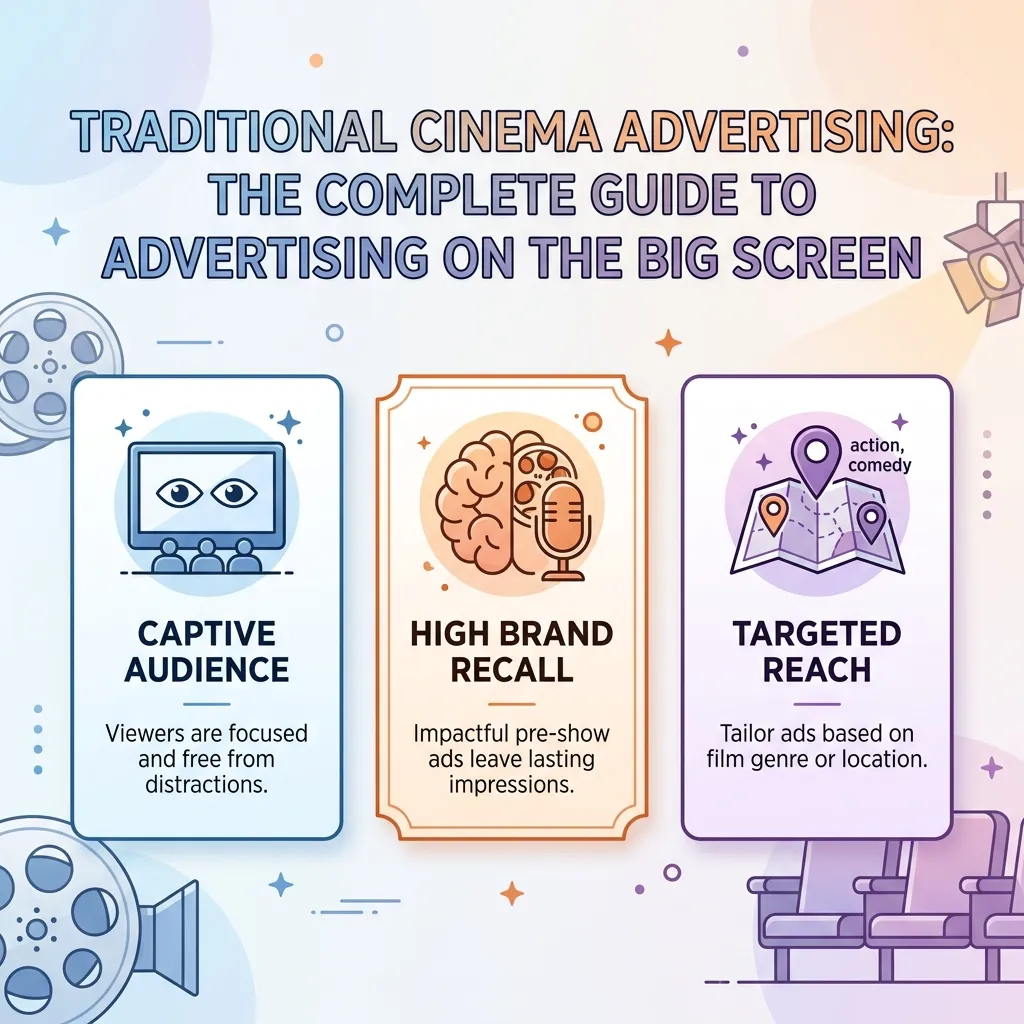
Traditional cinema advertising — the ads shown before a movie starts — remains one of the most underrated tools in a marketer’s toolkit. Unlike TV or social media ads that fight for attention among endless distractions, cinema advertising puts your brand in front of a captive, undistracted audience sitting in a darkened theater with nowhere else to look. This guide covers what cinema advertising actually involves, why it still works in a digital-first world, the different ad formats available, how it compares to TV advertising, what it costs, and how to plan a campaign that actually gets results.
Long before streaming, social feeds, and skippable pre-roll ads, cinema advertising had already mastered one thing every other channel struggles with: undivided attention. When the lights dim and the trailers roll, viewers aren’t scrolling their phones or reaching for the remote — they’re locked in. That single fact is why traditional cinema advertising has quietly remained a powerful, high-recall channel even as digital advertising has exploded.
This guide breaks down everything you need to know about traditional cinema advertising, from the different ad formats theaters offer to how it stacks up against traditional TV advertising. If you’re weighing offline advertising options for an upcoming campaign, understanding cinema advertising’s unique strengths can help you decide where it fits in your overall marketing mix.
What Is Cinema Advertising?
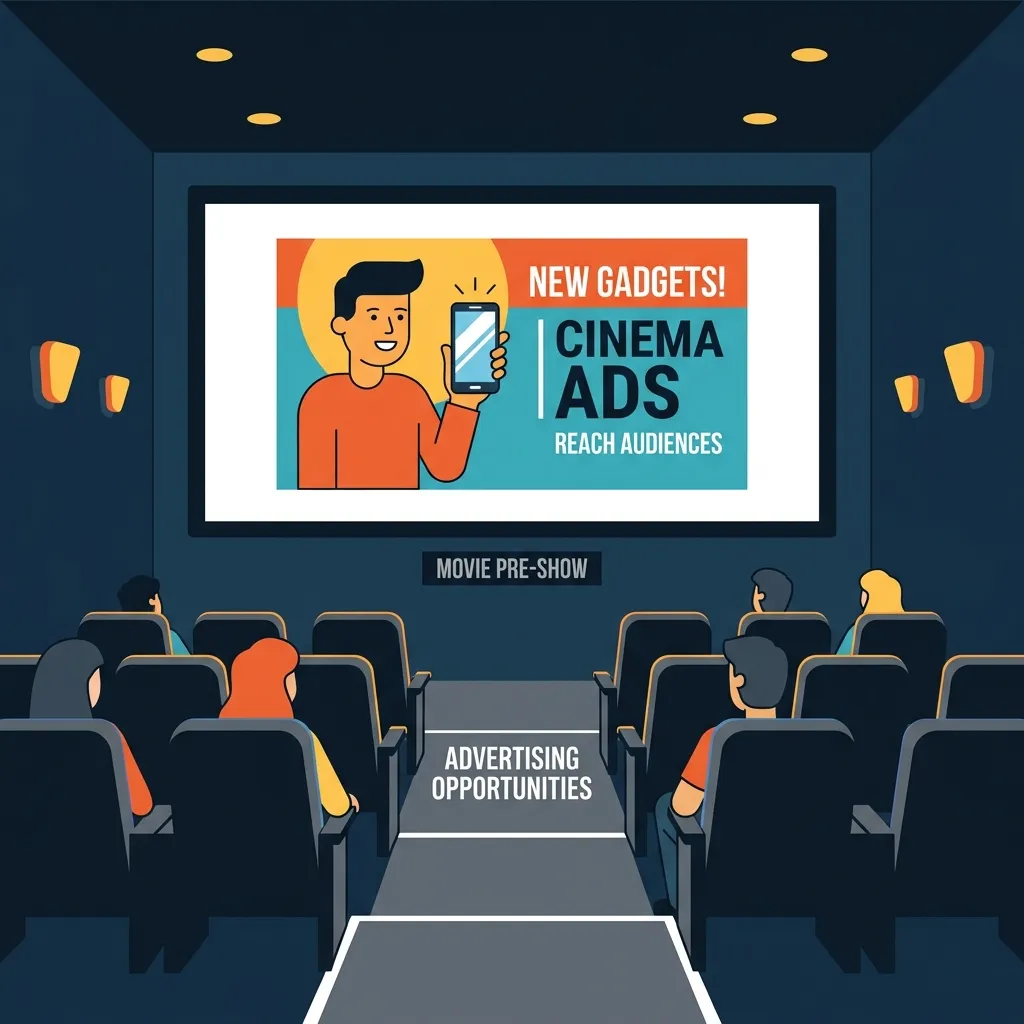
Cinema advertising refers to promotional content shown to audiences inside a movie theater — typically before the film begins, but also through in-lobby displays, on-screen slides, and branded physical placements throughout the venue. It sits firmly within the world of traditional, offline advertising, alongside channels like local TV advertising and outdoor billboards, but it comes with a few characteristics that make it genuinely unique.
Unlike most other traditional formats, cinema advertising offers near-total audience attention. There’s no channel-flipping, no ad-blocker, and no second screen competing for attention — just a large, high-quality screen and a room full of people who came specifically to watch content.
Why Cinema Advertising Still Works
It’s easy to assume that any offline advertising format is losing relevance in a digital-first world, but cinema advertising has a few structural advantages that keep it effective:
- A truly captive audience. Moviegoers can’t skip the ad, mute it, or scroll past it the way they can on YouTube or social media.
- High production value environment. A well-made ad looks and sounds dramatically better on a cinema screen with premium sound systems than it ever could on a phone.
- Strong emotional context. People go to the cinema to be entertained, which puts them in a relaxed, receptive mindset — ideal conditions for brand recall.
- Local and regional targeting. Theaters allow brands to target specific geographic markets by choosing which cinemas and showtimes to advertise in.
- Complements digital campaigns. Cinema advertising works well as part of a broader mix rather than a replacement for digital channels. This comparison of digital vs. traditional marketing benefits explains how the two approaches often perform best when combined rather than treated as competitors.
Types of Traditional Cinema Advertising
1. On-Screen Video Ads
The most recognizable format — a 15 to 60 second commercial played before the trailers or the main feature. These ads benefit enormously from the theater’s premium screen size and sound quality.
2. Pre-Show Static Slides
Simple branded slides shown on the screen before the video ads begin, often used by smaller local businesses due to their lower production cost.
3. Lobby and Standee Advertising
Physical branded displays, posters, or standees placed in the theater lobby, concession area, or entrance — capturing attention before and after the film.
4. Branded Concession Items
Popcorn bags, cup sleeves, and napkins branded with a sponsor’s logo are a subtle but effective way to keep a brand visible throughout the entire cinema visit.
5. Sponsored Experiences
Larger brands sometimes sponsor entire screening events, exclusive previews, or loyalty program tie-ins with the cinema chain itself, creating a deeper association between the brand and the movie-going experience.
Cinema Advertising vs. TV Advertising
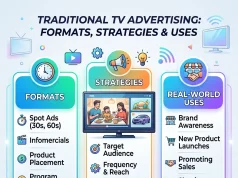
Cinema and TV advertising are often grouped together as “traditional” media, but they behave very differently in practice. TV advertising reaches a much larger audience at once and allows for more frequent repetition, which is covered in detail in this guide to traditional TV advertising. Cinema advertising, on the other hand, trades reach for attention quality — a smaller audience, but one that is far less likely to be distracted or multitasking during the ad.
Cost structures also differ significantly. TV ad costs vary based on time slot and channel reach, as explained in this breakdown of traditional TV advertising costs, while cinema advertising pricing depends more on the number of screens, showtimes, and geographic markets selected. Brands with a strong local or regional focus often find cinema advertising more cost-efficient than national TV buys.
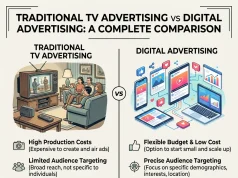
If you’re also considering how traditional formats stack up against fully digital alternatives, this comparison of TV advertising vs. digital advertising offers a useful framework that applies almost equally well to cinema advertising.
How to Plan a Cinema Advertising Campaign

Step 1: Define Your Objective
Are you building broad brand awareness, promoting a local event, or targeting a specific demographic that overlaps heavily with moviegoers, such as young adults or families? Your objective will shape everything from creative length to which theaters you choose.
Step 2: Choose the Right Theaters and Showtimes
Cinema advertising allows for precise targeting by location, theater chain, and even the genre of film being shown. A family-friendly product might perform best paired with animated or family films, while a lifestyle brand might target evening showtimes for action or drama releases.
Step 3: Create Cinema-Optimized Content
Don’t simply repurpose a TV or social media ad. Cinema ads benefit from widescreen visuals, cinematic pacing, and high-quality audio designed specifically for a theater’s sound system. Reviewing broader advertising methods and strategies can help ensure your creative approach fits the format rather than feeling like a repurposed digital ad.
Step 4: Decide on Frequency and Duration
Cinema ad slots are typically sold in blocks tied to specific release windows. Decide whether you want a short burst tied to a single major release or a sustained presence across multiple weeks and films.
Step 5: Coordinate With Your Broader Campaign
Cinema advertising performs best as part of an integrated push rather than a standalone effort. If you’re also promoting a new product launch, this guide to using traditional media for a product launch shows how cinema can fit alongside other offline channels for maximum impact.
Step 6: Measure Results
While cinema advertising is harder to track than digital channels, brands can still measure impact through unique promo codes, dedicated landing pages, post-campaign brand recall surveys, and regional sales lift comparisons between markets where the campaign ran and those where it didn’t.
The Cost of Cinema Advertising
Cinema advertising costs vary widely based on several factors:
- Number of screens and theaters included in the buy.
- Geographic market size — advertising in a major metro cinema chain costs more than a regional or independent theater.
- Ad length and production quality — a professionally produced 30-second spot costs more to create than a static slide.
- Duration of the campaign — a single-week run tied to a blockbuster release differs significantly in cost from a multi-month regional presence.
For small and mid-sized businesses, cinema advertising can be surprisingly accessible, especially through local and regional theater chains that offer lower-cost slide and short-video ad packages compared to national TV buys.
Cinema Advertising Within a Broader Marketing Mix
Cinema advertising rarely works best in isolation. Pairing it with complementary channels amplifies its impact:
- Creative campaigns across channels reinforce the same message moviegoers just saw on screen. This list of creative marketing strategies offers ideas for extending a cinema campaign’s creative concept across other touchpoints.
- Digital retargeting can follow up with audiences who scan a QR code or visit a promoted landing page after seeing a cinema ad, often supported by a PPC advertising campaign running in parallel.
- Local sponsorships and events near the theater can extend the brand experience beyond the screen itself.
Common Mistakes in Cinema Advertising
- Treating it as a set-and-forget channel. Like any advertising format, cinema ads need creative refreshes and periodic performance reviews.
- Using generic, repurposed creative. Ads that don’t take advantage of the big screen and premium sound feel out of place and underperform.
- Ignoring targeting options. Failing to match theater location, showtime, and film genre to the target audience wastes much of cinema advertising’s core advantage.
- Not integrating with other channels. Standalone cinema campaigns generally underperform compared to ones tied into a broader, integrated marketing strategy.
- Overlooking measurement. Skipping promo codes, dedicated landing pages, or recall surveys makes it impossible to prove ROI to stakeholders.
Understanding the Cinema Audience
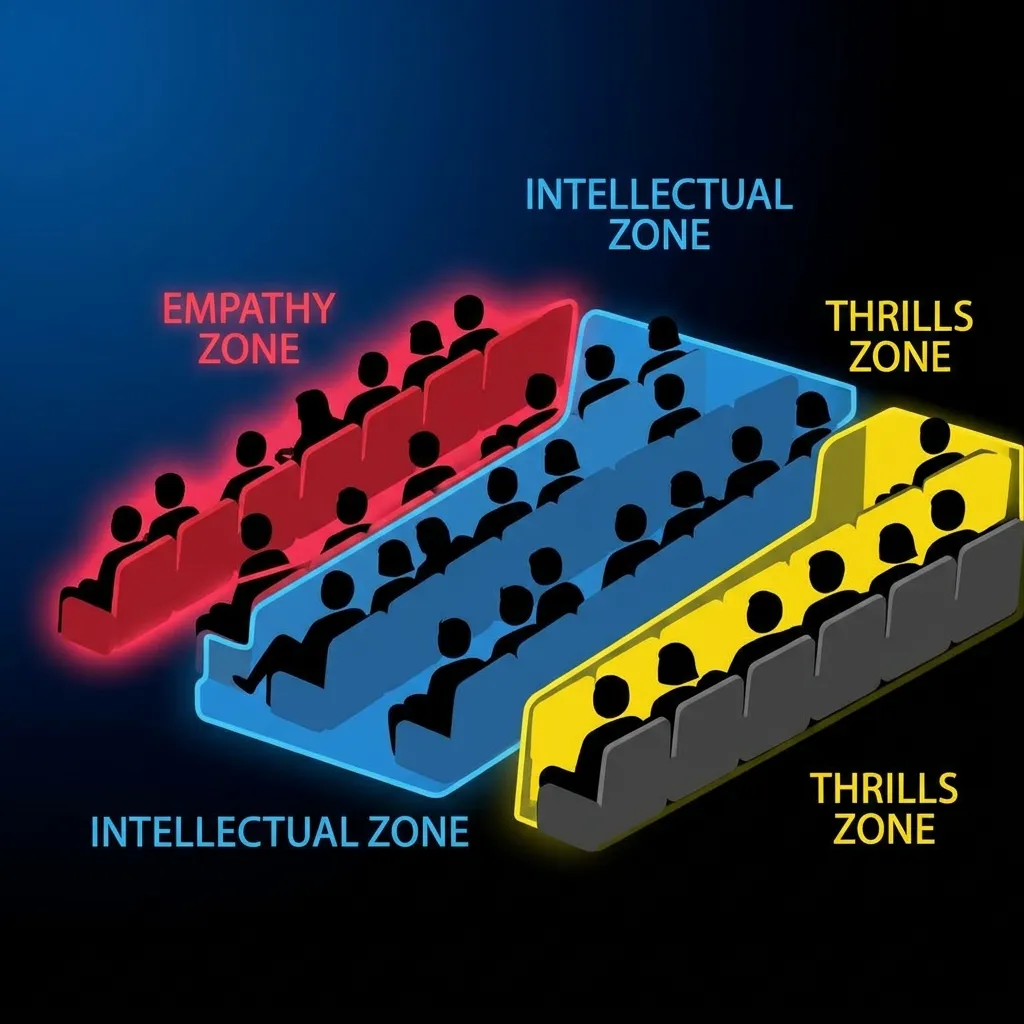
One reason cinema advertising performs so consistently is the predictability of its audience. Moviegoers tend to skew toward specific age groups and viewing habits depending on the film genre, showtime, and day of the week. Weekend evening slots for major blockbusters typically draw younger, mixed-gender audiences, while weekday matinees and family-film screenings attract parents with young children. Understanding these patterns allows advertisers to match their message to the right crowd far more precisely than a broad TV buy would allow.
This audience predictability also makes cinema advertising a strong complement to broader traditional strategies. Brands running seasonal campaigns, for example, can align cinema slots with family films during school holidays or pair evening action-film screenings with product launches aimed at a younger demographic. The result is a level of contextual targeting that few other offline formats can offer as naturally.
A Simple Example
A regional furniture retailer wanted to build awareness ahead of a seasonal sale. Instead of relying solely on local TV spots, they ran a 20-second cinema ad in family-oriented theaters during weekend matinee showtimes, paired with a QR code offering an exclusive in-store discount. The combination of a captive, relaxed audience and an easy digital call-to-action gave the campaign a much stronger recall and redemption rate than their previous TV-only push, at a fraction of the cost of a national television buy.
Conclusion
Traditional cinema advertising has quietly remained one of the most effective ways to earn genuine, undivided attention from an audience — something increasingly rare in a world of skippable ads and constant digital distraction. It won’t replace the reach of TV or the precision targeting of digital platforms, but as part of a well-planned, integrated campaign, cinema advertising delivers a level of impact and brand recall that few other channels can match. Define a clear objective, choose your theaters and showtimes strategically, invest in creative built specifically for the big screen, and pair the campaign with complementary digital and local efforts to get the most out of every screening.
Frequently Asked Questions (FAQs)
1. What is traditional cinema advertising?
It’s promotional content shown inside movie theaters, typically before a film begins, including video ads, static slides, lobby displays, and branded concession items.
2. Is cinema advertising still effective in 2026?
Yes. Its captive-audience format gives it strong brand recall rates that are difficult to replicate on digital platforms where ads can be skipped or ignored.
3. How much does cinema advertising cost?
Costs vary based on the number of screens, theater chain, geographic market, and ad format, but regional and local theater packages are often more affordable than national TV advertising.
4. How is cinema advertising different from TV advertising?
TV advertising reaches a larger audience with more repetition, while cinema advertising offers a smaller but far more attentive, distraction-free audience.
5. What length should a cinema ad be?
Most cinema ads run between 15 and 60 seconds, though the ideal length depends on the campaign objective and available budget.
6. Can small businesses afford cinema advertising?
Yes. Many local and regional theater chains offer lower-cost slide and short-video ad packages designed specifically for small business budgets.
7. How do you measure the success of a cinema ad campaign?
Common methods include unique promo codes, dedicated landing pages or QR codes, post-campaign brand recall surveys, and comparing sales performance across markets where the campaign ran.
8. What type of businesses benefit most from cinema advertising?
Local retailers, restaurants, entertainment brands, and consumer products with broad appeal tend to perform particularly well, especially when targeting family or event-based films.
9. Should cinema ads use the same creative as TV commercials?
It’s better to adapt or create dedicated creative that takes advantage of the cinema’s larger screen and higher-quality sound rather than simply reusing a TV spot.
10. Can cinema advertising be targeted geographically?
Yes, brands can select specific theaters, chains, and regions, making it a strong option for local or regional campaigns.
11. Does cinema advertising work well alongside digital campaigns?
Very well. Many brands pair cinema ads with QR codes or promo codes tied to digital landing pages and retargeting campaigns to bridge the offline and online experience.
12. What’s the biggest advantage of cinema advertising over other traditional formats?
Its captive audience. Unlike TV, radio, or outdoor ads, viewers in a theater have no easy way to skip, mute, or ignore the advertisement.
To see how cinema advertising fits into a wider offline strategy, explore our guide on why traditional advertising still works, or compare it directly with traditional TV advertising.