Most businesses jump straight into digital tactics without laying the proper groundwork. They launch social media campaigns, start email marketing, and invest in Google Ads—all without a clear strategic foundation. While digital marketing offers incredible opportunities, skipping the fundamentals of a traditional marketing plan often leads to scattered efforts, wasted budgets, and missed opportunities.
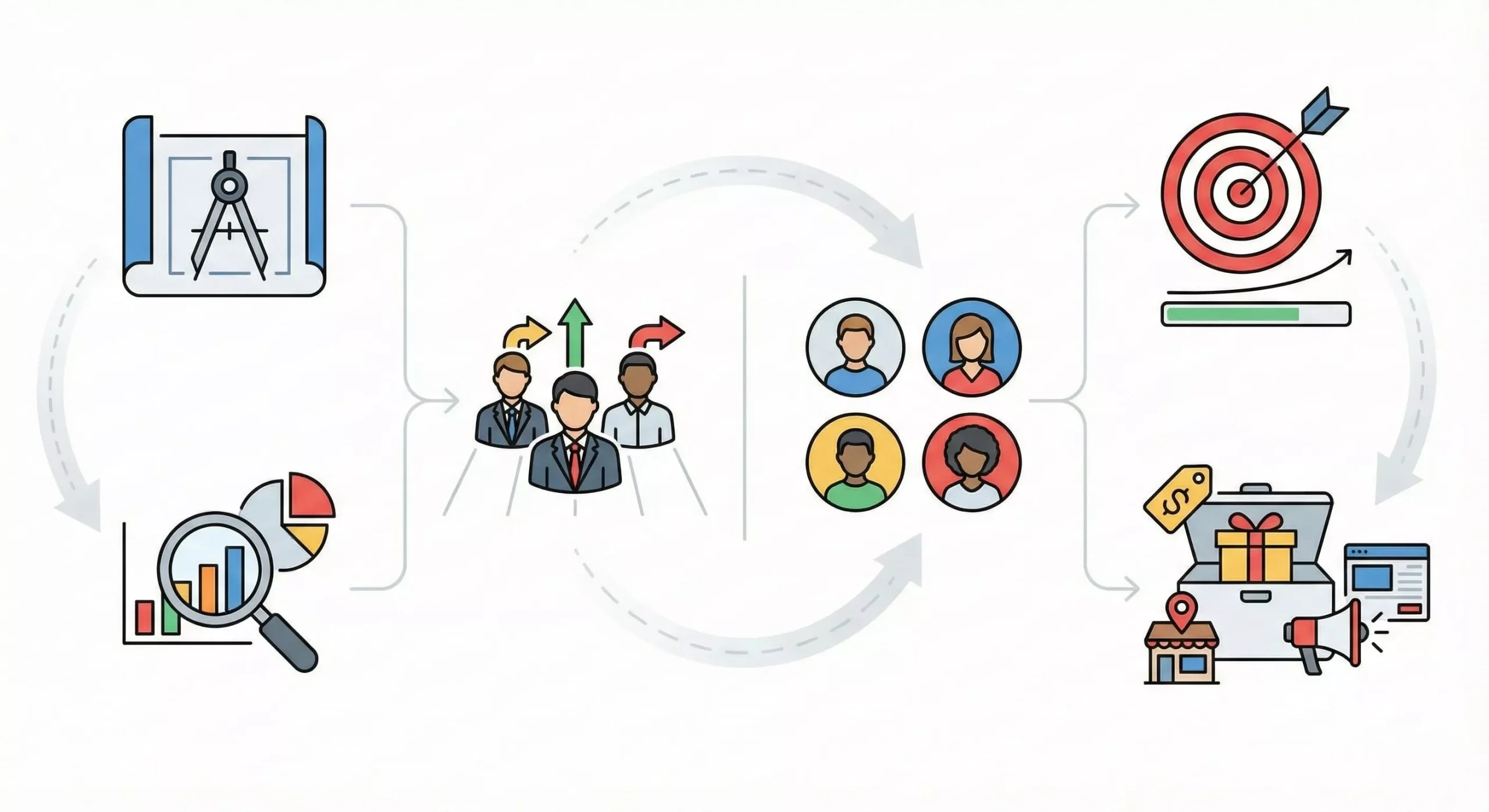
A traditional marketing plan serves as your business’s strategic blueprint. It defines your target audience, establishes clear objectives, outlines your competitive position, and creates a roadmap for all marketing activities. Whether you’re running Instagram ads or hosting networking events, every tactic should connect back to this core strategy.
This comprehensive guide will walk you through creating a traditional marketing plan that provides structure and direction for all your marketing efforts. You’ll learn the essential components, discover how to research your market effectively, and understand how to integrate traditional planning with modern marketing channels.
Understanding the Traditional Marketing Plan Framework
A traditional marketing plan follows a systematic approach that has guided successful businesses for decades. This framework ensures you make strategic decisions based on research and clear objectives rather than gut feelings or industry trends.
The traditional approach emphasizes thorough market research, competitor analysis, and customer understanding before selecting specific tactics. This foundation prevents common mistakes like targeting the wrong audience, choosing ineffective channels, or spreading resources too thin across multiple initiatives.
Unlike tactical marketing approaches that focus on individual campaigns, traditional marketing plans create long-term strategic direction. They establish consistent messaging, brand positioning, and customer experience across all touchpoints—whether that’s a print advertisement, sales conversation, or social media post.
Essential Components of a Traditional Marketing Plan
Executive Summary
Your executive summary provides a high-level overview of your entire marketing strategy. This section should clearly state your business objectives, target market, competitive advantages, and key marketing goals. Keep this concise but comprehensive—many stakeholders will read only this section.
Include your marketing budget allocation, expected return on investment, and timeline for major initiatives. This summary helps align your team and provides a quick reference for decision-making throughout the year.
Market Analysis
Thorough market analysis forms the foundation of effective marketing planning. Research your industry size, growth trends, and key drivers that influence customer behavior. Understanding market dynamics helps you identify opportunities and anticipate challenges.
Analyze customer demographics, psychographics, and buying patterns within your market. Look for market segments that are underserved or experiencing rapid growth. This research reveals gaps your business can fill and helps prioritize marketing investments.
Study economic factors, regulatory changes, and technological developments that could impact your market. External factors often create new opportunities or require strategic adjustments to your marketing approach.
Competitive Analysis
Identify your direct and indirect competitors, then analyze their marketing strategies, positioning, and performance. Direct competitors offer similar products to the same target audience, while indirect competitors solve the same customer problem through different approaches.
Evaluate competitor pricing strategies, distribution channels, promotional tactics, and brand messaging. Look for patterns in their marketing activities and identify gaps in their approach that represent opportunities for your business.
Document competitor strengths and weaknesses to inform your positioning strategy. Understanding what competitors do well helps you avoid head-to-head battles in areas where they have clear advantages.
Target Audience Definition
Create detailed profiles of your ideal customers, including demographic information, behavioral patterns, pain points, and motivations. Go beyond basic demographics to understand what drives purchasing decisions and how customers prefer to receive information.
Develop multiple customer personas if you serve different audience segments. Each persona should include specific details about their challenges, goals, media consumption habits, and decision-making process.
Research where your target audience spends time, both online and offline. Understanding their daily routines, preferred communication channels, and trusted information sources guides your channel selection and messaging strategy.
Marketing Objectives and Goals
Establish specific, measurable marketing objectives that align with your business goals. Effective marketing objectives follow the SMART framework—specific, measurable, achievable, relevant, and time-bound.
Set both quantitative goals (revenue targets, lead generation numbers, market share growth) and qualitative objectives (brand awareness, customer satisfaction, market positioning). Balance ambitious targets with realistic expectations based on your resources and market conditions.
Create short-term milestones that track progress toward longer-term objectives. Regular measurement against these benchmarks helps you adjust tactics and maintain momentum throughout the planning period.
Marketing Mix Strategy
Define your approach to the four fundamental marketing elements: product, price, place, and promotion. This framework ensures you consider all aspects of your marketing strategy and how they work together.
Your product strategy includes core offerings, features, benefits, and differentiation points. Price strategy covers pricing models, competitive positioning, and value communication. Place encompasses distribution channels and customer accessibility.
Promotion strategy outlines how you’ll communicate with target audiences through advertising, public relations, personal selling, and digital marketing. Include both traditional and emerging channels to ensure a well-rounded mix. For example, podcast advertising is becoming a powerful medium for reaching niche audiences with highly targeted messaging. It blends storytelling with authenticity and can complement broader campaigns by engaging listeners in a more intimate format.
Conducting Effective Market Research
Primary Research Methods
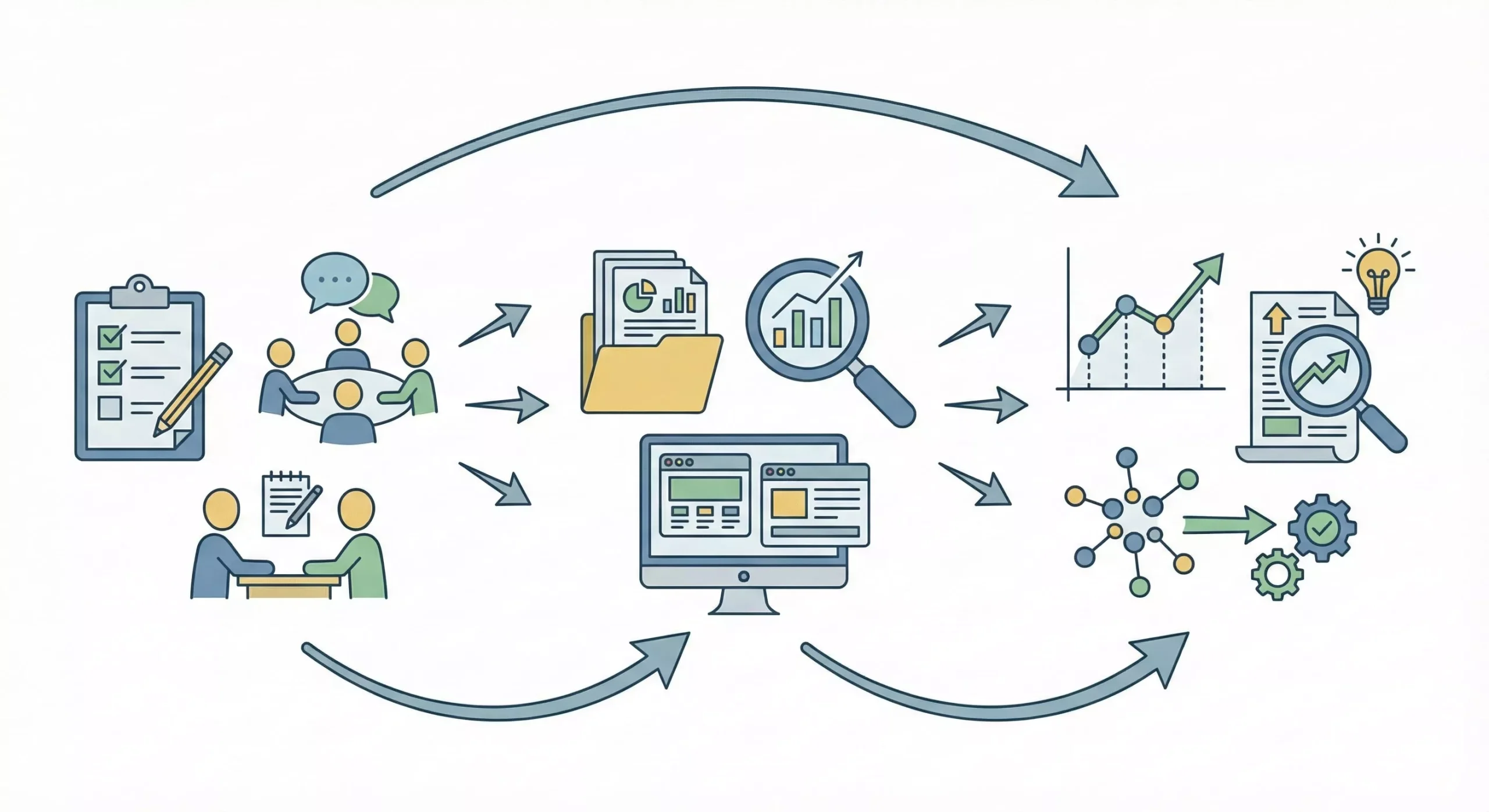
Primary research gathers original data directly from your target market. Conduct surveys to collect quantitative data about customer preferences, buying behavior, and satisfaction levels. Design questions that provide actionable insights rather than general opinions.
Organize focus groups to explore customer motivations, concerns, and decision-making processes in depth. These qualitative insights reveal the reasoning behind customer behavior and uncover opportunities that surveys might miss.
Schedule one-on-one interviews with current customers, prospects, and industry experts. Personal conversations often reveal nuanced insights about market trends, competitive positioning, and customer needs that broader research methods don’t capture.
Secondary Research Sources
Leverage existing industry reports, market studies, and government data to understand broader market trends and opportunities. Trade associations, research firms, and government agencies publish valuable data about market size, growth projections, and demographic trends.
Analyze competitor websites, marketing materials, press releases, and financial reports to understand their strategies and performance. Social media monitoring tools reveal competitor engagement levels, customer feedback, and promotional activities.
Review academic research, case studies, and expert analysis related to your industry. These sources provide deeper insights into market dynamics, consumer behavior, and successful marketing approaches in your sector.
Data Analysis and Insights
Organize research data to identify patterns, trends, and actionable insights. Look for connections between different data points that reveal customer motivations, market opportunities, or competitive vulnerabilities.
Validate findings across multiple research sources to ensure accuracy and relevance. Cross-reference primary research results with secondary data to build confidence in your conclusions.
Document key insights and their implications for your marketing strategy. Transform raw data into strategic recommendations that guide decision-making throughout the planning process.
Creating Your Marketing Budget and Timeline
Budget Allocation Strategy
Allocate your marketing budget based on strategic priorities, expected return on investment, and market opportunities. Consider both fixed costs (staff, tools, infrastructure) and variable expenses (advertising, events, campaigns).
Reserve budget for testing new approaches and responding to unexpected opportunities or challenges. Successful marketing plans balance planned activities with flexibility for optimization and adaptation.
Track spending against results to optimize budget allocation over time. Regular analysis of cost per acquisition, return on investment, and lifetime customer value helps refine future budget decisions.
Implementation Timeline
Create a detailed timeline that coordinates marketing activities with business objectives, seasonal factors, and resource availability. Plan major campaigns around peak buying periods and allow adequate time for preparation and execution.
Build buffer time into your schedule for creative development, approval processes, and unforeseen delays. Marketing campaigns often require coordination across multiple teams and external partners.
Establish regular review periods to assess progress, analyze results, and make necessary adjustments. Quarterly reviews provide opportunities to optimize tactics while maintaining strategic focus.
How to Align Your Traditional Marketing Plan with Your Business Goals
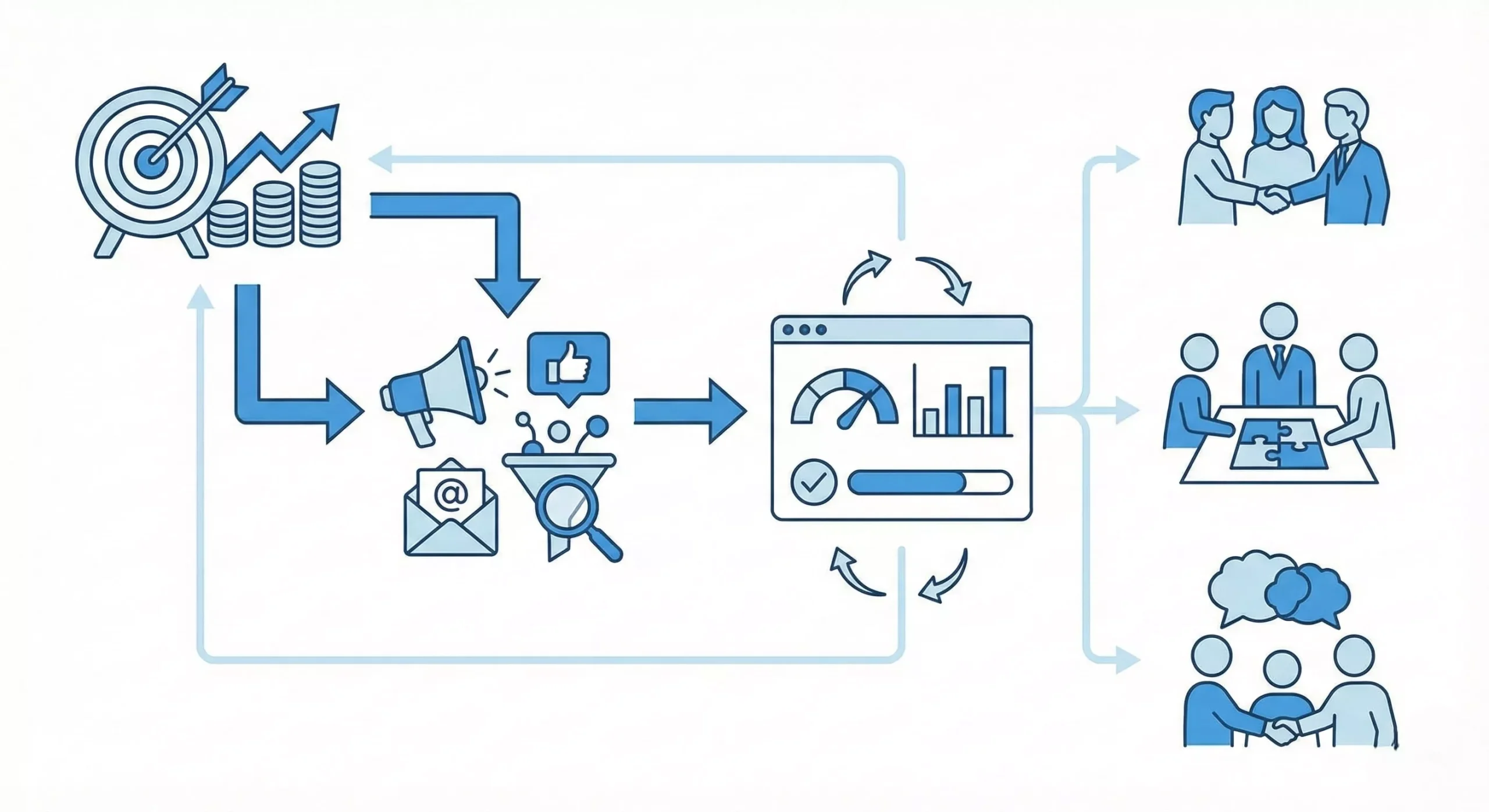
One of the key benefits of a traditional marketing plan is that it acts as a guiding document for aligning your marketing efforts with your business’s broader objectives. A clear connection between your marketing strategy and your business goals ensures that every initiative moves the company closer to its overall vision.
Here’s how to ensure alignment:
- Set Clear, Measurable Business Goals:Before diving into your marketing plan, take a step back and define your business goals. These could be revenue targets, market expansion, product launches, or customer retention objectives. Make sure they are measurable using metrics like sales growth, market share, or brand awareness.
- Develop Marketing Objectives That Support Business Goals:Once your business goals are defined, your marketing objectives should directly support them. For example, if one of your business goals is to increase sales by 15%, your marketing objectives could include lead generation strategies, promotional campaigns, and targeted advertising that align with that target.
- Monitor and Adjust Regularly:As you implement your marketing plan, ensure you’re continuously tracking the progress of both your marketing and business objectives. By regularly reviewing key performance indicators (KPIs) and comparing them against your goals, you’ll be able to adjust tactics if necessary. This ongoing process helps maintain alignment between marketing efforts and business growth.
- Integrate Cross-Department Collaboration:Aligning your marketing plan with business goals is not just about the marketing team. Collaboration with sales, customer service, and product development teams is essential. By understanding the business’s needs, the marketing team can create campaigns that resonate with sales targets, customer feedback, and product releases.
By closely aligning your marketing strategy with your business goals, you create a focused approach that maximizes the efficiency of your marketing resources and accelerates your path to success.
Integrating Traditional Planning with Modern Marketing
Digital Marketing Integration
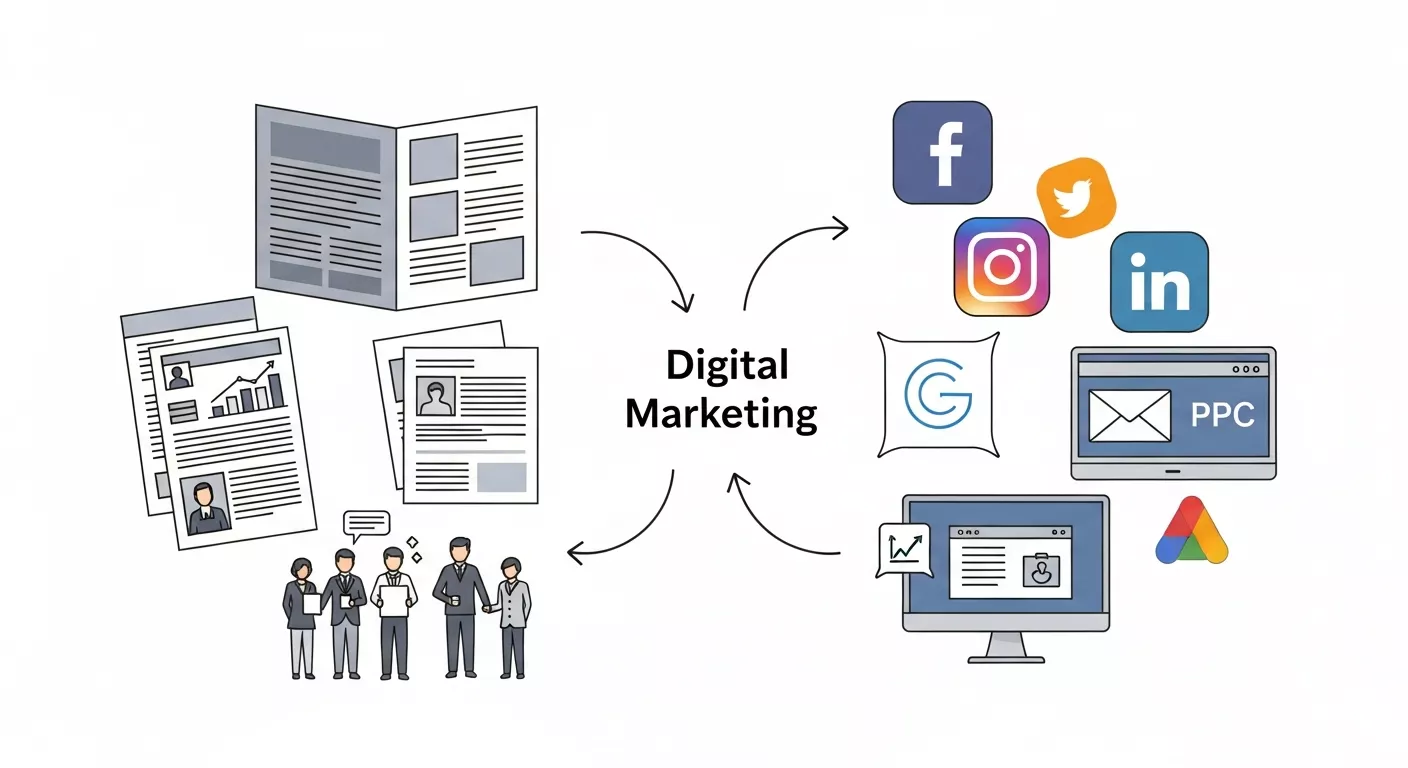
Use your traditional marketing plan foundation to guide digital marketing decisions. Target audience research, competitive analysis, and strategic objectives should inform social media strategy, content marketing, and online advertising approaches.
Maintain consistent brand messaging and positioning across traditional and digital channels. Customers interact with your business through multiple touchpoints, and inconsistent experiences damage credibility and effectiveness.
Leverage digital tools to enhance traditional marketing activities. Email marketing can nurture leads generated through networking events, while social media can amplify public relations efforts and build a community around your brand.
Measurement and Analytics
Establish key performance indicators that connect marketing activities to business results. Track both leading indicators (website traffic, social media engagement, lead generation) and lagging indicators (sales, customer retention, market share).
Use analytics tools to measure campaign performance, customer behavior, and market response. Digital marketing provides detailed tracking capabilities, but traditional activities also require measurement to optimize effectiveness.
Create regular reporting systems that track progress against objectives and inform strategic decisions. Combine quantitative metrics with qualitative feedback to understand both what’s happening and why it’s occurring.
Adapting Your Traditional Marketing Plan to Changing Market Conditions
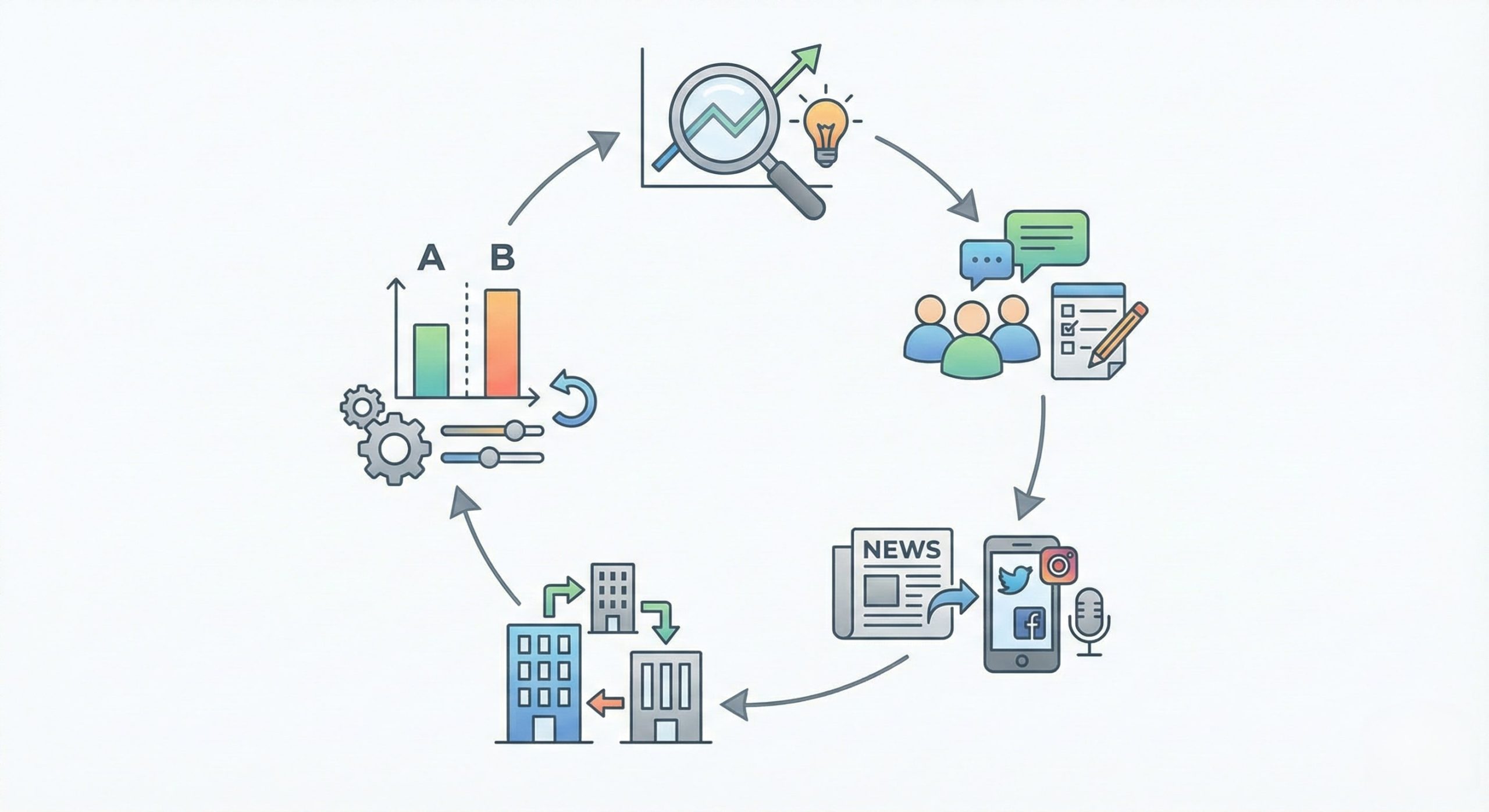
A successful traditional marketing plan isn’t static. Market conditions, customer preferences, and industry trends change over time, and your marketing plan needs to evolve with these shifts. Adapting your plan ensures that your business remains competitive and relevant, even in a rapidly changing environment.
Here’s how to adapt your traditional marketing plan to new challenges and opportunities:
- Stay Informed About Market Trends:Regularly conduct market research to keep a pulse on industry trends, technological advancements, and economic shifts. Attend industry conferences, subscribe to relevant journals, and follow key influencers to stay updated on new developments. By anticipating changes, you can proactively adjust your marketing strategies to stay ahead of competitors.
- Analyze Customer Feedback and Behavior:Your customers are a valuable source of insight when it comes to market changes. Monitor their feedback through surveys, social media, and direct interactions. Are their needs changing? What are their pain points? Understanding shifts in customer behavior allows you to fine-tune your messaging and product offerings.
- Reassess Your Marketing Channels:Marketing channels evolve over time, and what worked a few years ago may not be as effective today. For example, while print advertising might have been a staple in traditional marketing plans, digital channels like social media, influencer marketing, or podcasts are becoming more dominant. Regularly evaluate which channels are delivering the best ROI and adjust your budget allocation accordingly.
- Monitor Competitors and Industry Innovations:Keep an eye on what your competitors are doing. How are they evolving their marketing strategies in response to market changes? Analyzing their moves can provide valuable insights and inspire innovative ideas for your marketing efforts.
- Test, Measure, and Optimize:Even if a campaign or tactic initially worked well, it’s important to test new ideas and measure their effectiveness. A/B testing, for example, allows you to experiment with different messaging, visuals, or call-to-action buttons to identify what resonates best with your audience. Don’t be afraid to make adjustments as you go along—optimization is an ongoing process.
By continuously adapting your marketing plan to reflect changes in the market, you ensure that your strategy stays relevant and responsive to external factors, keeping your business competitive and prepared for future growth.
Maximizing Your Marketing Plan’s Impact
A well-crafted traditional marketing plan provides the strategic foundation necessary for marketing success in any business environment. By following the systematic approach outlined in this guide, you’ll create a roadmap that aligns marketing activities with business objectives and maximizes return on investment.
Remember that your marketing plan is a living document that should evolve with your business and market conditions. Regular review and refinement ensure your strategy remains relevant and effective over time.
Start building your traditional marketing plan today by conducting thorough market research and defining clear objectives. The time invested in strategic planning will pay dividends through more focused marketing efforts, better resource allocation, and improved business results.
Frequently Asked Questions (FAQ) About Traditional Marketing Plans
1. Why is a traditional marketing plan still relevant in the digital age?
While digital marketing offers many benefits, a traditional marketing plan provides the strategic foundation that ensures all your efforts, digital or otherwise, are aligned with your business goals. It focuses on understanding your target audience, competitors, and the market, which allows you to make informed decisions that digital tactics alone might not provide.
2. Can I use a traditional marketing plan if I run a digital-first business?
Absolutely! Even digital-first businesses need a strategic foundation. A traditional marketing plan helps you focus on long-term objectives, define clear messaging, and establish brand positioning. It ensures your digital marketing efforts, like SEO, social media, and email campaigns, all work cohesively and support your broader business goals.
3. How long should it take to develop a traditional marketing plan?
Developing a comprehensive marketing plan usually takes anywhere from 4 to 8 weeks, depending on the complexity of your business and the amount of research involved. However, a good plan is always evolving, so regular reviews and updates will ensure it stays relevant over time.
4. Can I combine traditional and digital marketing strategies?
Yes! The strength of modern marketing lies in integration. By combining traditional marketing methods (like print, direct mail, or in-person networking) with digital strategies (SEO, social media, PPC), you create a well-rounded, omnichannel marketing plan that maximizes reach and engagement.
5. What is the difference between a marketing plan and a marketing strategy?
A marketing strategy is the overarching vision and approach to achieving your business goals, while a marketing plan is the detailed blueprint of tactics, timelines, budgets, and performance metrics. The plan is the “how,” while the strategy is the “why” behind your marketing efforts.
6. How often should I update my marketing plan?
Your traditional marketing plan should be reviewed at least annually. However, it’s essential to conduct quarterly reviews to assess the effectiveness of your tactics and adjust for any market changes, new opportunities, or challenges.
7. What if I don’t have a large marketing budget? Can I still benefit from a traditional marketing plan?
Yes, absolutely! A well-crafted traditional marketing plan doesn’t require a large budget. It’s about being strategic with your resources. The plan will help you focus on high-impact, low-cost tactics that align with your goals. Additionally, understanding your market and competitors can help you prioritize efforts that provide the best ROI.
8. How do I measure the success of my traditional marketing plan?
Success is measured by comparing your key performance indicators (KPIs) against the objectives set in your marketing plan. These can include sales growth, lead generation, brand awareness, market share, or customer retention rates. Tracking these KPIs will help you understand whether your marketing efforts are driving the results you expect.
9. How does traditional marketing differ from digital marketing?
Traditional marketing often focuses on offline channels like print, radio, and direct mail, whereas digital marketing focuses on online tactics such as SEO, social media, and email campaigns. However, both types of marketing need to work together to ensure consistency in messaging and a comprehensive approach to reaching your target audience.
10. Can I implement a traditional marketing plan without hiring a marketing team?
While a dedicated marketing team can certainly help, it’s possible to create and implement a traditional marketing plan on your own, especially if you are a small business owner or startup. You may need to lean on external resources, like freelancers or agencies, for certain aspects (such as design or market research), but having a well-thought-out plan will guide your decisions.
Learn about: Instagram Ads Strategy for E-Commerce Brands That Actually Convert