Print advertising remains a relevant marketing tool despite the dominance of digital media. While spending has declined, print offers unique advantages—tangibility, trust, emotional connection, and less competition for attention. It works particularly well for niche audiences, luxury brands, healthcare, professional services, and local businesses. Integrating print with digital strategies, using QR codes, hybrid campaigns, and targeted placements, maximizes ROI. Print is most effective when leveraged strategically, with clear audience targeting, strong design, and measurable objectives.
Digital marketing dominates conversations about advertising strategy, but print advertising hasn’t disappeared. While businesses pour billions into social media campaigns and Google ads, many successful companies still allocate significant portions of their marketing budgets to newspapers, magazines, and direct mail.
The question isn’t whether print advertising exists—it clearly does. The real question is whether it delivers measurable results that justify the investment. With consumers spending more time on screens than ever before, does print still capture attention and drive sales?
The Current State of Print Advertising

Print advertising spending has declined dramatically over the past two decades. According to the Pew Research Center, U.S. newspaper advertising revenue fell from $49.4 billion in 2000 to just $8.8 billion in 2020. Magazine advertising revenue followed a similar trajectory.
However, this decline doesn’t tell the complete story. While overall spending has decreased, certain segments of print advertising have shown resilience or even growth. Direct mail, for example, generated $167 billion in sales in 2020, according to the Data & Marketing Association. Luxury brands continue to invest heavily in high-end magazine placements, and local businesses still find success with newspaper advertising.
The shift reflects changing consumer behavior rather than the complete obsolescence of print media. Younger consumers primarily consume content digitally, while older demographics still engage regularly with print publications. Smart advertisers recognize these patterns and adjust their strategies accordingly.
Why Print Advertising Still Works
Tangibility Creates Trust
Physical advertisements carry psychological weight that digital ads often lack. When consumers hold a magazine or newspaper, they engage with content differently than when scrolling through social media feeds. This tactile experience creates a sense of permanence and credibility that ephemeral digital ads struggle to match.
Research from Temple University found that physical media requires 21% less cognitive effort to process than digital media. This easier processing leads to better recall and stronger emotional connections with advertised products and services.
Less Competition for Attention
Digital advertising spaces are oversaturated. The average person encounters thousands of digital ads daily, creating banner blindness and ad fatigue. Print publications typically contain far fewer advertisements per page, giving your message more room to breathe and capture attention.
This reduced competition means print ads often enjoy higher engagement rates among readers who choose to consume print media. These readers have made an intentional decision to engage with physical content, suggesting higher attention levels and purchase intent.
Targeting Niche Audiences
Specialized print publications offer precise audience targeting that broad digital platforms can’t always match. A medical device company advertising in a cardiology journal reaches exactly the specialists who make purchasing decisions. This laser-focused targeting often produces better conversion rates than broader digital campaigns.
Trade publications, hobby magazines, and local newspapers provide access to highly engaged communities that share specific interests or geographic locations. These audiences often trust their preferred publications and view advertisements as valuable information rather than interruptions.
The Challenges Print Faces
Declining Readership
Print circulation numbers continue falling across most publication categories. Newspapers have been hit particularly hard, with daily circulation dropping from 62 million in 1990 to just 24 million in 2020, according to the Pew Research Center.
This shrinking audience means advertisers reach fewer people with each print placement. For businesses focused on maximizing reach, digital channels often provide better value per dollar spent.
Limited Analytics and Tracking
Digital advertising’s greatest strength lies in its measurability. Advertisers can track clicks, conversions, and customer journeys with precision that print advertising can’t match. Print ads typically rely on indirect measurement methods like coupon codes or dedicated phone numbers to track effectiveness.
This measurement challenge makes it difficult to optimize print campaigns in real-time or demonstrate clear return on investment to stakeholders who expect detailed analytics.
Higher Production Costs
Creating print advertisements requires significant upfront investment in design, copywriting, and production. High-quality print materials demand professional photography, premium paper, and skilled graphic design. These costs can quickly exceed digital advertising budgets, especially for small businesses.
Print also locks advertisers into longer commitment periods. Once a magazine goes to print, you can’t modify your ad based on market changes or competitor actions.
Industries Where Print Still Thrives
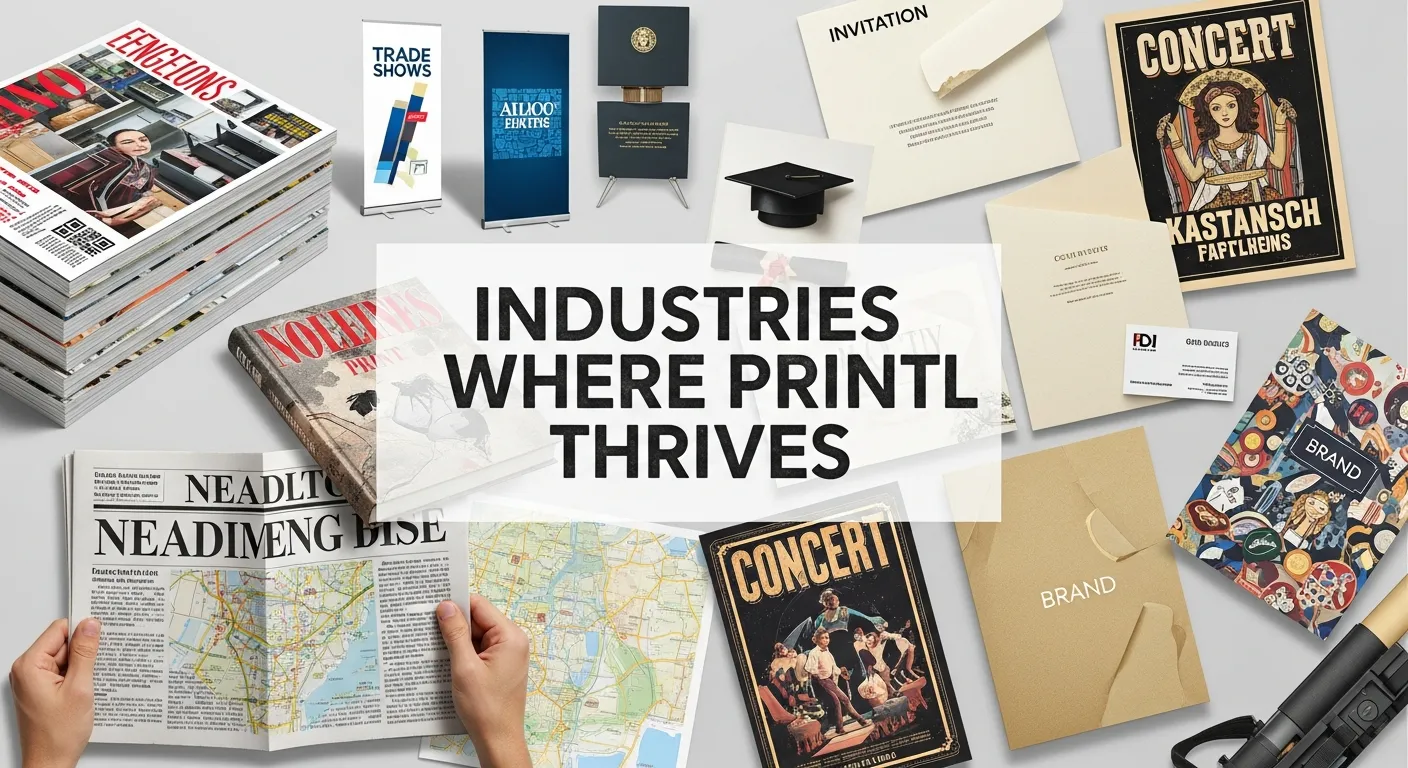
Luxury and Fashion
High-end brands continue investing heavily in print advertising because it aligns with their premium positioning. Luxury fashion houses, jewelry companies, and automotive manufacturers use glossy magazine spreads to showcase products in aspirational contexts.
Print advertising reinforces the exclusivity and quality these brands represent. A Rolex advertisement in a premium magazine carries different implications than the same ad appearing as a Facebook banner.
Healthcare and Professional Services
Medical professionals, lawyers, and financial advisors often prefer print advertising because it conveys stability and trustworthiness. Patients and clients in these industries value expertise and credibility over flashy digital presentations.
Professional publications also provide continuing education credits and industry news, making their readers highly engaged with content. Advertisements in these contexts are viewed as professional resources rather than sales pitches.
Real Estate
Local real estate markets still rely heavily on print advertising through newspapers and specialized real estate magazines. Home buyers often browse these publications during their search process, and agents use print ads to establish local market presence.
Real estate print ads also serve as long-term relationship builders. Agents who consistently advertise in local publications become familiar faces in their communities, generating referrals and repeat business.
Integrating Print with Digital Strategies
The most successful modern advertising campaigns don’t treat print and digital as competing channels. Instead, they create integrated approaches that leverage each medium’s strengths, much like how traditional advertising principles still drive digital success.
QR codes bridge the gap between print and digital, allowing readers to instantly access websites, videos, or special offers. This technology transforms print ads into gateways for digital engagement while maintaining print’s credibility and attention advantages.
Retargeting strategies can follow up on print advertising exposure. While you can’t directly track who viewed your print ad, you can create digital campaigns targeting similar demographics in the same geographic area, reinforcing your print message through online channels.
Cross-channel storytelling creates cohesive brand experiences. A luxury car manufacturer might use print ads to establish emotional connections and aspirational messaging, while digital ads focus on specific features, pricing, and dealer locations.
Making Print Work for Your Business
Success with print advertising requires strategic thinking about audience, message, and measurement. These essentials align with the core principles of marketing every business should know, regardless of the medium used. Start by clearly defining your target customer and researching which publications they consume. Media kits from publishers provide detailed demographic information to guide your decisions.
Choose publication types that match your objectives. Brand awareness campaigns might benefit from broad-circulation magazines, while lead generation efforts perform better in specialized trade publications.
Design matters more in print than digital advertising. Invest in professional creative development that takes advantage of print’s visual impact and permanence. Consider how your ad will look alongside editorial content and competing advertisements.
Establish clear success metrics before launching campaigns. While print measurement isn’t as precise as digital analytics, you can track response through dedicated landing pages, phone numbers, or promotional codes.
Consumer Psychology: Why Print Appeals on a Deeper Level

In an era where digital content disappears with a swipe, print materials tap into powerful aspects of human psychology. Physical media activates sensory pathways—touch, sight, and even smell—that digital screens simply cannot replicate. This multisensory engagement creates stronger emotional connections and improves memory retention. Unlike digital ads that compete with pop-ups, notifications, and endless scrolling, print advertising benefits from “focused attention environments,” where the reader is voluntarily consuming content in a calm, distraction-free setting. These cognitive and emotional factors explain why print ads often feel more personal, trustworthy, and authoritative. When used strategically, print becomes not just an advertisement, but an experience—one that leaves a lasting impression on consumers long after they’ve put the magazine or brochure down.
Why Print Connects Emotionally
- Activates tactile learning, boosting memory retention
- Creates a sense of permanence and credibility
- Leads to “slow consumption,” allowing the message to sink in
- Reduces cognitive load, making information easier to process
- Enhances emotional resonance through high-quality visuals and textures
Psychological Triggers Used in Print
- Luxury cues: Glossy paper, bold typography, minimalistic layouts
- Authority cues: Placement in reputable magazines or professional journals
- Nostalgia: Vintage designs or retro aesthetics
- Scarcity: Limited-time offers printed on postcards or brochures
- Trustworthiness: Tangible items feel more legitimate than digital ads
Cost–Effectiveness Breakdown Across Print Formats
Not all print advertising carries the same cost structure. Some formats are surprisingly affordable, while others require premium budgets. Understanding the cost variations helps businesses pick the right print medium without overspending. This section breaks down common print formats—newspapers, magazines, direct mail, brochures, and trade publications—based on cost, expected reach, and best use cases. While print may seem more expensive upfront, many formats deliver higher-quality impressions, lower competition, and extended shelf life. For example, a magazine might sit in a waiting room for months, generating repeated exposure for the same cost. Direct mail may cost more per impression, but response rates can be significantly higher than digital ads. When factoring in brand impact, recall rates, and longevity, print often competes strongly with digital advertising—even offering superior ROI in niche markets.
Factors That Influence Print Costs
- Print quality (paper type, ink quality, finishing)
- Publication popularity and circulation level
- Geographic targeting (local vs national)
- Ad size and placement (front cover, center spread, back cover)
- Frequency (one-time placement vs multi-issue package)
Cost–Effectiveness Table
| Print Format | Typical Cost Range | Audience Reach | Strengths | Best For |
|---|---|---|---|---|
| Newspapers | Low to Moderate | Local, older demographics | Timely, trusted, affordable | Local businesses, real estate, retail |
| Magazines | Moderate to High | Niche or premium audiences | High-quality visuals, long shelf life | Luxury brands, fashion, lifestyle |
| Direct Mail | Moderate | Highly targeted households | High engagement, tangible presence | Service businesses, promotions |
| Brochures/Flyers | Low | Local or event-based | Cheap, flexible distribution | Small businesses, events |
| Trade Publications | Moderate | Industry-specific audiences | Highly qualified leads | B2B brands, medical, technical sectors |
When Print Delivers Better Value
- When targeting niche, highly specialized audiences
- When brand perception and prestige matter
- When consumers prefer tangible information (healthcare, finance)
- When advertising long-term services rather than quick promotions
Advanced Strategies to Boost Print Performance

Print advertising becomes significantly more powerful when enhanced with strategic planning, creativity, and data-backed refinements. Modern businesses no longer treat print as a standalone channel; instead, they weave it into a multichannel storytelling experience. One of the strongest strategies is creating “print anchors”—ads that capture attention offline and guide audiences into digital ecosystems through QR codes, short URLs, or NFC-enabled pages. Another method involves using print as the top-of-funnel credibility builder while using digital retargeting to drive conversions. Advanced segmentation allows businesses to customize print content based on geographic, demographic, or behavioral data. Even small details like headline design, copy readability, color psychology, and white space usage significantly influence print performance. Businesses that treat print as a craft—not just an expense—achieve higher engagement and more measurable outcomes.
High-Impact Print Optimization Tactics
- Use trackable CTAs (QR codes, short URLs, coupon codes)
- Personalize direct mail with names, neighborhoods, or purchase history
- Use sensory elements (textured paper, embossing, metallic ink)
- A/B test different headlines or visual layouts across publications
- Align print visuals with digital branding for consistency
- Add testimonials, certifications, or awards to build trust instantly
Creative Print Strategies That Drive Higher Engagement
- Story-driven spreads: Multi-page magazine layouts that tell a narrative
- Collector’s edition mailers: Premium postcards or mini catalogs
- Hybrid print–digital experiences: AR-enabled brochures
- Geo-targeted newspaper inserts: Customized to local communities
- Event-triggered mailers: Send print materials after specific life events
The Future of Print Advertising
Print advertising won’t disappear, but it will continue evolving. Publishers are exploring augmented reality features that bring print ads to life through smartphone apps. Personalized printing technology enables mass customization that rivals digital targeting capabilities.
Sustainability concerns are pushing the industry toward eco-friendly papers and inks, potentially attracting environmentally conscious consumers who appreciate responsible advertising practices.
The key to print advertising success lies in understanding its unique strengths and applying them strategically rather than trying to compete directly with digital channels on their terms. Businesses that recognize print’s role in building trust, reaching specific audiences, and creating memorable brand experiences will continue finding value in this traditional medium.
Print advertising works when it’s used thoughtfully as part of a comprehensive marketing strategy. The question isn’t whether you should abandon print entirely, but how to use it most effectively alongside your digital efforts.
Conclusion
Print advertising is not obsolete; it complements digital marketing by providing tactile engagement, credibility, and targeted reach. Businesses that recognize print’s unique psychological and emotional impact, and integrate it thoughtfully with digital campaigns, can achieve higher engagement, brand recall, and customer trust. Strategic planning, creative execution, and cross-channel integration make print a powerful tool for modern marketing success.
Frequently Asked Questions
What is print advertising?
Print advertising refers to marketing messages distributed via newspapers, magazines, brochures, direct mail, or other physical media.
Is print advertising still effective in the digital age?
Yes. Print provides tangibility, trust, emotional engagement, and niche audience targeting that digital ads often cannot replicate.
Which industries benefit most from print advertising?
Luxury and fashion, healthcare and professional services, real estate, and local businesses typically see strong results with print.
Why does print create stronger consumer trust?
Physical ads engage multiple senses and feel more permanent, making them more credible and memorable than fleeting digital content.
Can print advertising target specific audiences?
Absolutely. Niche magazines, trade publications, and local newspapers allow precise demographic, geographic, or industry-specific targeting.
What are the main challenges of print advertising?
Declining readership, limited real-time analytics, higher production costs, and longer campaign commitments compared to digital media.
How can print be integrated with digital marketing?
Use QR codes, NFC links, hybrid campaigns, and retargeting strategies to connect print exposure with online engagement.
Does print advertising offer a good ROI?
Yes—especially for niche audiences, luxury brands, long-term services, or campaigns that value engagement and emotional impact over immediate clicks.
How does design affect print performance?
High-quality visuals, professional layouts, white space, readable fonts, and creative use of textures enhance attention, recall, and engagement.
Are there cost-effective print options?
Yes. Local newspapers, flyers, brochures, and event-based materials can be affordable while still delivering targeted impressions.
What psychological factors make print effective?
Tactile interaction, slower consumption, reduced cognitive load, luxury cues, and emotional resonance make print memorable and persuasive.
How should businesses decide between print and digital?
Evaluate audience demographics, campaign objectives, messaging goals, and desired engagement. Often, a blended strategy that combines both delivers the best results.