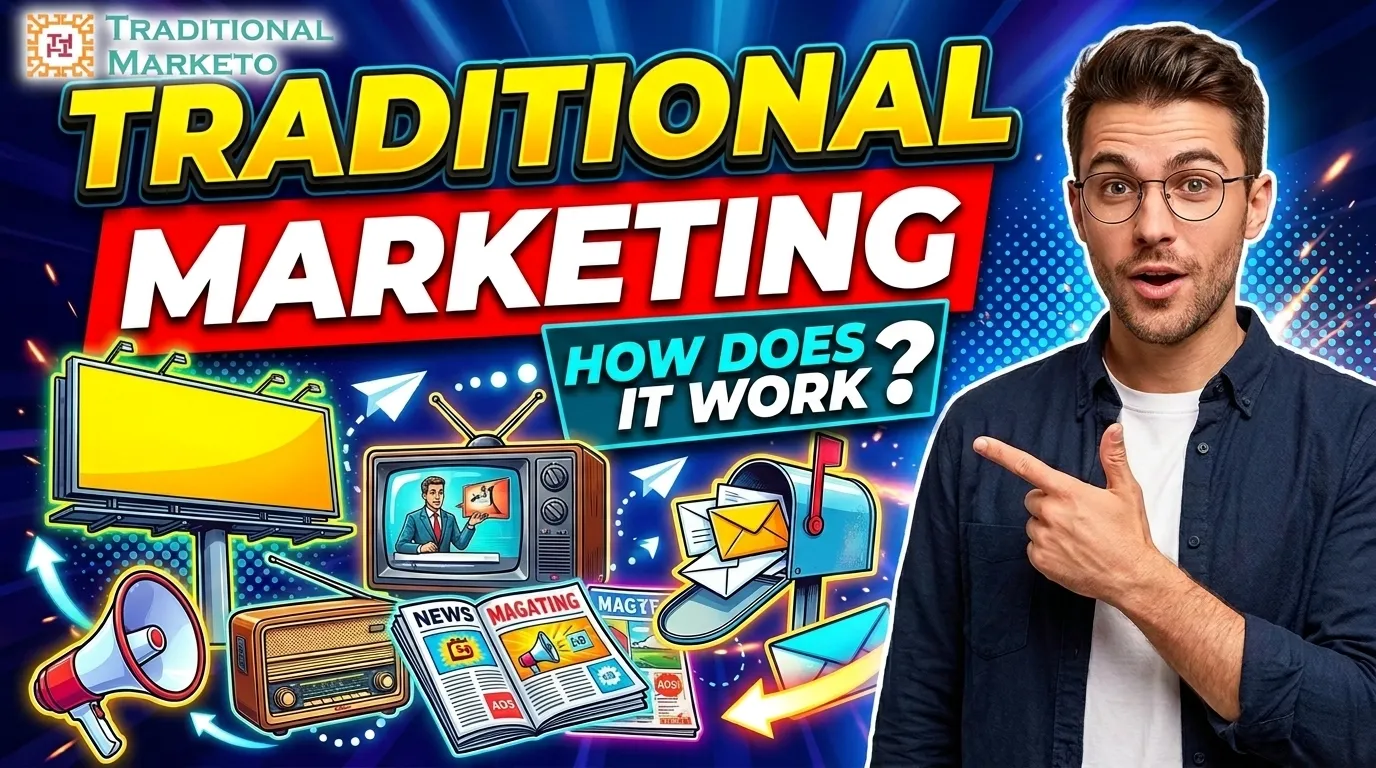
Traditional marketing is a proven way for businesses to promote their products and services through offline channels such as television, radio, newspapers, magazines, billboards, direct mail, and events. It helps brands reach local audiences, build trust, and create lasting customer relationships. Although digital marketing has become increasingly popular, traditional marketing remains valuable for businesses that want to improve brand awareness, attract new customers, and strengthen their presence in the marketplace.
Traditional Marketing Strategies
Traditional marketing strategies are planned activities that businesses use to promote their products or services through offline communication channels. These strategies focus on reaching potential customers through familiar media, building brand recognition, and encouraging people to take action, such as visiting a store, calling a business, or purchasing a product.
A successful strategy begins with understanding the target audience. Businesses need to identify their customers’ interests, locations, purchasing habits, and preferences before choosing suitable promotional methods. For example, a local restaurant might distribute flyers in nearby neighborhoods, while a large company may advertise on television to reach a broader audience.
Traditional marketing also involves setting clear objectives, creating a consistent brand message, and allocating a suitable budget. Companies can combine several promotional channels to improve visibility and reach customers at different stages of their buying journey. For businesses organizing promotional events, event marketing messaging strategies can provide useful ideas for creating messages that attract attention and encourage engagement.
When businesses plan their campaigns carefully, traditional marketing can support long-term brand awareness and customer loyalty. Measuring sales, tracking promotional codes, collecting customer feedback, and comparing campaign costs with revenue can help organizations improve future results.
Types of Traditional Marketing
There are several types of traditional marketing, and each serves a different purpose. Print marketing includes advertisements in newspapers, magazines, brochures, catalogs, and leaflets. These materials allow businesses to share detailed information about their products, services, prices, and special offers.
Broadcast marketing includes television and radio advertisements. Television combines sound and visuals to communicate brand messages, while radio reaches listeners during activities such as commuting, shopping, or working. Both channels can help businesses reach large audiences, depending on the station, program, and advertising schedule.
Outdoor marketing uses billboards, posters, banners, transit advertisements, and other displays in public places. These advertisements can increase brand visibility among people who regularly travel through busy streets, shopping areas, and transportation hubs.
Direct mail is another important category. Businesses send promotional letters, postcards, catalogs, and discount coupons directly to selected households or customers. Event marketing involves trade shows, exhibitions, product demonstrations, community gatherings, and sponsorships that allow companies to interact with potential customers face-to-face.
Choosing the right type of traditional marketing depends on the business’s goals, budget, audience, and location. A small retailer may benefit from local print advertisements, while a national brand may combine broadcast advertising with outdoor promotions to increase reach.
Traditional Marketing Methods
 Traditional marketing methods describe the practical activities businesses use to communicate with customers offline. These methods can include distributing flyers, publishing newspaper advertisements, sponsoring local events, conducting product demonstrations, and sending promotional mail.
One common method is local advertising. Businesses promote their offerings through community newspapers, regional radio stations, local magazines, and outdoor displays. This approach can be particularly useful for restaurants, retail shops, educational institutions, healthcare providers, and service businesses that depend on customers within a specific geographical area.
Another method is personal selling. Sales representatives meet potential customers, explain product features, answer questions, and help buyers make informed decisions. Personal interaction can be valuable for products and services that require demonstrations, detailed explanations, or customized solutions.
Businesses can also use public relations to strengthen their reputation. Press releases, community partnerships, charitable activities, and media coverage help organizations communicate their values and develop relationships with the public.
Budget planning is essential when selecting these methods. Companies should estimate production expenses, advertising placement fees, distribution costs, and expected returns before launching a campaign. A practical marketing budgeting and planning guide can help marketers understand how to allocate resources and evaluate promotional spending.
The most effective traditional marketing methods are those that match the audience’s preferences and the company’s objectives. Instead of investing in every available channel, businesses should select the methods most likely to produce measurable results.
Examples of Traditional Marketing
Traditional marketing examples can be found in businesses of almost every size and industry. A supermarket might publish a weekly newspaper advertisement featuring discounts on groceries and household essentials. Customers who see the advertisement may visit the store to take advantage of the offers.
A clothing retailer might install billboards near shopping districts to promote a seasonal collection. A university could distribute brochures to schools and participate in education fairs to attract prospective students. These examples demonstrate how offline promotion can connect businesses with people who are likely to need their products or services.
Television commercials are another familiar example. A consumer goods company may produce an advertisement showing how its product solves an everyday problem. By combining visuals, storytelling, music, and a memorable message, the company can increase recognition among viewers.
Radio advertising can help a local business promote a limited-time offer to commuters and regular listeners. Similarly, a car dealership might organize an open-house event where visitors can examine vehicles, speak with sales representatives, and arrange test drives.
These examples show that traditional marketing is not limited to large corporations with substantial budgets. Small businesses can also use targeted print advertisements, community sponsorships, promotional materials, and local events to attract customers. The key is to select an approach that reaches the right people with a clear and relevant message.
Benefits of Traditional Marketing
One of the main benefits of traditional marketing is its ability to reach audiences through familiar and widely recognized channels. Television, radio, newspapers, and outdoor advertisements remain useful for businesses seeking broad visibility or a strong presence in a local community.
Another advantage is physical visibility. A printed brochure, storefront poster, or direct-mail advertisement gives customers something tangible that they can keep, review, or share. This can be helpful when people need more time to consider a purchase or compare different options.
Traditional marketing can also support trust and credibility. Professional advertisements in established publications, community sponsorships, and in-person demonstrations may help businesses appear more familiar to potential customers. However, credibility depends on the quality of the message, the reputation of the business, and the audience’s perception.
Face-to-face interaction is another benefit. Trade shows, exhibitions, and product demonstrations allow businesses to answer questions immediately and build personal relationships. These interactions can be particularly useful for high-value products or services that require customer confidence.
Furthermore, traditional marketing can complement digital campaigns. A billboard or television advertisement can encourage people to visit a website, search for a brand, or follow its social media account. Businesses can explore the benefits of digital marketing to understand how online promotion can complement offline advertising.
Although traditional marketing may require significant upfront investment, carefully targeted campaigns can generate valuable leads, repeat purchases, and long-term brand recognition.
Traditional Marketing vs Digital Marketing
 Traditional marketing and digital marketing share the same broad objective: connecting businesses with potential customers and encouraging profitable actions. However, they differ in the channels they use, the way audiences interact with advertisements, and how campaign performance is measured.
Traditional marketing relies on offline channels such as print publications, television, radio, billboards, direct mail, and in-person events. Digital marketing uses online platforms such as websites, search engines, email, social media, and digital advertising networks.
A major difference is measurement. Traditional marketing performance may be assessed through coupon redemptions, customer surveys, store visits, dedicated phone numbers, and sales comparisons. Digital marketing often provides more immediate data on impressions, clicks, conversions, and customer behavior.
Audience targeting also differs. Traditional campaigns can target geographical areas, publication readerships, or specific broadcast audiences. Digital campaigns can often target users according to their search intent, interests, demographics, and online behavior, depending on the platform.
Cost varies by channel. A television campaign may require substantial production and placement expenses, whereas some digital campaigns can begin with smaller budgets. However, neither approach is automatically cheaper or more effective; results depend on the campaign and its audience.
Businesses do not necessarily need to choose one over the other. A balanced approach can combine traditional marketing for local visibility and broad awareness with digital channels for detailed targeting, customer engagement, and performance tracking. A well-planned social media marketing strategy can help connect offline promotional activities with online conversations and customer relationships.
Traditional Advertising Techniques
Traditional advertising techniques help businesses deliver persuasive messages through offline media. The most suitable technique depends on the product, target audience, campaign objectives, and available budget.
Emotional storytelling is a common technique used in television, radio, and print advertisements. Businesses create relatable stories that connect their products with customer needs, aspirations, or everyday experiences. When the message feels relevant, audiences may be more likely to remember the brand.
Repetition is another important technique. Repeated exposure to a recognizable brand name, slogan, or visual identity can improve familiarity over time. However, advertisements must be scheduled carefully to avoid unnecessary spending and audience fatigue.
Promotional offers can also encourage action. Discounts, coupons, free samples, seasonal deals, and limited-time offers give customers a practical reason to try a product or visit a store. Clear terms and genuine value are important for maintaining customer trust.
Celebrity endorsements and sponsorships provide another way to attract attention. A recognizable personality may help a brand reach an audience, while sponsoring a community event can create positive associations with the organization.
Product demonstrations allow customers to see how a product works before making a purchase. This technique is especially useful for appliances, technology products, educational services, and specialized equipment.
Effective traditional marketing combines an appropriate advertising technique with a clear message and a suitable channel. Businesses should test different approaches where possible and evaluate which techniques generate the strongest response.
Importance of Traditional Marketing
Traditional marketing remains important because customers do not interact with brands exclusively through digital platforms. Many people still encounter advertisements while watching television, listening to radio, reading printed publications, traveling, shopping, or attending community events.
For local businesses, offline advertising can provide a direct way to connect with nearby customers. A sign outside a store, a leaflet distributed in a neighborhood, or a sponsorship at a community gathering can increase awareness among people who are already close to the business.
Traditional marketing can also help establish a consistent brand identity. Repeated use of the same name, logo, colors, slogan, and message across physical advertisements makes a company easier to recognize. Over time, this familiarity may influence purchasing decisions when customers need a particular product or service.
Another important factor is accessibility. Some audiences may prefer printed information or personal interaction instead of engaging with online advertisements. Businesses that understand these preferences can select communication methods that better match their customers’ habits.
Traditional marketing is particularly useful when combined with other promotional activities. For example, a company might launch a product through a local event, advertise it in a magazine, and direct interested customers to an online store. This coordinated approach helps create a consistent customer experience across different channels.
Ultimately, the importance of traditional marketing depends on how well it supports a company’s goals. When campaigns are planned strategically and evaluated regularly, offline promotion can remain a valuable part of a modern marketing mix.
Offline Marketing Strategies
Offline marketing strategies focus on attracting and retaining customers through activities that take place outside digital platforms. These strategies can be especially effective for businesses that serve local communities, rely on personal relationships, or offer products that customers prefer to experience in person.
Community involvement is one useful approach. Businesses can sponsor local sports teams, support charitable activities, participate in neighborhood festivals, or organize educational workshops. These activities provide opportunities to introduce a brand while building relationships with community members.
Referral programs can also strengthen offline promotion. A business may encourage satisfied customers to recommend its services to friends, relatives, and colleagues. Offering a suitable incentive can motivate referrals, although the quality of the product or service remains essential for long-term success.
Direct mail is another practical strategy. Sending personalized postcards, catalogs, or special offers to relevant households can help businesses communicate with specific customer groups. Campaigns become more useful when the mailing list is accurate and the offer is relevant.
In-store experiences also matter. Product displays, demonstrations, samples, and knowledgeable staff can help customers understand a product’s value and make confident purchasing decisions.
To improve results, businesses should define a target audience, set a budget, establish a measurable objective, and track responses. For example, a retailer could use a unique coupon code in printed advertisements to estimate how many customers responded to the campaign.
A carefully designed traditional marketing plan should focus on customer needs rather than simply distributing promotional materials. By selecting relevant activities and measuring their impact, businesses can improve efficiency and build stronger customer relationships.
Traditional Marketing Channels
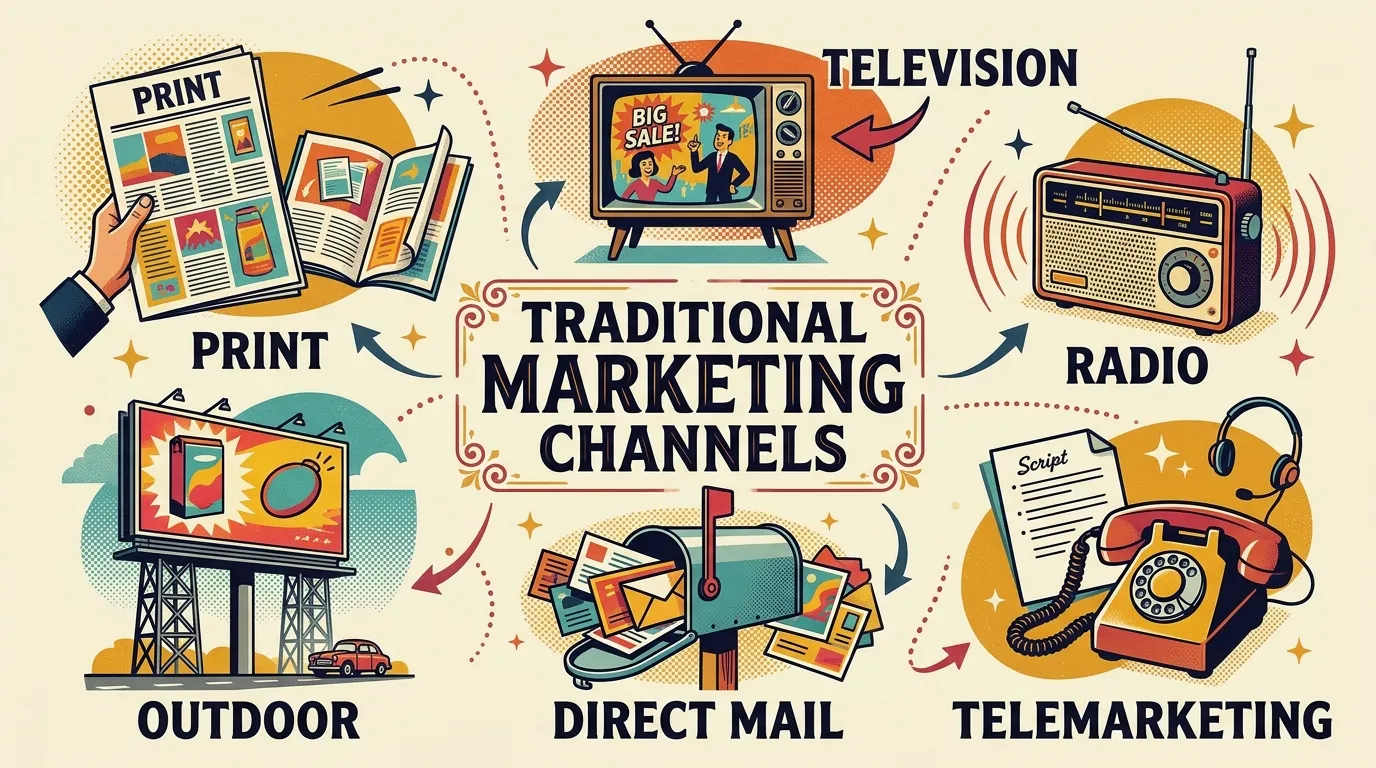 Traditional marketing channels are the communication platforms businesses use to deliver their promotional messages to audiences. Choosing the right channels is important because each one has different strengths, costs, and reach.
Print media includes newspapers, magazines, brochures, catalogs, and flyers. It is useful for delivering detailed information and reaching readers who regularly engage with printed content. Local publications can be particularly valuable for small businesses targeting a specific community.
Broadcast media includes television and radio. Television combines visuals and sound, making it suitable for demonstrations and storytelling. Radio can provide repeated exposure to listeners in selected markets, especially during commuting hours and popular programs.
Outdoor advertising includes billboards, posters, transit displays, and signs. These channels help businesses maintain visibility in busy locations and reinforce brand recognition through repeated exposure.
Direct mail enables companies to send promotional materials to households or selected customers. Trade shows, exhibitions, conferences, and promotional events provide opportunities for direct interaction, demonstrations, networking, and lead generation.
Word-of-mouth referrals are another valuable channel. Recommendations from friends, family members, and professional contacts can influence customer decisions because they often come from trusted sources.
Businesses should compare channels according to audience relevance, expected reach, cost, and measurable outcomes. Rather than selecting a channel solely because it is popular, marketers should consider whether it reaches the people most likely to become customers.
When combined thoughtfully, these channels can help businesses improve awareness, establish credibility, and support sales growth. The best channel mix is one that aligns with the company’s objectives, audience preferences, and available resources.
Conclusion
Traditional marketing remains an effective way for businesses to build brand awareness, reach target audiences, and develop lasting customer relationships. Through methods such as print advertising, television commercials, radio promotions, billboards, direct mail, and community events, businesses can connect with customers in meaningful ways. The success of traditional marketing depends on understanding customer needs, choosing the right channels, managing the budget, and measuring campaign performance. By combining traditional marketing with digital marketing, businesses can expand their reach, improve customer engagement, and create a balanced marketing strategy that supports long-term growth.
FAQ
1. What is traditional marketing?
Traditional marketing is the promotion of products and services through offline channels such as television, radio, newspapers, magazines, billboards, direct mail, and events. It helps businesses reach audiences, build brand awareness, and generate sales.
2. How does traditional marketing work?
Traditional marketing works by identifying a target audience, selecting appropriate offline channels, creating a promotional message, and delivering it to potential customers. Businesses then measure results through sales, inquiries, coupon redemptions, surveys, and other relevant indicators.
3. What are the four main types of traditional marketing?
Four widely recognized categories are print marketing, broadcast marketing, outdoor advertising, and direct marketing through physical mail. Events, sponsorships, and personal selling are also common offline promotional approaches.
4. Is traditional marketing still effective?
Yes, traditional marketing can remain effective when it reaches the right audience with a relevant message. Its performance depends on factors such as campaign quality, location, budget, competition, and the product or service being promoted.
5. What are some examples of traditional marketing?
Examples include television commercials, radio advertisements, newspaper promotions, billboards, printed brochures, direct-mail coupons, trade show booths, and sponsorships of community events.
6. What is the difference between traditional and digital marketing?
Traditional marketing uses offline channels, while digital marketing uses internet-based platforms such as search engines, websites, email, and social media. Digital campaigns often offer more detailed real-time tracking, whereas traditional campaigns can provide strong physical visibility and local reach.
7. Is traditional marketing expensive?
Traditional marketing costs vary by channel. Television advertising and large billboards can be expensive, while flyers, local sponsorships, and targeted print promotions may be more affordable. Businesses should compare campaign costs with their expected results.
8. Which traditional marketing method is best for small businesses?
The best method depends on the target audience and location. Local flyers, community events, referral programs, neighborhood newspapers, and storefront signage can be practical choices for small businesses seeking nearby customers.
9. How can businesses measure traditional marketing results?
Businesses can measure results through sales changes, dedicated phone numbers, promotional codes, customer surveys, event registrations, inquiries, and comparisons of campaign spending with generated revenue.
10. Can traditional marketing and digital marketing work together?
Yes, combining both approaches can create a more complete promotional strategy. For example, a business can use billboards or printed brochures to increase awareness and direct customers to its website or social media pages for additional information and engagement.