Traditional marketing promotes products and services through offline methods, including print, broadcast, direct mail, and outdoor advertising. It helps businesses build brand awareness, reach local customers, and establish trust. Despite the growth of digital marketing, traditional marketing remains effective when used with the right strategy.
Four Types of Traditional Marketing
Traditional marketing refers to promotional activities that use offline channels to communicate with customers. Before the widespread adoption of the internet, businesses relied heavily on newspapers, magazines, television, radio, and physical advertisements to attract attention and increase sales. Today, these methods continue to play an important role in marketing campaigns.
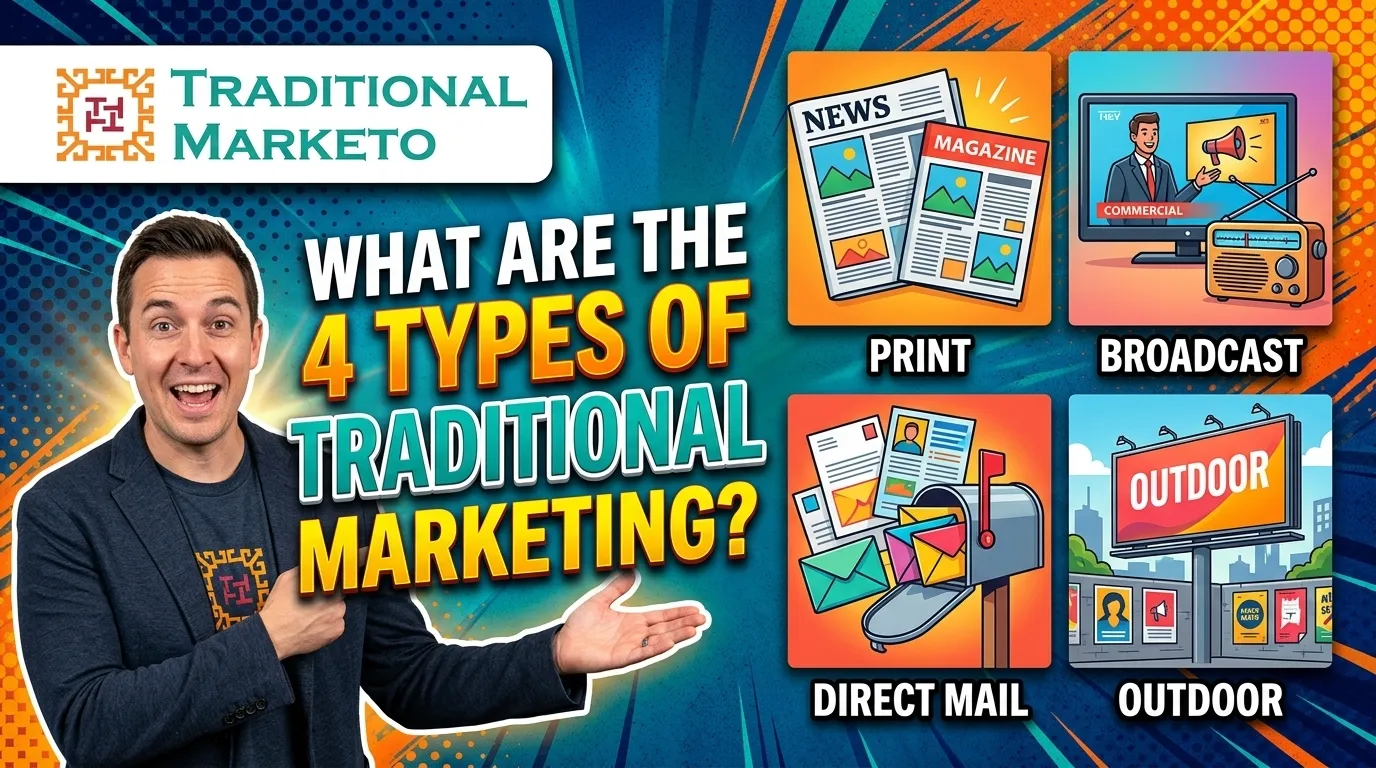
The four main types of traditional marketing are print marketing, broadcast marketing, direct mail marketing, and outdoor marketing. Each type offers a different way to reach consumers and communicate a brand’s message.
Print marketing includes newspaper advertisements, magazine promotions, brochures, flyers, and posters. It allows businesses to share detailed information through printed materials that customers can read at their convenience. Broadcast marketing uses television and radio to reach a large audience, making it useful for introducing products and building brand recognition. Direct mail marketing involves sending promotional materials, catalogs, discount coupons, or personalized offers directly to customers’ homes or businesses.
Outdoor marketing includes billboards, transit advertisements, banners, and posters displayed in public spaces. It helps businesses reach people while they travel, shop, or participate in everyday activities. The best choice depends on the target audience, campaign objectives, and available budget.
Traditional Marketing Methods
Traditional marketing methods help businesses communicate with customers through familiar, offline channels. Newspaper advertisements, radio commercials, television campaigns, direct mail, trade shows, and outdoor displays are common examples. Businesses can use these methods individually or combine several channels to create a consistent promotional campaign.
For example, a local restaurant might advertise a special menu in a community newspaper, distribute flyers in nearby neighborhoods, and display banners outside its premises. A larger company may use television advertisements to introduce a new product and direct mail to distribute exclusive promotional offers.
Choosing an effective method requires understanding customers’ interests, location, purchasing habits, and media preferences. Businesses should also establish clear objectives, such as increasing store visits, generating inquiries, or improving brand recognition.
Traditional marketing can support other business activities as well. Companies selling downloadable products, for instance, can use offline promotions to attract new customers before directing them to an online store. Businesses interested in expanding their digital offerings can explore digital products to sell to understand how digital products fit into a broader business model.
Examples of Traditional Marketing
 Traditional marketing appears in many everyday situations. A full-page newspaper advertisement promoting a new shopping mall, a radio commercial announcing a seasonal sale, and a billboard displaying a brand’s latest product are all examples. Similarly, a printed catalog mailed to existing customers or a promotional brochure distributed at a trade show represents traditional marketing.
Small businesses frequently use these techniques to reach customers in their immediate area. A dental clinic might distribute introductory brochures, while a clothing store could place posters near busy shopping streets. Larger brands often invest in television campaigns, magazine advertisements, and outdoor displays to reach a wider audience.
Seasonal promotions provide another opportunity to use traditional marketing effectively. Retailers can advertise holiday discounts through newspaper inserts, direct mail coupons, and in-store signage. These activities can complement online campaigns, including seasonal social media marketing, helping businesses maintain consistent messaging across different customer touchpoints.
The most effective example is not necessarily the most expensive one. A well-placed advertisement that reaches the right audience can produce better results than a costly campaign shown to people who have little interest in the product.
Traditional Marketing Strategies
A successful traditional marketing strategy begins with a clear understanding of the target audience. Businesses need to determine who their customers are, where they live, what they need, and which offline channels they are most likely to notice. This information helps marketers select suitable promotional methods and allocate their budgets effectively.
The next step is to develop a consistent message. Advertisements should communicate the product’s value, highlight relevant benefits, and provide a clear reason for customers to take action. For example, a local retailer might promote a limited-time discount through flyers and radio advertisements while using the same offer in its storefront displays.
Timing is also important. Businesses can schedule campaigns around holidays, local events, product launches, and seasonal purchasing patterns. Tracking campaign results through coupon codes, dedicated phone numbers, customer surveys, and sales comparisons helps determine whether the strategy is working.
Companies that sell to other businesses can also connect offline awareness campaigns with lead generation and follow-up processes. Understanding B2B lead conversion strategies can help businesses turn interest generated through trade shows, print advertisements, and networking events into qualified leads and potential sales.
Benefits of Traditional Marketing
Traditional marketing offers several benefits, particularly for businesses that want to build recognition among local or specific demographic groups. Printed advertisements and physical promotional materials can make a brand feel established and tangible. Customers can keep a brochure, refer to a printed catalog, or notice the same billboard during their daily commute.
Another advantage is broad audience reach. Television and radio advertisements can introduce products to large groups of people, including consumers who may not actively engage with digital platforms. Outdoor advertising can also generate repeated exposure when people regularly pass the same location.
Traditional marketing can be particularly effective for local businesses. Community newspapers, direct mail, event sponsorships, and neighborhood signage help companies connect with people who are geographically close to their stores or service areas.
However, these benefits come with limitations. Printing, distribution, broadcast placements, and billboard rentals can be expensive. Measuring results may also require additional effort compared with digital campaigns. Businesses can maximize their investment by defining campaign goals, choosing relevant channels, and evaluating outcomes before repeating or expanding their efforts.
Traditional Advertising Channels
 Traditional advertising channels are offline platforms businesses use to promote their products and services. The most common channels include newspapers, magazines, television, radio, direct mail, billboards, public transportation advertisements, and promotional events.
Each channel serves a different purpose. Newspapers and magazines are useful for reaching readers interested in local news, specific industries, or particular subjects. Television combines visuals, sound, and storytelling to create memorable advertisements, while radio helps businesses reach listeners during commutes and daily activities. Billboards and transit advertisements provide repeated exposure to people traveling through busy areas.
Direct mail offers a more personalized approach because businesses can send specific offers to selected households or customers. Trade shows and community events also allow companies to interact directly with potential buyers, answer questions, and demonstrate products.
When selecting advertising channels, businesses should consider audience reach, campaign costs, geographic coverage, and the expected response. Combining complementary channels can improve visibility and reinforce the same message across different settings.
Print Advertising and Newspaper Marketing
Print advertising is one of the oldest forms of traditional marketing. It involves promoting products or services through newspapers, magazines, brochures, flyers, catalogs, and other printed materials. Despite the growth of online advertising, print marketing remains relevant for businesses targeting local communities, professional audiences, and readers who prefer physical publications.
Newspaper marketing is especially useful for announcing local events, promoting retail discounts, introducing new services, and sharing community-focused offers. Businesses can select publications based on their readership, circulation area, and advertising costs. Magazine advertising, meanwhile, can help brands reach specialized audiences interested in subjects such as fashion, travel, business, or home improvement.
Brochures and flyers provide additional flexibility because businesses can distribute them at storefronts, exhibitions, public events, and residential locations. These materials can include product descriptions, contact information, pricing, and promotional offers.
To improve results, print advertisements should use clear headlines, readable text, attractive visuals, and a straightforward call to action. Including a unique coupon code or mentioning the advertisement when purchasing can also help businesses evaluate its effectiveness. The key is to select publications and distribution methods that match the intended audience.
Television and Radio Advertising
Television and radio advertising are two important forms of broadcast marketing. They enable businesses to share promotional messages with audiences through audiovisual content or audio-only commercials. Both channels can help brands increase awareness, promote new products, and establish a recognizable identity.
Television advertising combines moving images, music, dialogue, and storytelling to demonstrate products and create emotional connections. For example, a household appliance company might show how its product saves time, while a supermarket could advertise special prices before a holiday. Television can reach a broad audience, although production and airtime costs may be substantial.
Radio advertising offers a different advantage. It can reach people while they drive, work, or listen to their favorite programs. Local radio stations are particularly useful for businesses promoting nearby services, retail offers, restaurants, and community events. Radio campaigns can also be adjusted to reach listeners during particular programs or time slots.
The effectiveness of both channels depends on audience relevance, message quality, frequency, and timing. Businesses should choose stations and programs that match their customers’ interests and evaluate results through inquiries, promotional codes, website visits, and changes in sales.
Direct Mail Marketing Techniques
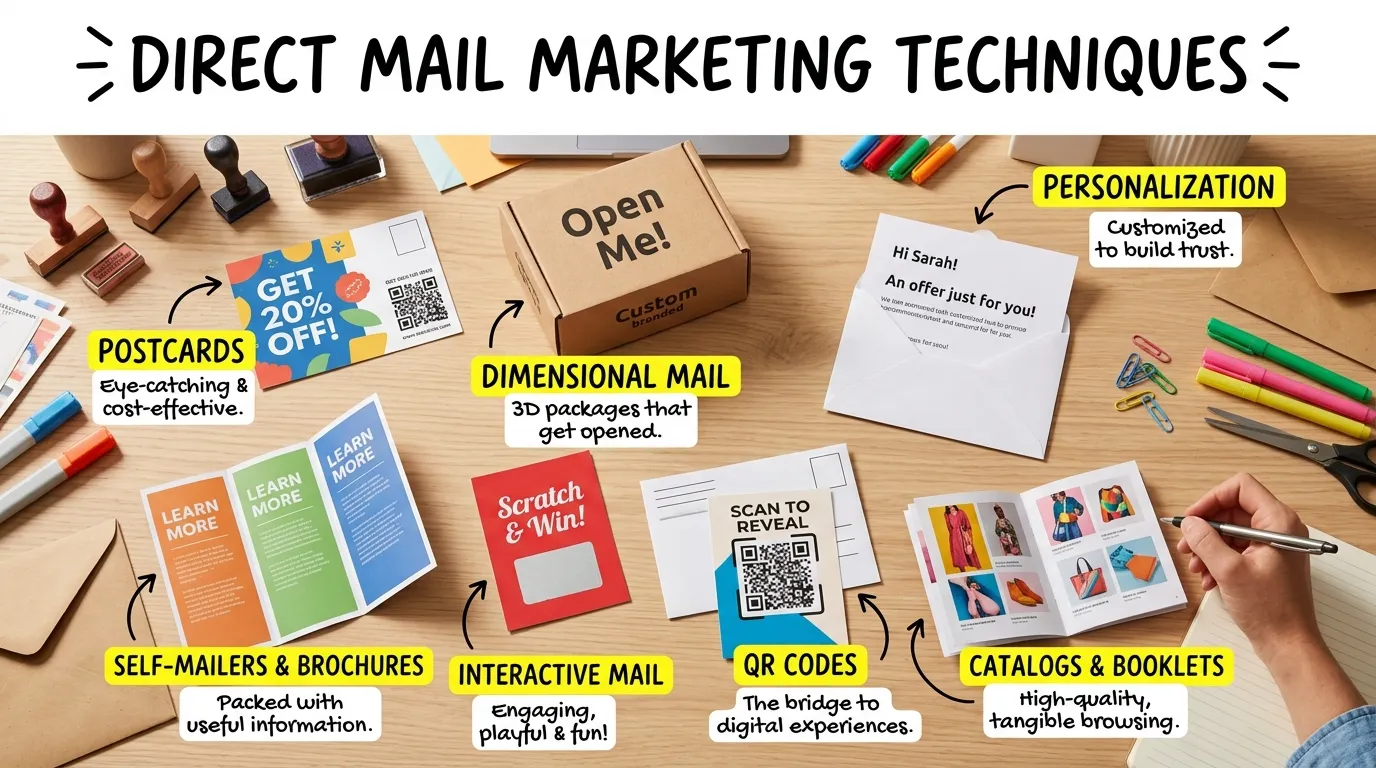 Direct mail marketing involves sending physical promotional materials to individuals or businesses through postal services or other delivery methods. Common formats include postcards, catalogs, brochures, letters, discount coupons, and personalized promotional packages.
One of the main strengths of direct mail is its ability to deliver a message directly to a selected audience. A real estate agency might mail property listings to households in a specific neighborhood, while a retailer could send discount coupons to previous customers. Business-to-business companies may use personalized letters to introduce their services to relevant organizations.
Personalization can make direct mail more engaging. Addressing recipients by name, tailoring offers to their interests, and providing a clear benefit can encourage them to respond. A strong call to action, such as visiting a store, requesting a consultation, or redeeming a coupon, gives recipients a practical next step.
Businesses should maintain accurate mailing lists, respect privacy requirements, and avoid sending unnecessary materials. They should also track responses using unique codes, dedicated contact details, or campaign-specific offers. These techniques make it easier to identify successful campaigns and improve future marketing decisions.
Traditional Marketing vs. Digital Marketing
Traditional marketing and digital marketing share the same fundamental goal: reaching potential customers and encouraging them to take action. However, they differ in the channels they use, their targeting capabilities, their costs, and how easily businesses can measure their performance.
Traditional marketing relies on offline channels such as print advertisements, television, radio, direct mail, and billboards. Digital marketing uses online platforms, including search engines, websites, email, social media, and paid online advertisements. Traditional methods can provide strong local visibility and repeated exposure, whereas digital channels often offer more precise targeting, faster feedback, and detailed performance analytics.
Cost is another important difference. Television commercials and billboard placements can require substantial budgets, while some digital campaigns can begin with relatively small investments. Nevertheless, digital marketing is not automatically cheaper, and traditional marketing is not always more effective for reaching a broad audience. Results depend on the industry, audience, message, and campaign objectives.
Businesses can compare their marketing performance using suitable metrics. Traditional campaigns may rely on coupon redemptions, customer surveys, inquiries, and sales changes. Digital campaigns can track impressions, clicks, conversions, and website engagement. Tools for website performance tracking can help businesses understand how visitors interact with their websites after encountering an advertisement.
Rather than treating traditional and digital marketing as competing approaches, many businesses benefit from combining them. A newspaper advertisement can introduce a brand, while its website provides more information and an online purchasing option. Similarly, a billboard can increase recognition while social media reinforces the campaign with additional content.
The right balance depends on the business’s goals, budget, and audience. A thoughtful combination of both approaches can help brands improve visibility, maintain consistent messaging, and create more opportunities to attract and retain customers.
Conclusion
Traditional marketing remains a useful way for businesses to build brand awareness, reach local audiences, and promote products through established offline channels. Print marketing, broadcast marketing, direct mail, and outdoor advertising each offer distinct advantages. By understanding their audience, setting clear goals, and measuring campaign performance, businesses can make better marketing decisions. Combining traditional methods with digital channels can further strengthen visibility and create a more consistent customer experience.
FAQ
1. What are the four types of traditional marketing?
The four main types are print marketing, broadcast marketing, direct mail marketing, and outdoor marketing. They include newspapers, magazines, television, radio, mailed promotional materials, and billboards.
2. What is the most common form of traditional marketing?
Print and broadcast advertising are among the most recognized forms of traditional marketing. However, the most common method varies depending on the industry, target audience, and advertising budget.
3. Is traditional marketing still effective?
Yes, traditional marketing can still be effective for building brand awareness, reaching local audiences, promoting physical stores, and connecting with consumers who regularly use offline media.
4. What is an example of traditional marketing?
A newspaper advertisement promoting a store’s weekend sale is a simple example. Other examples include television commercials, radio advertisements, billboards, brochures, and direct mail coupons.
5. What are the main benefits of traditional marketing?
Traditional marketing can provide broad audience reach, local visibility, repeated brand exposure, physical promotional materials, and opportunities to build trust through familiar media channels.
6. What are the disadvantages of traditional marketing?
Its main disadvantages include potentially high advertising costs, limited targeting in some channels, slower campaign adjustments, and greater difficulty measuring results compared with many digital campaigns.
7. How does print marketing differ from broadcast marketing?
Print marketing uses physical materials such as newspapers, magazines, flyers, and brochures. Broadcast marketing uses television and radio to distribute promotional messages to audiences.
8. Is traditional marketing better than digital marketing?
Neither approach is universally better. Traditional marketing can be valuable for local exposure and broad awareness, while digital marketing offers online reach, flexible targeting, and detailed analytics. The best option depends on business objectives.
9. How can small businesses use traditional marketing?
Small businesses can distribute flyers, advertise in local newspapers, use community radio, display storefront signs, send promotional mail, and participate in local events. They should prioritize methods that reach their ideal customers.
10. How can businesses measure traditional marketing results?
Businesses can measure results through coupon redemptions, dedicated phone numbers, customer surveys, inquiries, event attendance, and sales comparisons before and after a campaign. Using unique tracking methods for each channel helps identify which activities perform best.