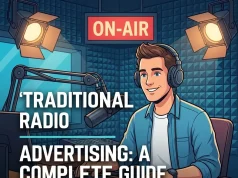
A traditional radio advertising strategy is a planned approach to buying airtime, crafting spots, and timing a campaign so it reaches the right listeners at the right moment, rather than just running an ad and hoping it sticks. Radio remains one of the most cost-effective ways to build local awareness and reach audiences who spend meaningful time commuting or working with the radio on in the background. This guide covers how to plan a radio strategy from station selection through scripting, scheduling, and measurement.
Radio gets overlooked constantly in a marketing world obsessed with digital channels, but it remains one of the most reliable ways to build awareness with a local or regional audience. People still spend significant time in their cars, at work, and around the house with a radio station playing in the background, and that consistent, repeated exposure is exactly what makes the format effective for building brand recall over time.
The businesses that get real results from radio don’t just buy a block of airtime and call it a strategy. A genuine traditional radio advertising strategy involves choosing the right stations, writing spots that work within the format’s constraints, and scheduling airtime in a way that builds frequency rather than scattering a handful of spots across the week. This guide walks through exactly how to build that strategy from the ground up.
Why Radio Still Works as an Advertising Channel
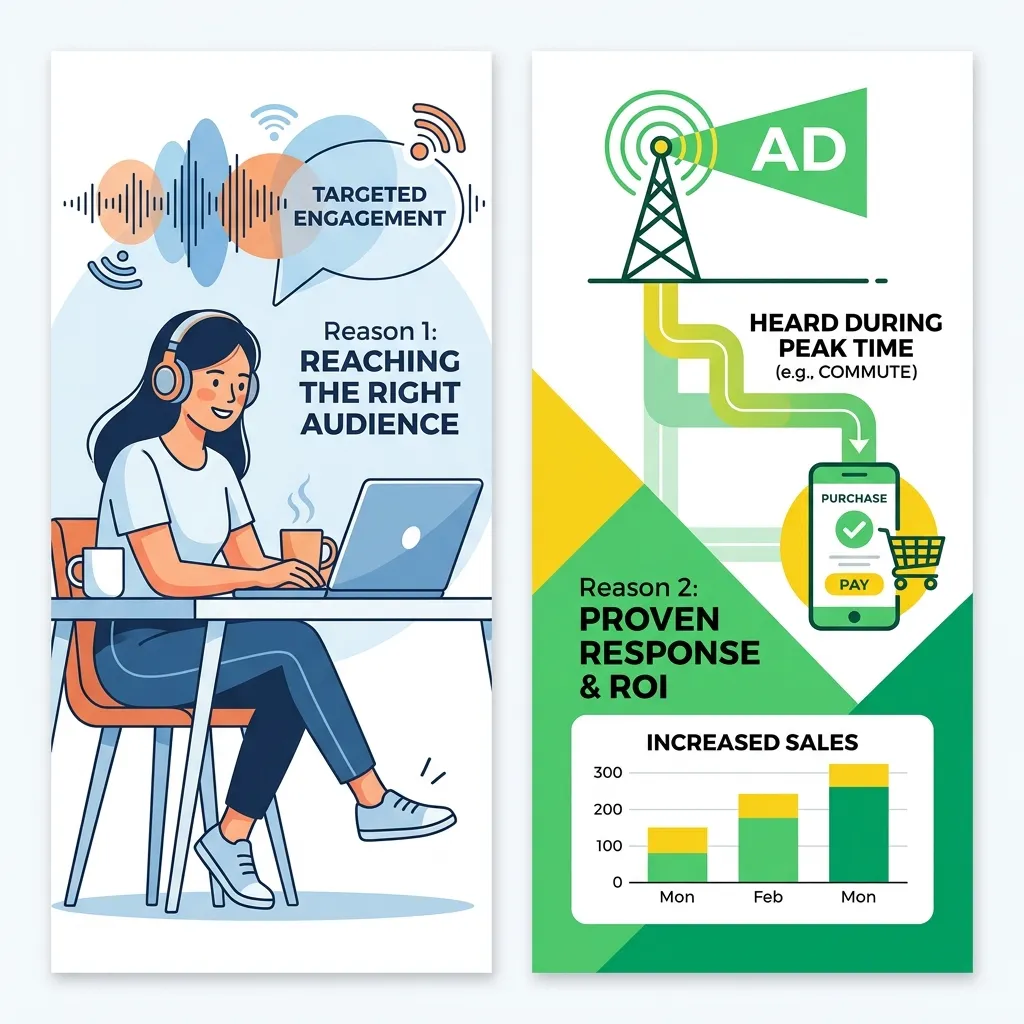
Radio’s core strength is repetition combined with trust in a familiar voice. Listeners tend to be loyal to specific stations and hosts, and a brand that shows up consistently on a station someone already trusts benefits from some of that same credibility. This dynamic is part of why traditional advertising in general continues to deliver measurable results even in a market saturated with digital alternatives — familiarity and repetition still move people toward a purchase decision.
A few specific advantages make radio worth including in a broader media plan:
- It reaches people at high-attention moments. Commuting, working, or driving are all times when a listener’s attention is available in a way that’s harder to capture through a scrolling social feed.
- It’s highly targetable by geography and format. Choosing stations by genre, talk format, or local news coverage lets you reach a fairly specific audience without complex targeting technology.
- It builds frequency affordably. Radio airtime is often less expensive than television, making it realistic to run enough repetitions to actually build recall.
- It pairs well with other channels. A radio campaign that drives a memorable phone number or offer can reinforce a broader multi-channel push rather than working in isolation.
What Makes a Radio Strategy “Traditional”
The term distinguishes this approach from streaming audio ads or podcast sponsorships, which follow different buying models and audience behaviors. A traditional radio advertising strategy specifically involves buying airtime on AM/FM broadcast stations, working within their programming blocks, and reaching listeners through the station’s existing audience rather than a platform’s algorithmic targeting. Understanding this distinction matters because the buying process, creative constraints, and measurement approach for broadcast radio differ meaningfully from digital audio formats.
The Complete Framework: Building a Traditional Radio Advertising Strategy
Here is a step-by-step approach to planning a radio campaign that actually performs.
Step 1: Define Your Goal and Target Audience
Before contacting a single station, decide what the campaign needs to achieve — foot traffic to a local business, brand awareness for a regional launch, or driving calls to a specific number. Pair that goal with a clear picture of who you’re trying to reach, since station selection depends entirely on matching format and audience to your actual target customer.
Step 2: Choose the Right Stations and Formats
Not every station reaches the same audience, even within the same market. A classic rock station skews toward a different demographic than a country or talk-radio station, and a strategy built around one wrong format assumption wastes budget regardless of how good the creative is. Research each station’s audience data, typical listener demographics, and time-of-day patterns before committing budget.
Step 3: Understand Dayparts and When to Buy
Radio audiences shift dramatically by time of day. Morning and afternoon drive times typically carry the highest listenership and the highest cost, while midday and evening slots are cheaper but reach a smaller, sometimes more specific audience. Building a strategy that mixes higher-cost drive-time spots with more affordable off-peak slots is often the most efficient way to build frequency within a limited budget.
Step 4: Write Scripts for the Ear, Not the Eye
Radio scripts need to work without any visual support, which means the message, brand name, and call to action all need to be clear from audio alone. Repeating the business name and key offer more than once in a thirty-second spot is standard practice, since a listener who tunes in partway through the ad still needs to catch the essential information. Keeping the script conversational and matching the tone of the station it airs on tends to perform better than a script that sounds like it was written for a completely different format.
Step 5: Build Frequency Rather Than Spreading Thin
A handful of scattered spots across a week rarely builds the recall needed to actually move a listener to action. Radio works on repetition — the same message heard several times over a short period is far more effective than an equal number of spots stretched across a month. Concentrating budget into a focused flight of two to four weeks, rather than a thin drizzle over several months, generally produces better results for the same total spend.
Step 6: Give Listeners a Clear, Trackable Response Path
Every spot should include one specific action — a memorable phone number, a simple-to-remember web address, or a mention of a specific promo code. Making that response path trackable, even something as simple as a unique landing page or promo code tied only to the radio campaign, is what makes it possible to judge whether the spend actually worked.
Step 7: Coordinate Radio with Other Channels
A traditional radio advertising strategy performs best as part of a broader plan rather than as an isolated channel. Pairing radio with local sponsorships, direct mail, or in-store promotions reinforces the same message across multiple touchpoints. Our guide on community sponsorships marketing for brands covers how local partnerships can extend the reach of a radio push well beyond the airtime itself.
Step 8: Measure Results and Adjust the Mix
After a flight ends, review response data against the goals set at the start — calls received, promo code redemptions, or measurable foot traffic increases during the campaign window. Our guide to offline marketing metrics walks through practical ways to track performance for channels like radio that don’t come with built-in digital analytics.
Comparing Radio to Other Traditional Channels
Radio isn’t the right fit for every campaign, and understanding how it compares to other offline formats helps clarify when to prioritize it. Compared to local television, radio is generally more affordable and easier to target by daypart and format, though it lacks the visual storytelling television allows. Compared to print, radio delivers repetition and emotional tone through voice and music in a way static print ads can’t replicate, though it lacks the lasting, referenceable quality of a printed ad someone can revisit. Our comparison of traditional TV advertising versus digital advertising is a useful companion read if you’re deciding how to split budget across a broader media mix that includes radio alongside other channels.
Common Mistakes in Radio Advertising Strategy
Even well-funded radio campaigns underperform for predictable reasons:
- Buying the wrong stations for the audience. Choosing a station based on personal preference rather than actual listener data wastes budget regardless of how strong the creative is.
- Spreading spots too thin. A small number of spots scattered across many weeks rarely builds enough frequency to be remembered.
- Writing scripts that assume visual context. A script that relies on imagery or text the listener can’t see fails the basic requirement of the format.
- Skipping a trackable response path. Without a dedicated number, code, or landing page, it’s nearly impossible to isolate radio’s actual contribution to results.
- Treating radio as a standalone tactic. A radio flight disconnected from the rest of a marketing plan rarely performs as well as one reinforced by other channels.
Radio’s Role in Building Local Word-of-Mouth
One underrated effect of a consistent radio presence is how it feeds word-of-mouth in a local market. When a business becomes a familiar name on a station people already trust, customers are more likely to mention it in conversation, which extends the campaign’s reach well past the actual airtime. This dynamic lines up closely with what wompromotion describes in their guide to word-of-mouth marketing strategies — repeated, trusted exposure is what gives people something worth repeating to others, and radio’s format is particularly well suited to building exactly that kind of familiarity over time.
Extending a Radio Campaign into Other Formats
A strong radio strategy doesn’t have to stop at the airwaves. The same core message, offer, and brand voice developed for a radio spot can inform other formats running alongside it. A business promoting a seasonal offer on the radio, for example, might host a related live event or webinar to capture leads who want more detail than a thirty-second spot can provide — a tactic covered in webinarmarketo’s beginner’s guide to webinar marketing. Similarly, a business with the resources to produce short video content can repurpose the same core message from a radio script into a video ad, an approach outlined in vidpromot’s guide to video advertising strategy. Neither of these extensions requires abandoning radio — they simply stretch the value of a message that’s already been proven to work on air.
Why Radio Still Deserves a Place in a Modern Media Plan
Digital channels dominate marketing conversations, but that doesn’t mean broadcast formats have stopped working — it often just means they’re underpriced relative to how effective they remain. The same logic applies across other traditional formats too. trendmarketo’s take on why traditional business models still drive success makes a similar point about not writing off proven approaches just because they’re less discussed than newer alternatives.
Radio also complements digital efforts particularly well for local and regional businesses. A listener who hears a spot during their commute and later sees the same brand name in a retargeting ad or a social post is experiencing the kind of repeated, multi-channel exposure that reliably outperforms any single channel used in isolation. Treating a traditional radio advertising strategy as one piece of a coordinated plan, rather than a channel to test in isolation, is usually what separates campaigns that build lasting recall from ones that get forgotten the moment the flight ends.
A Quick Word on Frequency and Budget Trade-offs
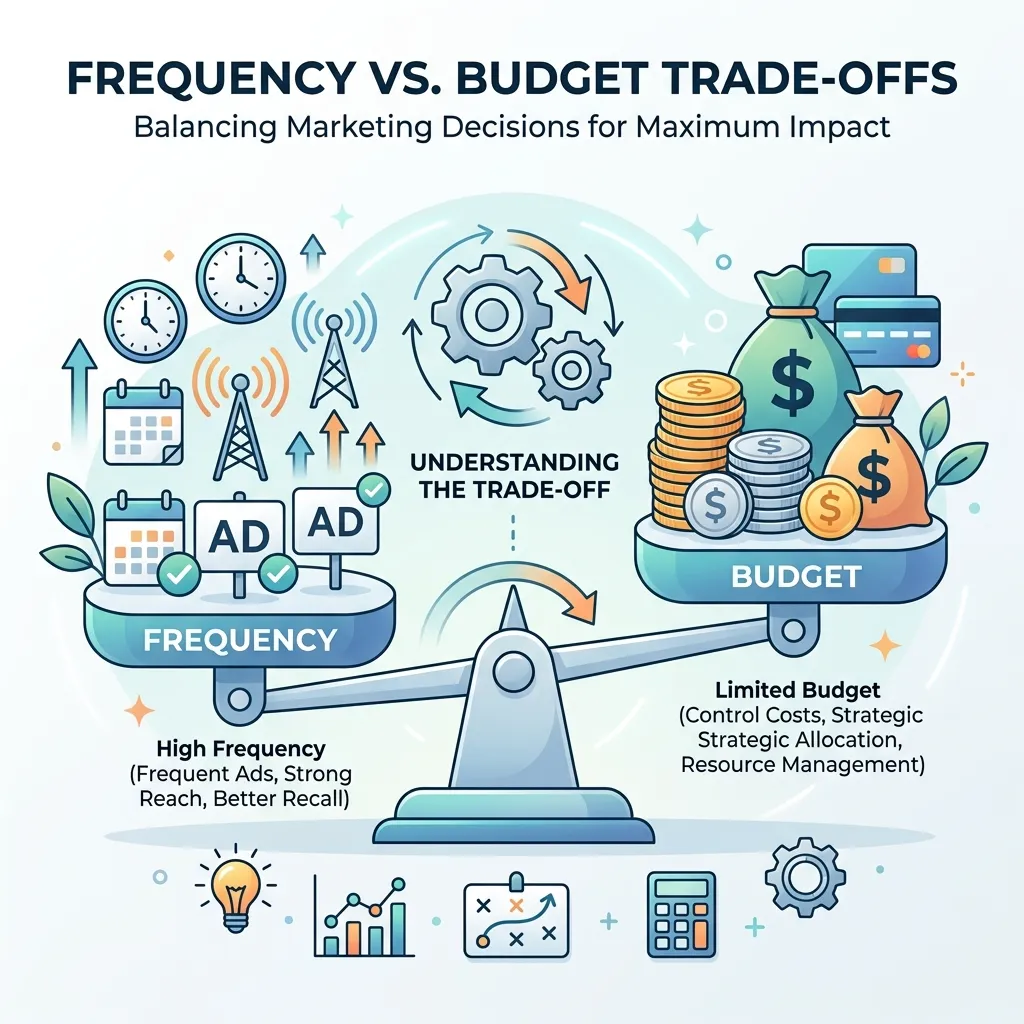
One question that comes up constantly when planning a radio buy is whether it’s better to run on more stations at a lower frequency or fewer stations at a higher frequency. In almost every case, concentration wins. A listener needs to hear a spot several times before it registers as memorable, so spreading a fixed budget across too many stations at too low a frequency on each usually means the message never reaches the repetition threshold needed to work anywhere. It’s generally more effective to commit fully to one or two well-matched stations than to spread thin across five in the hope that broader reach compensates for weaker frequency.
Conclusion
A traditional radio advertising strategy works when it’s built with the same rigor as any other media plan — a clear goal, the right stations for the actual target audience, scripts written for the ear, and a schedule that builds real frequency instead of spreading too thin. Give every spot a trackable response path, coordinate the campaign with other channels in your broader plan, and measure results against the goals you set before the flight started. Radio remains one of the most cost-effective ways to build local and regional awareness, and a well-planned strategy is what turns that potential into results rather than airtime that quietly comes and goes unnoticed.
Frequently Asked Questions
1. What is a traditional radio advertising strategy?
It’s a planned approach to buying broadcast airtime, writing effective spots, and scheduling a campaign to build frequency and reach a specific target audience, rather than airing a handful of disconnected ads.
2. Is radio advertising still effective in a digital marketing world?
Yes. Radio still reaches audiences during high-attention moments like commuting, and its repetition-driven format continues to build brand recall effectively, especially for local and regional businesses.
3. How much does traditional radio advertising typically cost?
Costs vary widely by market size, station popularity, and daypart, with drive-time slots commanding the highest rates and off-peak hours offering more affordable options.
4. What are radio dayparts and why do they matter?
Dayparts are the time blocks radio audiences are segmented into, such as morning drive or evening. Matching your buy to the daypart when your target audience actually listens is critical to a strategy’s success.
5. How long should a radio ad campaign run?
A focused flight of two to four weeks with concentrated frequency generally performs better than the same number of spots spread thin over several months.
6. What makes a good radio ad script?
A good script is written for the ear, repeats the business name and key message more than once, and matches the conversational tone of the station it airs on.
7. Can small businesses afford a radio advertising strategy?
Yes. Local and regional stations often offer more affordable rates than national outlets, making radio accessible for small businesses focused on a specific geographic area.
8. How do you measure the success of a radio campaign?
Track a dedicated phone number, unique promo code, or specific landing page tied only to the radio campaign so response can be isolated from other marketing activity.
9. Should radio be combined with other advertising channels?
Yes. Radio performs best as part of a coordinated plan alongside channels like local sponsorships, direct mail, or digital retargeting, rather than running in isolation.
10. What’s the biggest mistake businesses make with radio advertising?
Choosing stations without reviewing actual listener demographic data often results in reaching the wrong audience, regardless of how strong the ad itself is.
11. Is radio advertising better for local or national campaigns?
Radio tends to work especially well for local and regional campaigns, since station audiences are naturally concentrated in specific geographic markets.
12. How is traditional radio different from streaming audio advertising?
Traditional radio involves buying airtime on broadcast AM/FM stations within existing programming, while streaming audio ads run through digital platforms with different targeting and buying models.