Integrating traditional and digital marketing maximizes reach, enhances credibility, and drives ROI. By unifying messaging, leveraging diverse channels, and using data-driven insights, brands can create seamless, multi-touch campaigns for greater engagement and measurable success.
In an age where digital channels dominate headlines, traditional marketing often gets relegated to the back burner. Yet the most successful brands are those that recognize the power of marrying offline tactics—print ads, billboards, radio, and direct mail—with online strategies like social media, email campaigns, and search advertising. This integrated approach maximizes reach, boosts credibility, and drives measurable ROI. In this guide, we’ll explore why integration matters, which channels to leverage, best practices for unifying your messaging, and how to measure success across the entire marketing ecosystem.
Why Combine Traditional and Digital Marketing?
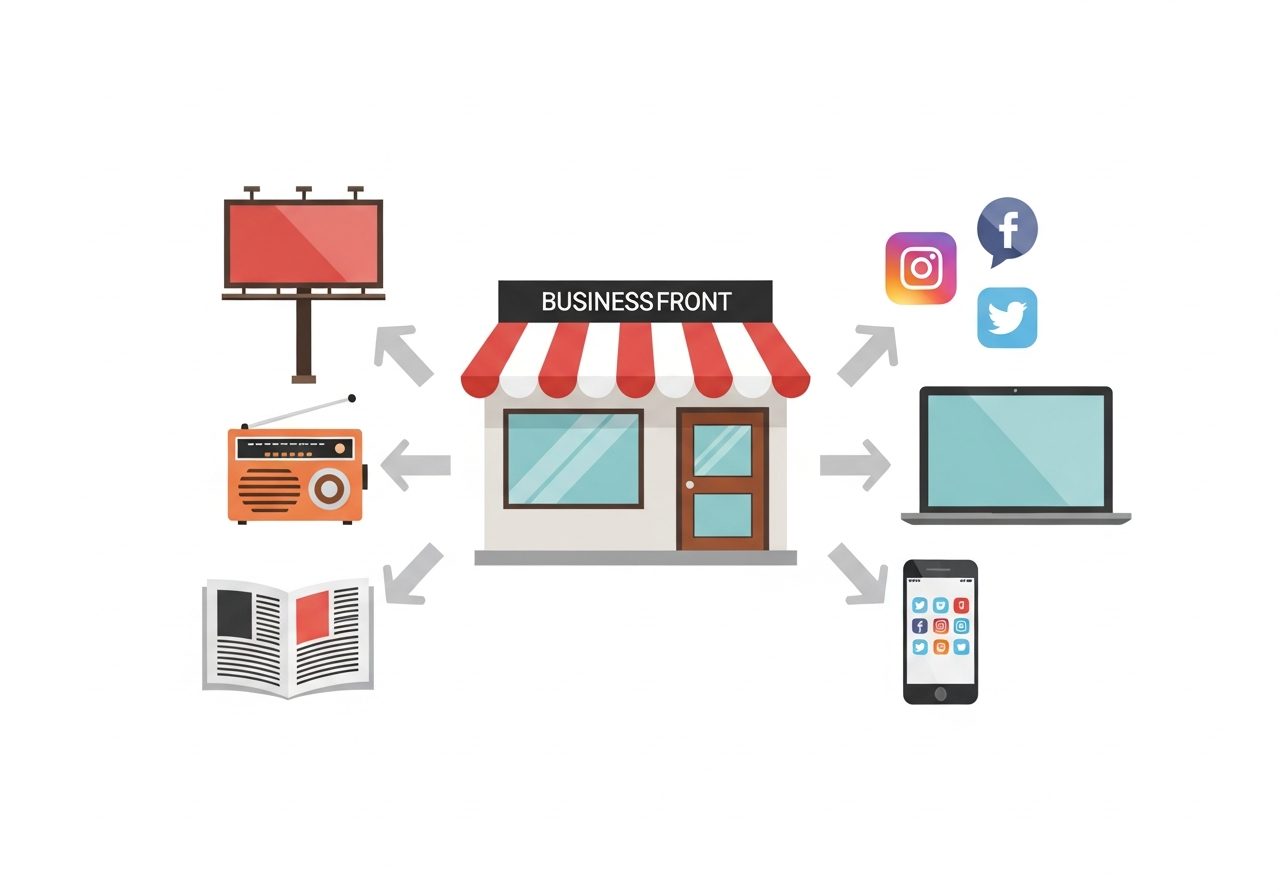
Many marketers fall into the trap of treating digital and traditional efforts as separate silos. In reality, each channel provides unique advantages that, when coordinated, deliver a multiplier effect. That’s why integrating traditional and digital marketing is essential for modern brands. Let’s look at the key benefits of an integrated strategy.
Broader Reach
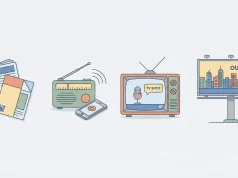
Traditional channels such as television, radio, and outdoor advertising remain indispensable for reaching audiences who aren’t online all day. Billboard ads capture motorists, print magazines engage niche readers, and radio reaches commuters. Digital channels, in turn, let you retarget and nurture these same prospects with personalized messages, ensuring your brand remains top of mind across touchpoints. This is a key reason for integrating traditional and digital marketing.
Enhanced Credibility
Offline marketing carries a certain gravitas. A full-page magazine advert or a well-placed billboard signals that your brand is established and invested in quality. Digital ads alone can sometimes feel transient. By pairing offline presence with online follow-up—such as driving QR code scans to a landing page—you reinforce credibility and deepen engagement. This combination exemplifies the power of integrating traditional and digital marketing.
Improved Attribution and Analytics
Integrating channels encourages marketers to adopt multi-touch attribution models. Rather than crediting a sale entirely to the last click, you can map the customer journey from a print ad or radio spot, through website visits, to the final purchase. This holistic view sheds light on which combinations of tactics deliver the best ROI, guiding smarter budget allocation.
Key Traditional Marketing Channels to Leverage
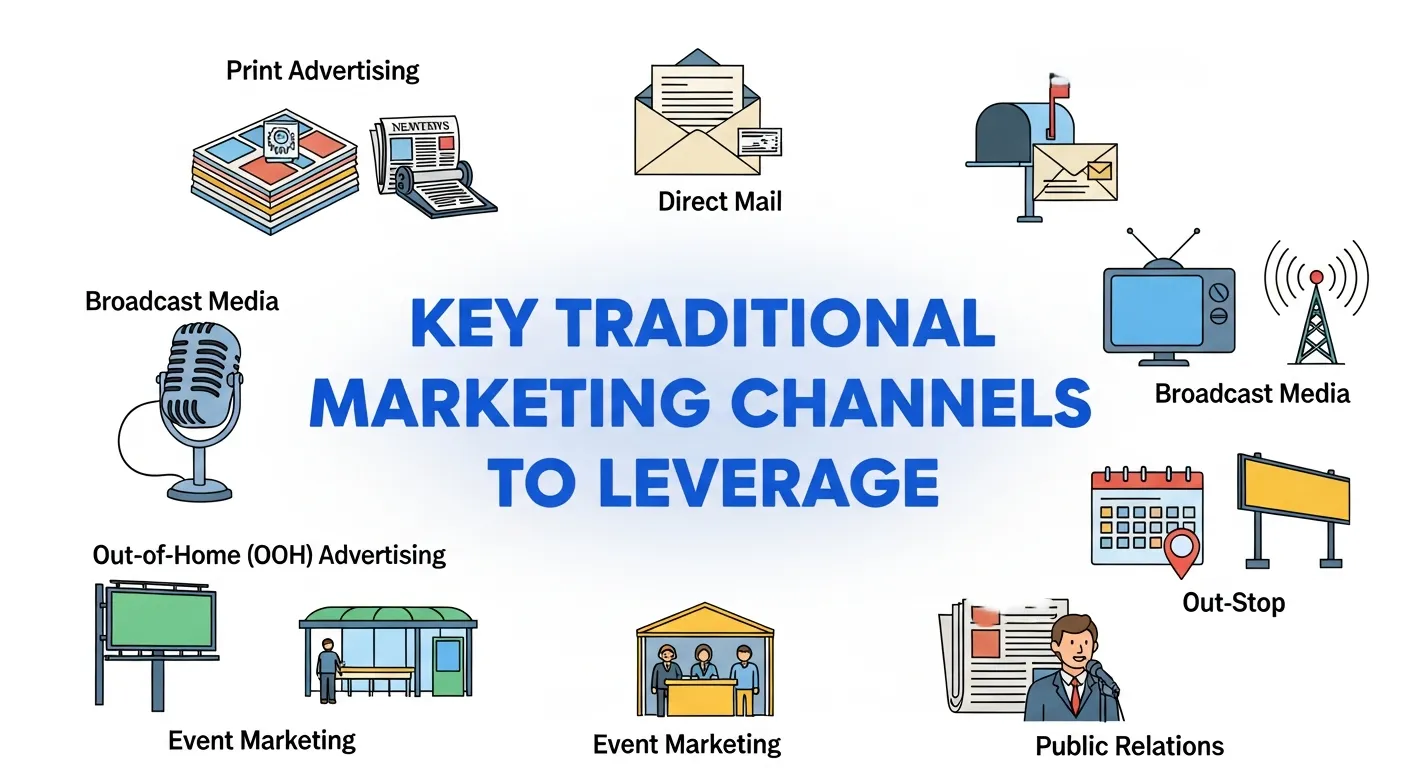
Before diving into integration tactics, identify the offline channels best suited for your target audience and objectives.
Print Advertising
Print Advertising is still a highly effective marketing channel. With magazines, newspapers, and specialty publications attracting loyal readers, print advertising works perfectly for product launches, limited-time offers, or sharing thought leadership content. By incorporating unique URLs or personalized QR codes, your print advertising can seamlessly track offline-to-online conversions and boost engagement.
Broadcast Media
Television and radio spots deliver mass reach. Short, memorable jingles or slogans can improve brand recall. To integrate digitally, encourage listeners or viewers to visit a short vanity URL, follow a hashtag, or scan an on-screen QR code for exclusive discounts.
Out-of-Home Advertising
Billboards, transit ads, and street furniture target audiences on the go. Leverage geotargeting in your digital campaigns to retarget people who pass by your OOH placements, using mobile display ads or location-based push notifications.
Digital Marketing Channels Complementing Traditional Efforts
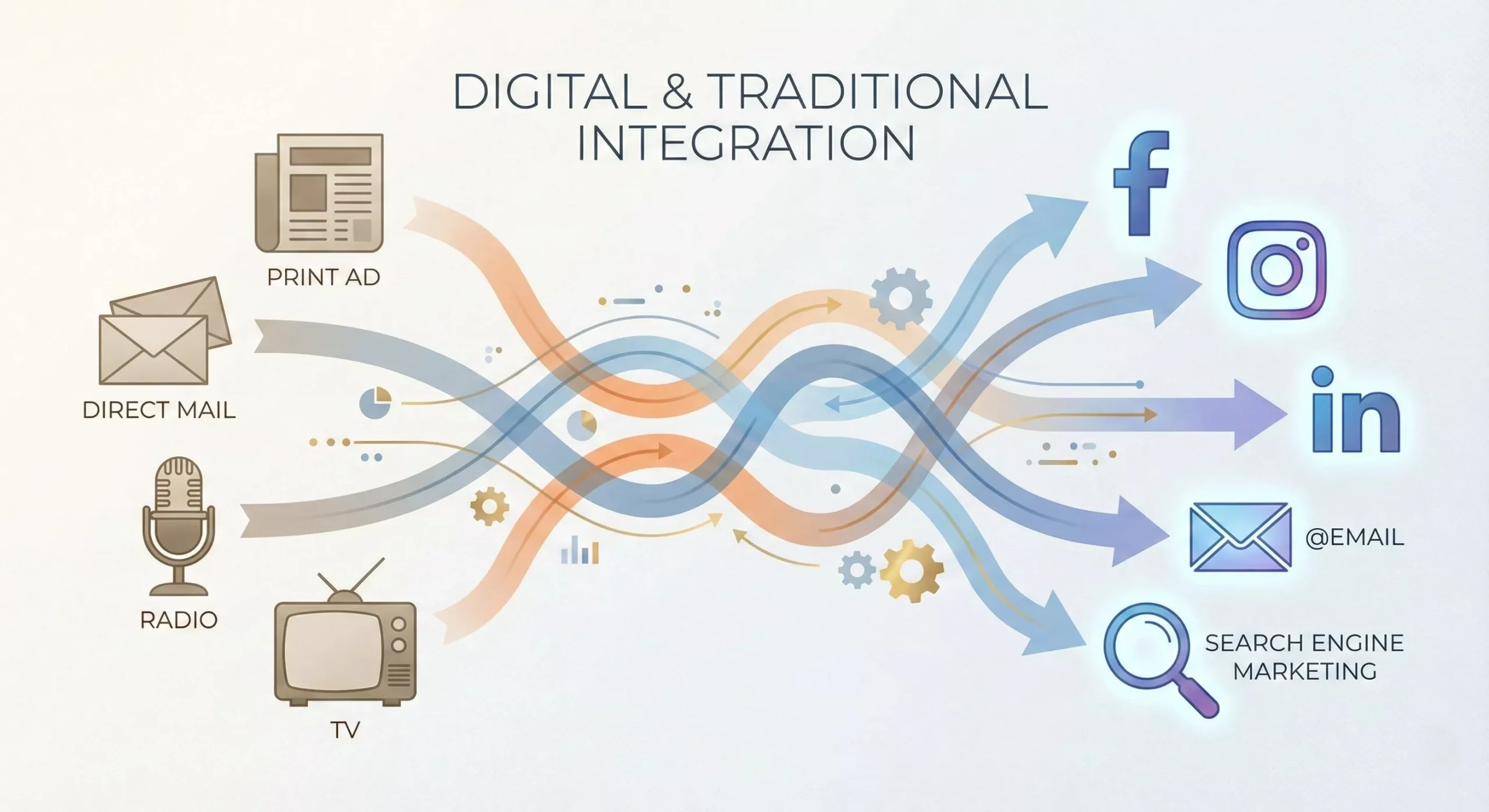
Digital channels offer precision targeting, real-time analytics, and the agility to pivot quickly. Here’s how they complement offline tactics, highlighting why integrating traditional and digital marketing is so powerful.
Social Media
Platforms like Facebook, Instagram, LinkedIn, and TikTok allow you to retarget audiences exposed to your traditional ads. Encourage user-generated content by running hashtag contests tied to an offline campaign, or live-stream events promoted via print or radio.
Email Marketing
Drive newsletter sign-ups through postcards or direct mail incentives. Integrate Email Marketing by using tailored email sequences to nurture leads acquired offline, sending them exclusive digital-only offers or valuable content that builds trust.
Search Engine Marketing
Capitalize on branded search queries generated by traditional ads. Use Search Engine Marketing strategies by increasing your Google Ads budget for branded terms during print and broadcast campaigns to ensure you own the digital shelf.
Strategies for Seamless Integration
The real magic lies in crafting unified campaigns that weave offline and online threads together. Consider these strategies to succeed at integrating traditional and digital marketing:
Unified Messaging and Branding
Ensure your visual elements—logos, color palettes, typography—remain consistent across all channels. Align your copy so that taglines and value propositions ring true whether prospects see your billboard or click your Facebook ad.
Data-Driven Targeting
Use CRM and customer data platforms to segment audiences based on offline interactions. For instance, send personalized email offers to customers who redeemed a Direct Mail Marketing coupon, or retarget users who scanned an in-store QR code with display ads for complementary products.
Cross-Channel Promotions
Run limited-time promotions advertised in print that require a digital redemption code. Host events promoted via direct mail and social media, driving registrations through an online portal. Every promotion should encourage movement between offline and online touchpoints.
Best Practices for Designing an Integrated Marketing Campaign
When combining traditional and digital marketing strategies, it’s important to follow a structured approach to ensure a seamless experience for your audience. Here are some best practices for designing successful integrated campaigns:
Start with a Clear Objective
Your campaign’s goal should be at the forefront of both your traditional and digital strategies. Whether you’re aiming to increase brand awareness, generate leads, or boost sales, having a clear objective helps you determine which channels to use, how to structure your messaging, and how to measure success. Ensure that both offline and online channels support this shared goal to create a cohesive narrative.
Create a Unified Experience
Integration isn’t just about using both traditional and digital channels; it’s about creating a unified brand experience. Ensure that your message, tone, and design elements are consistent across all platforms. This consistency strengthens brand recognition and fosters trust among your audience, whether they’re encountering your brand on a billboard, website, or social media post.
Leverage Cross-Channel Interactivity
Encourage your audience to move between offline and online experiences. For example, a print ad could direct readers to a website or social media page where they can engage with the brand more deeply. Use dynamic content like QR codes, exclusive online offers, or hashtags to create a continuous customer journey that integrates both worlds.
Utilize Data and Feedback for Optimization
Throughout the campaign, gather real-time data and feedback from both traditional and digital channels. Use this information to refine and optimize the campaign. For example, if your print ads are driving high engagement on social media but low conversions, adjust your online ads or landing pages to address any friction in the conversion process.
Measuring Success Across Channels
Without integrated measurement, you’ll miss the full picture of campaign performance. Businesses that are serious about integrating traditional and digital marketing adopt multi-touch attribution and unified analytics dashboards to track every touchpoint.
- Multi-Touch Attribution: Allocate credit to every touchpoint, both offline and online, to understand the true influence of each channel.
- Unique Tracking Mechanisms: Use QR codes, vanity URLs, phone numbers, or promo codes to tie offline responses back to digital systems.
- Unified Analytics Dashboard: Consolidate data from your ad management platforms, web analytics, CRM, and point-of-sale systems to track campaign success in real time.
The Role of Automation in Integrated Marketing
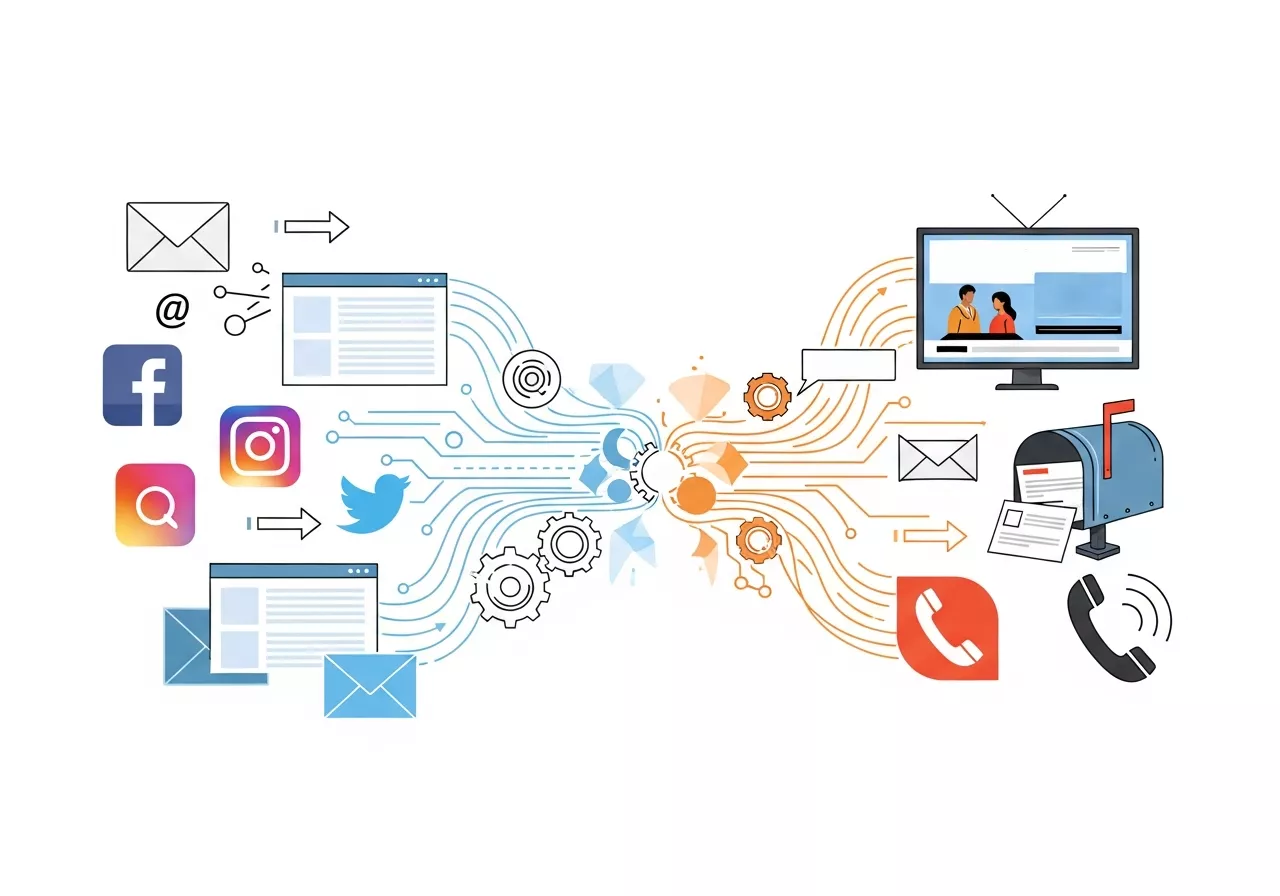
As brands increasingly adopt integrated marketing strategies, automation tools have become essential in streamlining campaigns and ensuring timely, personalized experiences. Here’s how automation can enhance the integration of traditional and digital marketing:
1.Automated Cross-Channel Campaigns
Marketing automation platforms allow businesses to schedule, trigger, and execute campaigns across multiple channels. For example, you can automate email follow-ups to customers who saw a TV ad, visited your website, or scanned a QR code on a direct mail piece. Automation ensures that messaging is timely and relevant, without the need for manual intervention, saving time and resources.
2.Personalization at Scale
Automation allows for hyper-personalized marketing at scale, especially when integrating digital and traditional efforts. Data collected from digital touchpoints can be used to personalize direct mail, email campaigns, or SMS messages. This ensures that all communication feels tailored to the individual, increasing engagement and conversions.
3.Seamless Customer Journey Tracking
Automation tools integrate across various channels and track customer behaviors, helping brands create a seamless experience for consumers as they move from one touchpoint to another. By automatically syncing data from offline interactions (like phone calls or in-store visits) to online activity (website visits, social media interactions), you can better understand the customer journey and refine future campaigns accordingly.
4.Efficiency in Attribution and Reporting
With automation, you can track and attribute success across both offline and online channels. Automated reporting tools consolidate data, giving you a holistic view of campaign performance. This allows for more accurate insights and faster decision-making, ensuring your marketing strategies are optimized in real-time.
Case Study: A Real-World Example
Imagine a regional restaurant chain launching a new seasonal menu. They distribute direct mail postcards featuring a QR code offering 20 percent off. Concurrently, they place targeted Facebook and Instagram ads in the same zip codes, promoting user-generated content contests with the hashtag #FallFlavors2025. Outdoor billboards in busy districts display mouthwatering menu images alongside the QR code. Over six weeks, the restaurant tracks:
- QR code scans and promo redemptions at the point of sale
- Social media engagement, hashtag usage, and contest entries
- Lift in branded search queries and online reservations
The integrated campaign achieves a 25 percent increase in foot traffic, a 40 percent boost in social media followers, and a 15 percent uplift in average check size. Importantly, post-campaign analysis shows that combining offline touchpoints with digital follow-up generated a 30 percent higher ROI than standalone efforts.
Challenges and Pitfalls to Avoid
An integrated approach isn’t without challenges. Stay vigilant for these common pitfalls:
Budget Allocation Misalignment
Don’t inadvertently starve one channel of resources. Allocate budgets based on historical performance, testing, and attribution insights to ensure each tactic receives adequate support.
Inconsistent Brand Voice
Divergent messaging erodes trust. Maintain centralized brand guidelines and coordinate campaign planning across teams to preserve a cohesive voice.
Poor Data Integration
Silos in data collection hinder accurate measurement. Invest in platforms that connect online and offline data streams, and establish clear processes for data governance and sharing.
Future Trends: The Evolution of Integrated Marketing
The marketing landscape continues to evolve. As technologies like augmented reality (AR), virtual reality (VR), and the Internet of Things (IoT) mature, integrated campaigns will become even more immersive. Imagine interactive bus shelters that trigger personalized mobile experiences, or digital kiosks that tie back to your CRM in real time. Staying ahead means embracing innovation while preserving the proven strengths of traditional channels.
Conclusion
Traditional and digital marketing aren’t adversaries; they’re partners in building memorable brand experiences. By aligning your messaging, tracking every touchpoint, and leveraging the unique strengths of both offline and online channels, you’ll unlock higher engagement, greater credibility, and superior ROI. Start small with a pilot campaign—perhaps pairing print ads with social media retargeting—measure rigorously, and scale what works. The future of marketing is integrated, and the time to act is now.
FAQ: Integrating Traditional and Digital Marketing
1. What is integrating traditional and digital marketing?
Integrating traditional and digital marketing means combining offline channels—like print ads, billboards, radio, and direct mail—with online strategies such as social media, email campaigns, and search advertising. The goal is to create a seamless, consistent brand experience that maximizes reach and ROI.
2. Why should my business integrate traditional and digital marketing?
An integrated approach broadens audience reach, enhances credibility, improves customer journey tracking, and drives measurable results. By connecting offline and online efforts, brands can create a stronger presence and engage customers across multiple touchpoints.
3. Which traditional marketing channels work best with digital campaigns?
Common channels include:
- Print advertising (magazines, newspapers, specialty publications)
- Broadcast media (TV and radio spots)
- Out-of-home advertising (billboards, transit ads, street furniture)
These channels can drive traffic to digital platforms through QR codes, vanity URLs, or social media prompts.
4. How do digital channels complement traditional marketing?
Digital channels enable precise targeting, retargeting, and real-time analytics. Social media, email marketing, and search engine marketing can nurture leads generated by traditional ads and measure engagement and conversions effectively.
5. How do I track the success of an integrated campaign?
Use multi-touch attribution models to credit every touchpoint, offline and online. Implement unique tracking mechanisms like QR codes, vanity URLs, or promo codes, and consolidate data into a unified analytics dashboard for a full view of campaign performance.
6. What are common challenges in integrating traditional and digital marketing?
Key challenges include:
- Misaligned budgets between offline and online channels
- Inconsistent brand messaging
- Poor data integration and siloed analytics
7. Can small businesses benefit from integrating traditional and digital marketing?
Absolutely. Even small-scale campaigns—like pairing direct mail with social media retargeting—can drive significant engagement and conversions, while providing insights to scale efforts over time.
8. What’s the future of integrating traditional and digital marketing?
Emerging technologies such as augmented reality (AR), virtual reality (VR), and the Internet of Things (IoT) will make integrated campaigns more immersive and interactive, allowing brands to connect offline experiences with personalized digital touchpoints in real time.