Marketing can feel overwhelming when you’re staring at a blank strategy document. Where do you start? What elements should you prioritize? How do you ensure your marketing efforts work together cohesively?
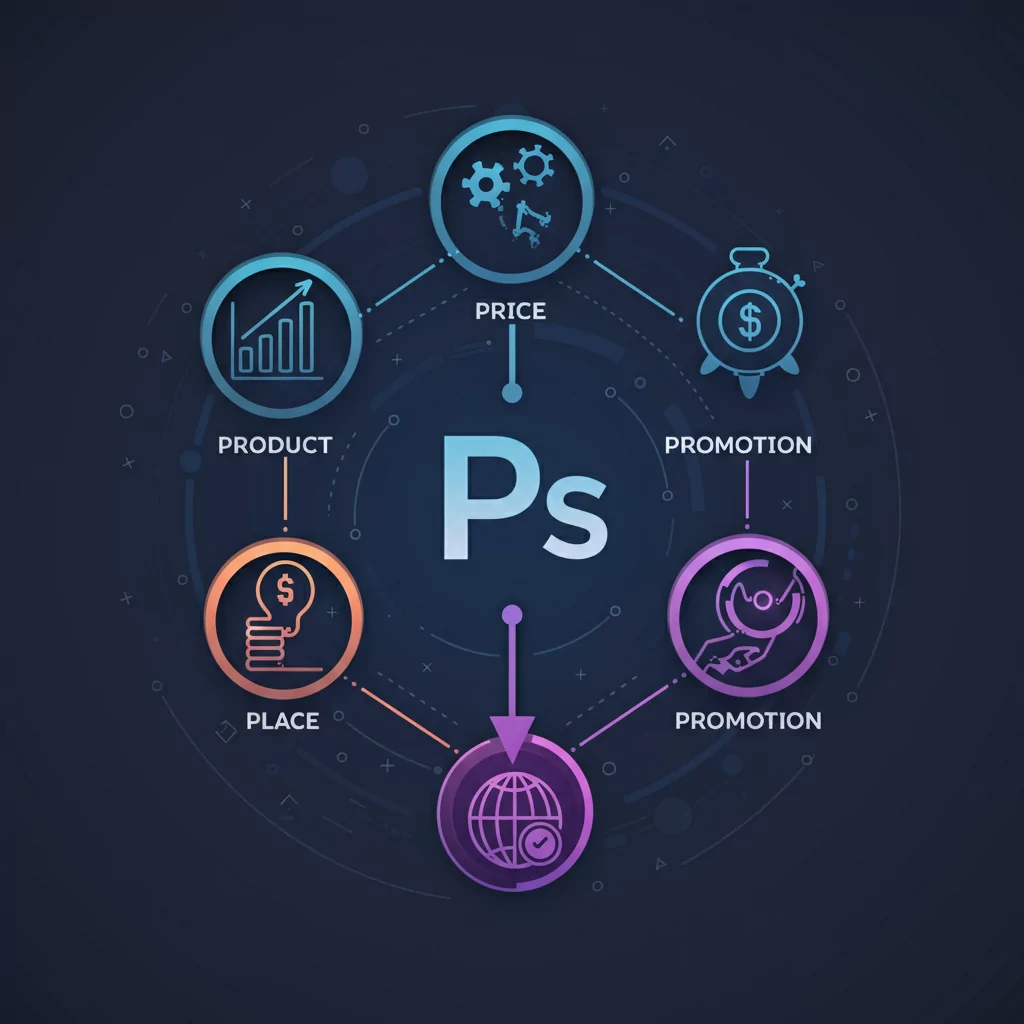
The answer lies in a framework that has guided marketers for over six decades: the four Ps of marketing. This foundational concept, also known as the marketing mix, provides a systematic approach to developing and executing marketing strategies that resonate with your target audience.
This guide will walk you through each of the four Ps—Product, Price, Place, and Promotion—and show you how to apply them to create marketing campaigns that drive real results.
What Are the Four Ps of Marketing?
The four Ps of marketing represent the core elements that businesses must consider when bringing a product or service to market. First introduced by marketing professor E. Jerome McCarthy in 1960, this framework has become the cornerstone of marketing education and practice worldwide.
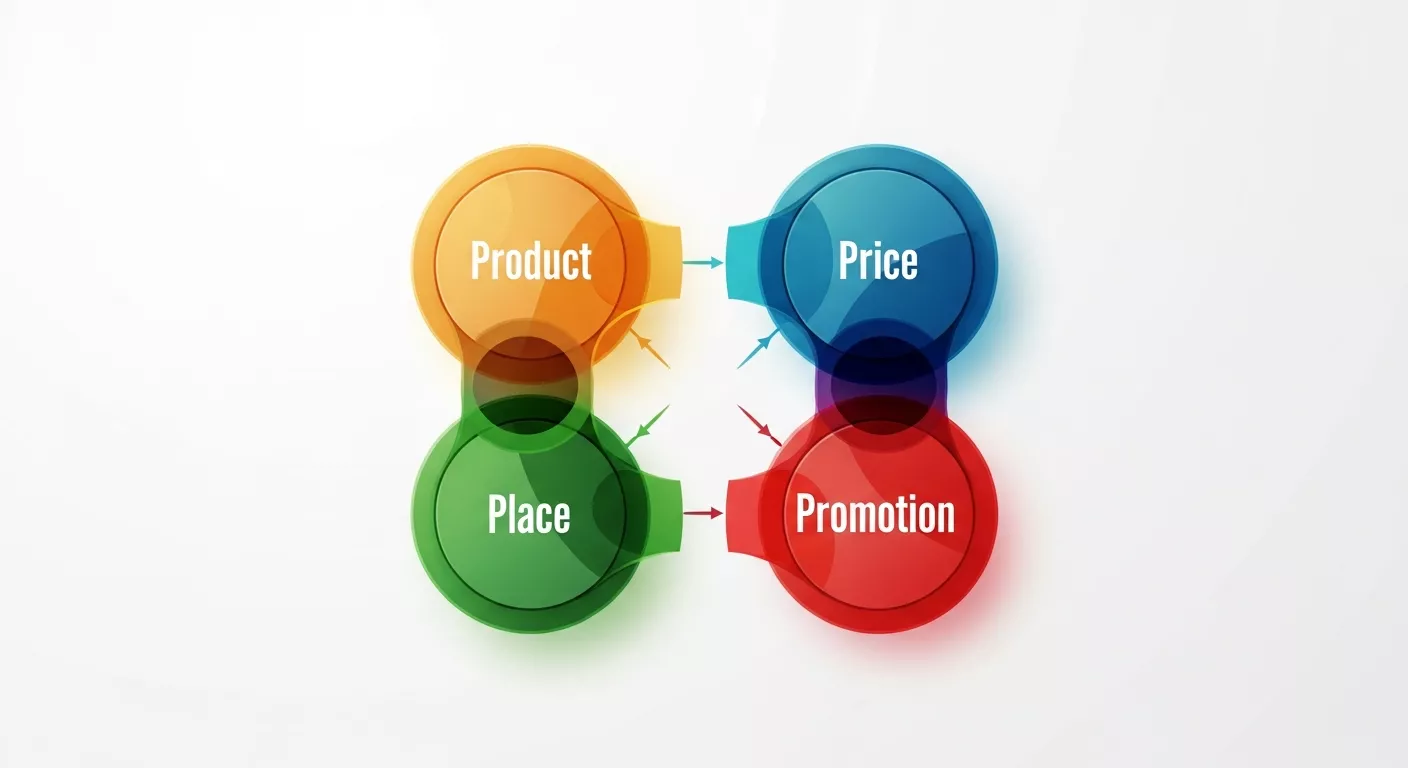
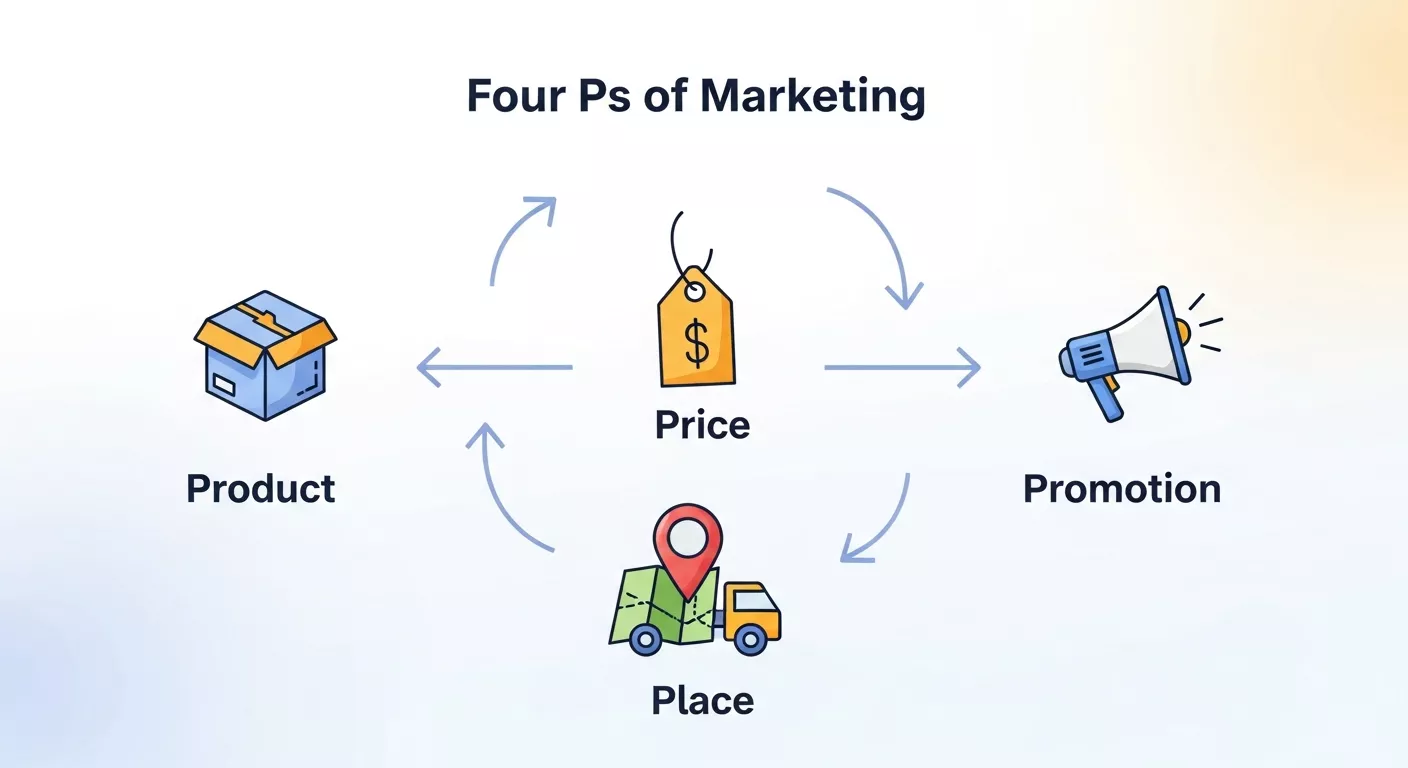
The four Ps are:
- Product: What you’re selling
- Price: How much do you charge
- Place: Where you sell it
- Promotion: How you communicate with customers
These elements work together to form your marketing mix—the combination of strategies and tactics that position your offering in the marketplace. When aligned properly, the four Ps create a cohesive marketing strategy that addresses every aspect of your customer’s journey.
Product: The Foundation of Your Marketing Strategy
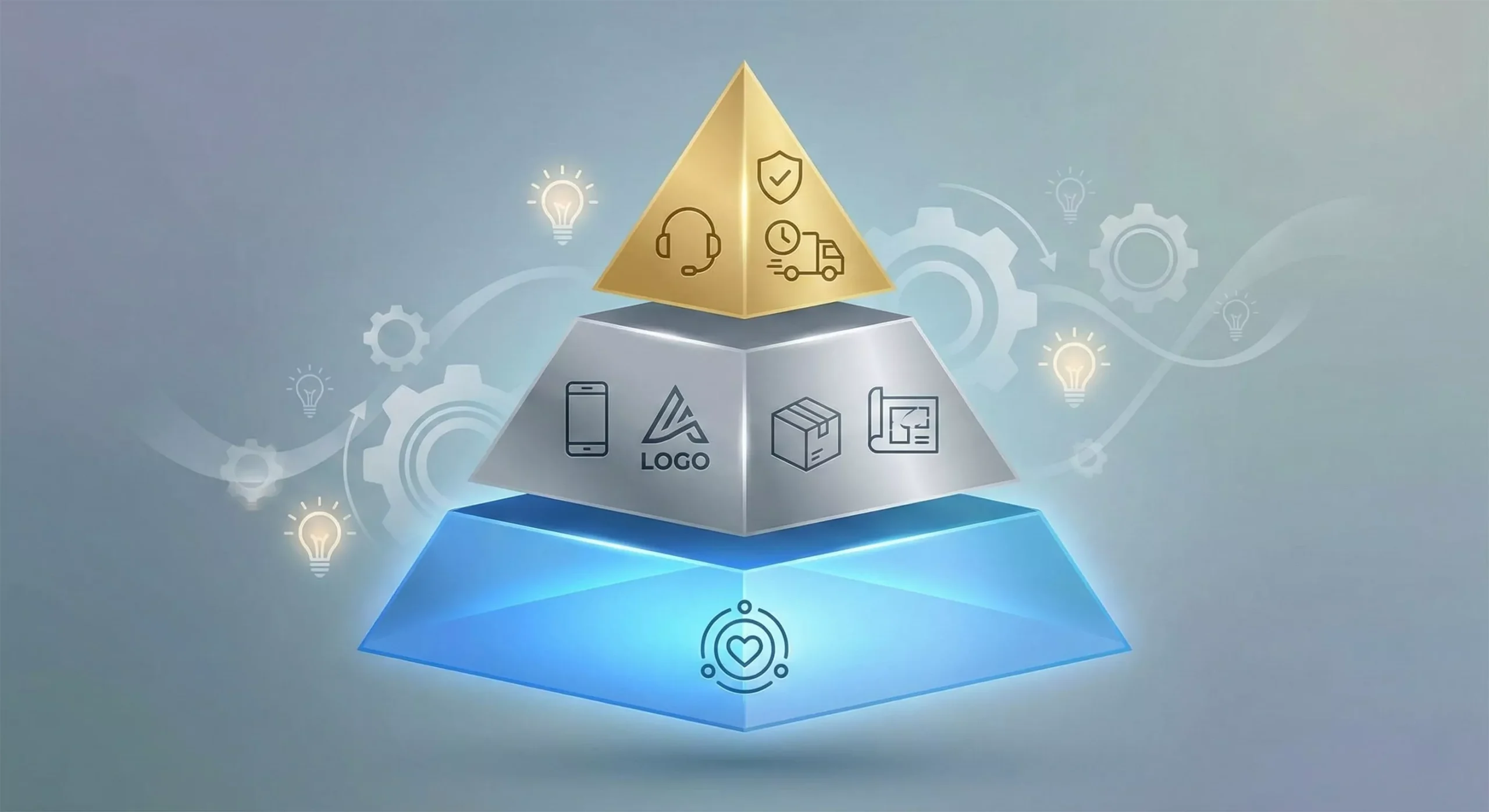
Your product is more than just a physical item or service—it’s the complete solution you provide to meet customer needs. This includes features, benefits, design, quality, branding, and customer support.
Defining Your Product Strategy
Start by asking these key questions:
- What problem does your product solve?
- What makes it different from competitors?
- What features matter most to your target audience?
- How does your product fit into customers’ lives?
Product Development Considerations
- Core Product: The fundamental benefit or service your customers receive.
- Actual Product: The tangible aspects include quality, features, design, brand name, and packaging.
- Augmented Product: Additional services and benefits such as warranties, customer support, installation, and after-sales service.
Product Lifecycle Management
Products move through different stages—introduction, growth, maturity, and decline. Your marketing approach should adapt to each stage:
- Introduction Stage: Focus on building awareness and educating customers about your product’s benefits.
- Growth Stage: Emphasize differentiation and work to capture market share.
- Maturity Stage: Highlight competitive advantages and consider product improvements or line extensions.
- Decline Stage: Decide whether to revitalize, maintain, or discontinue the product.
Price: Finding the Sweet Spot
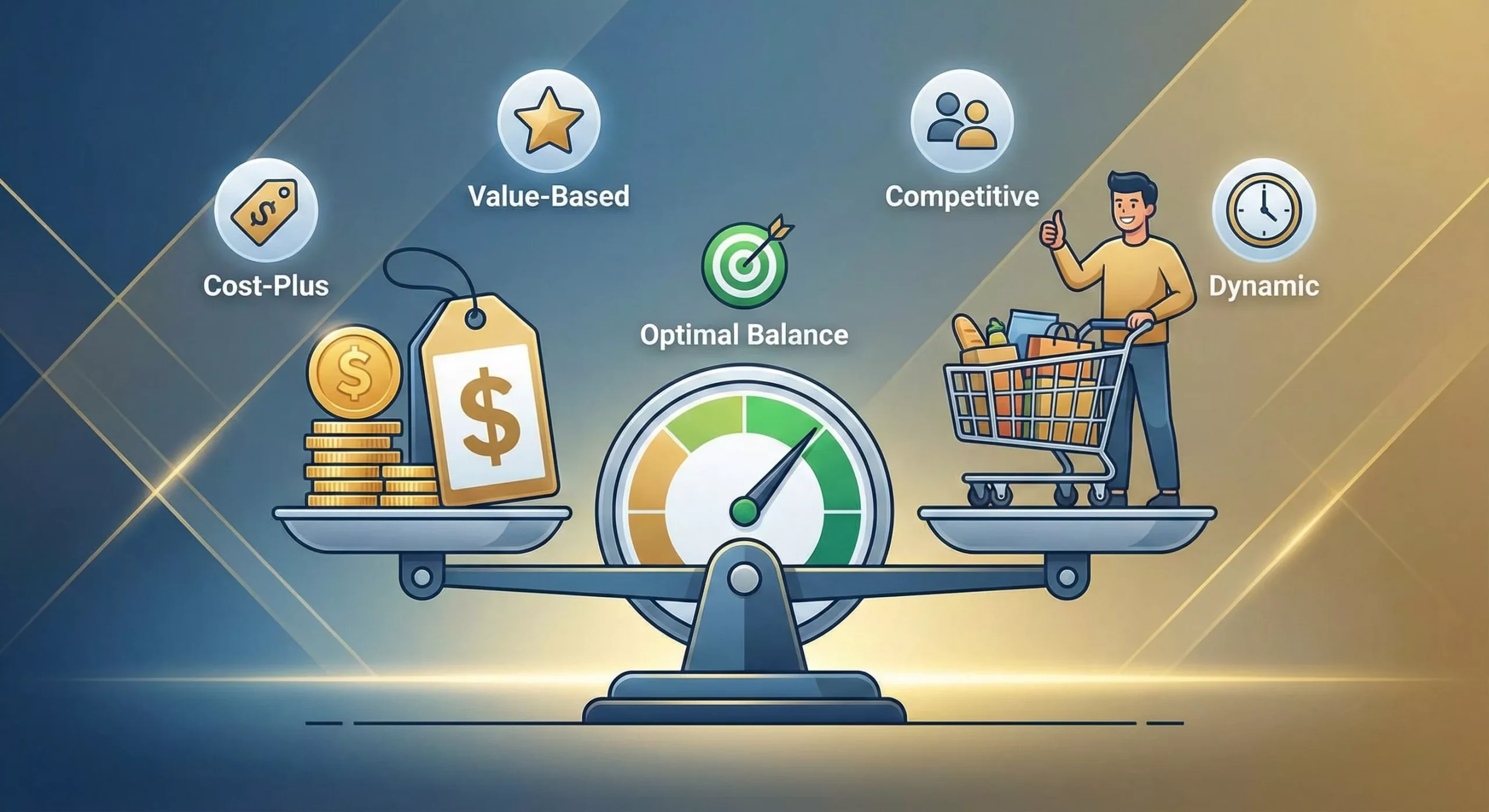
Price is the only element of the marketing mix that generates revenue—the other three represent costs. Setting the right price requires balancing profitability goals with customer expectations and competitive pressures.
Pricing Strategy Approaches
- Cost-Plus Pricing: Add a markup to your production costs. Simple but may not reflect market value.
- Value-Based Pricing: Price based on the perceived value to customers. Often leads to higher profit margins.
- Competitive Pricing: Set prices relative to competitors. Useful in highly competitive markets.
- Penetration Pricing: Start with low prices to gain market share quickly, then raise prices later.
- Skimming Pricing: Start with high prices for early adopters, then lower prices to reach broader markets.
Factors Affecting Price Decisions
- Customer Demand: Higher demand typically supports higher prices.
- Competition: Direct competitors influence your pricing flexibility.
- Cost Structure: Your costs set the floor for pricing decisions.
- Market Positioning: Premium positioning justifies higher prices.
- Economic Conditions: Economic downturns may require price adjustments.
Psychological Pricing Techniques
- Charm Pricing: Prices ending in 9 or 99 (like $19.99) often increase sales.
- Bundling: Combining products or services can increase perceived value.
- Anchoring: Presenting a high-priced option first makes other options seem more reasonable.
Place: Getting Your Product to Customers
Place refers to how and where customers can access your product. This includes distribution channels, retail locations, online platforms, and logistics.
Distribution Channel Options
Direct Sales: Selling directly to customers through your own channels.
- Benefits: Higher profit margins, better customer relationships, more control
- Challenges: Higher costs, limited reach
Indirect Sales: Using intermediaries like retailers, wholesalers, or distributors.
- Benefits: Wider reach, lower costs, established relationships
- Challenges: Less control, lower margins, potential channel conflicts
Multi-Channel Approach: Combining direct and indirect channels.
- Benefits: Maximum reach, flexibility, risk diversification
- Challenges: Complexity, potential channel conflicts
Digital Distribution Considerations
- E-commerce Platforms: Amazon, eBay, Shopify, and other online marketplaces.
- Social Commerce: Selling through social media platforms like Instagram, Facebook, and TikTok.
- Mobile Apps: Dedicated apps for direct customer engagement and sales.
- Subscription Services: Recurring delivery models for ongoing customer relationships.
Location Strategy for Physical Retail
- Demographics: Align store locations with your target customer base.
- Foot Traffic: Choose locations with high visibility and accessibility.
- Competition: Consider proximity to competitors—sometimes clustering works, sometimes it doesn’t.
- Costs: Balance prime locations with rental costs and potential returns.
Promotion: Connecting with Your Audience
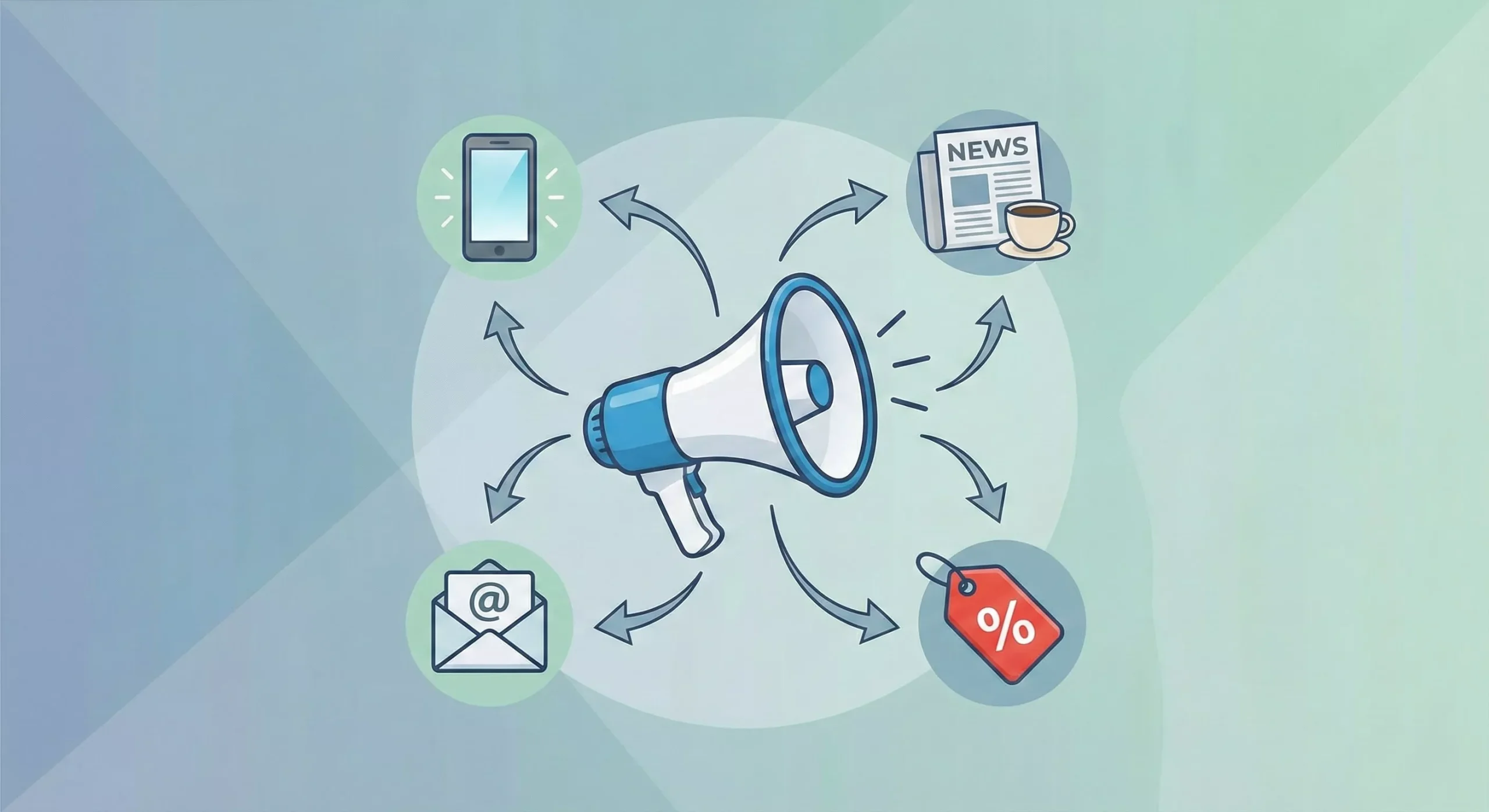
Promotion encompasses all the ways you communicate with customers about your product. This includes advertising, public relations, sales promotions, direct marketing, and digital marketing.
Integrated Marketing Communications
Your promotional efforts should work together to deliver consistent messages across all touchpoints:
- Advertising: Paid media placements in print, broadcast, digital, and outdoor channels.
- Public Relations: Earned media coverage through press releases, events, and media relationships.
- Sales Promotion: Short-term incentives like discounts, contests, and loyalty programs.
- Direct Marketing: Personalized communications through email, mail, and phone.
- Digital Marketing: Online strategies including social media, content marketing, and search engine optimization.
Choosing the Right Promotional Mix
- Target Audience: Different demographics respond to different promotional approaches.
- Product Type: Consumer goods often require different promotion than business services.
- Budget: Allocate resources across channels based on expected return on investment.
- Objectives: Brand awareness requires different tactics than driving immediate sales.
- Timing: Coordinate promotional activities with product launches, seasonal trends, and competitive activities.
Measuring Promotional Effectiveness
- Awareness Metrics: Brand recognition, recall, and reach.
- Engagement Metrics: Click-through rates, social media engagement, and time spent with content.
- Conversion Metrics: Sales, leads generated, and customer acquisition costs.
- Retention Metrics: Customer lifetime value, repeat purchase rates, and loyalty program participation.
The Importance of Customer Feedback in the Marketing Mix
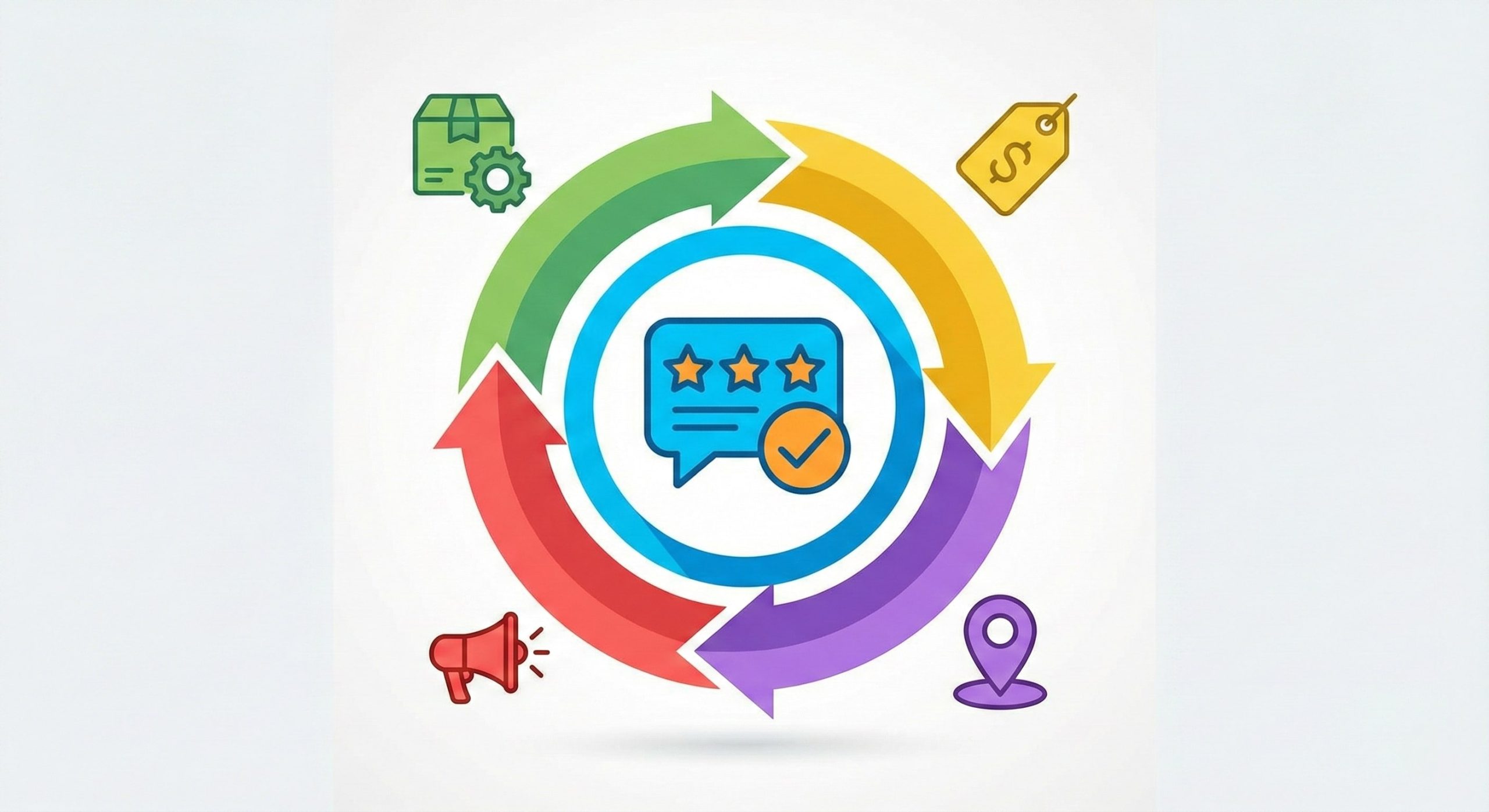
Customer feedback is a crucial factor in refining and optimizing your marketing mix. Without understanding your customers’ needs, preferences, and pain points, it’s difficult to craft a product, set the right price, choose the best distribution channels, and create promotions that resonate.
Why Customer Feedback Matters:
- Product Refinement: Regular feedback allows you to assess if your product truly addresses customer needs or if it requires adjustments. This could involve tweaking the features, adding new ones, or addressing common concerns.
- Price Adjustments: Customer feedback often reveals if your price is too high or too low for the perceived value. For example, customers may indicate that they would be willing to pay more for a premium feature, or that your price point is unreasonably high for the market segment you’re targeting.
- Improving Distribution: Feedback on where and how your customers want to buy your product—whether online, in retail stores, or through a subscription model—can guide your place strategy.
- Promotion Optimization: Customer preferences around communication channels can help you decide whether to focus more on social media, email marketing, influencer partnerships, or traditional advertising methods.
How to Collect Customer Feedback Effectively:
- Surveys and Questionnaires: Regularly ask your customers for their input through well-designed surveys that target the key aspects of your product, price, place, and promotion.
- Social Media Engagement: Monitor customer interactions on social platforms to identify trends in customer sentiment, complaints, and preferences.
- Review Platforms and Testimonials: Customer reviews on websites like Google, Yelp, or product pages can provide insights into how your customers perceive your offering.
- Customer Service Data: Interactions with your customer support team can reveal recurring issues, potential improvements, or new opportunities.
By integrating customer feedback into your marketing strategy, you ensure that your four Ps are always aligned with the real-world needs of your audience.
The Role of Data and Analytics in Optimizing the Four Ps
In today’s data-driven world, analytics play a key role in refining your marketing mix. With access to vast amounts of data from various channels, marketers can make informed decisions to optimize each of the four Ps. Data not only helps track what’s working but also provides insights into areas for improvement.
How Data Improves Each P:
- Product: Data on customer behavior, preferences, and pain points can help shape your product development. Tools like customer usage data, A/B testing, and heat maps can show how users interact with your product and where they might be facing issues.
- Price: Dynamic pricing models are powered by data analysis. Understanding demand fluctuations, competitor pricing, and customer sensitivity to price changes can help you set the most profitable price for your product.
- Place: Data on customer location, online shopping habits, and delivery preferences can guide your distribution strategy. Analytics from your website or e-commerce platform, combined with geographic data, allow you to optimize your sales channels and delivery systems.
- Promotion: Analytics help you measure the effectiveness of different promotional channels, enabling you to focus your efforts on the most successful tactics. By analyzing conversion rates, click-through rates, and return on investment (ROI), you can fine-tune your messaging and promotional efforts.
Tools and Techniques for Data-Driven Marketing:
- Google Analytics: Track user behavior on your website, measure traffic sources, and monitor conversion rates to optimize the “Place” and “Promotion” aspects of your marketing.
- Customer Relationship Management (CRM) Systems: Use CRM platforms like Salesforce to gather insights on customer interactions, loyalty, and feedback, improving the “Product” and “Price” strategies.
- Social Media Insights: Leverage tools like Facebook Insights, Instagram Analytics, or Twitter Analytics to gauge engagement and sentiment around your promotions, helping with the “Promotion” P.
- A/B Testing: Experiment with different product designs, pricing structures, distribution channels, and promotional offers to determine which elements of your marketing mix yield the best results.
By harnessing data, you can continuously optimize your marketing mix, ensuring that each element of the four Ps is aligned with your business goals and the expectations of your customers.
Integrating the Four Ps for Maximum Impact
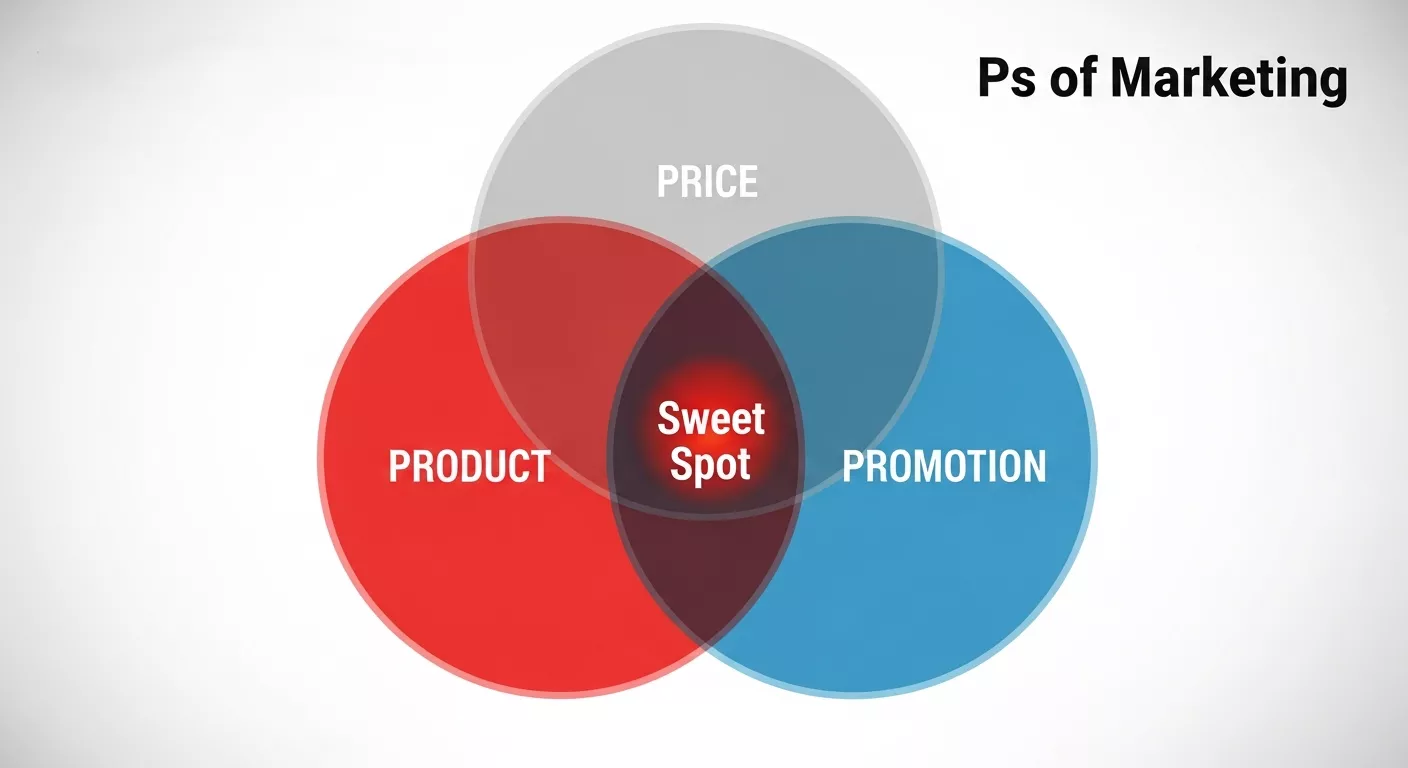
The four Ps work best when they reinforce each other. Here’s how to create alignment:
Consistency Across Elements
Your product quality should match your pricing strategy. Premium products require premium pricing, distribution through upscale channels, and sophisticated promotional approaches.
Target Audience Alignment
Each P should appeal to the same customer segments. If you’re targeting budget-conscious consumers, ensure your product features, pricing, distribution, and promotion all speak to value.
Competitive Positioning
Use the four Ps to differentiate from competitors. If competitors compete on price, you might focus on superior product features, exclusive distribution, or innovative promotional approaches.
Flexibility and Adaptation
Markets change, and your marketing mix should evolve accordingly. Regular review and adjustment of the four Ps helps maintain competitive advantage.
Modern Applications and Extensions
While the four Ps remain relevant, modern marketing has expanded the framework:
Service-Based Additions
- People: The human element in service delivery.
- Process: How services are delivered and customer experiences are created.
- Physical Evidence: Tangible elements that support intangible services.
Digital Age Considerations
- Personalization: Customizing each P based on individual customer data.
- Automation: Using technology to optimize pricing, distribution, and promotion.
- Real-Time Adjustments: Rapidly changing elements based on market feedback.
Building Your Marketing Mix Strategy
Start by thoroughly understanding your target market, then develop each P with your customers in mind:
- Define your product based on customer needs and competitive gaps
- Set your price using market research and financial analysis
- Choose distribution channels that reach your target audience effectively
- Develop promotional strategies that communicate your value proposition clearly
Remember that the four Ps are interconnected. Changes to one element often require adjustments to others. Regular testing and refinement help optimize your marketing mix over time.
Your Next Steps in Marketing Mix Mastery
The four Ps of marketing provide a proven framework for developing comprehensive marketing strategies. By systematically addressing Product, Price, Place, and Promotion, you create marketing campaigns that work together to achieve your business objectives.
Start by auditing your current marketing mix. How well do your four Ps align with each other and with your target audience? Identify gaps and opportunities for improvement, then develop an action plan to optimize each element.
Success with the marketing mix comes from understanding that it’s not just about individual tactics—it’s about creating a cohesive strategy where every element supports your overall business goals. Master this approach, and you’ll have a solid foundation for marketing success.
Frequently Asked Questions (FAQ)
1. What are the Four Ps of Marketing?
The Four Ps of Marketing—Product, Price, Place, and Promotion—represent the core elements that businesses need to focus on when developing a marketing strategy. These elements work together to create a cohesive marketing mix that positions a product or service in the market and meets the needs of the target audience.
2. Why are the Four Ps important in marketing?
The Four Ps serve as a simple yet comprehensive framework to ensure that all aspects of your marketing strategy are aligned and working toward your business goals. By addressing each P, you can develop a well-rounded approach to creating, pricing, distributing, and promoting your product effectively.
3. How can I apply the Four Ps to my marketing strategy?
To apply the Four Ps:
- Product: Understand your customers’ needs and develop a product that addresses those needs, ensuring it stands out from competitors.
- Price: Choose a pricing strategy that balances profitability with customer expectations and market demand.
- Place: Identify the best distribution channels—whether online, in-store, or a combination—that will reach your target customers.
- Promotion: Develop a promotional strategy that effectively communicates your product’s value to your audience, using appropriate channels like social media, advertising, and public relations.
By considering each of these elements and how they work together, you can create a cohesive marketing plan that resonates with your audience.
4. What is the role of customer feedback in the marketing mix?
Customer feedback plays a critical role in refining your marketing mix. By understanding your customers’ experiences, preferences, and pain points, you can improve your product, adjust pricing strategies, choose the right distribution channels, and optimize your promotional efforts. Customer feedback ensures that your marketing strategies are aligned with the real-world needs of your audience.
5. How do data and analytics help improve the Four Ps?
Data and analytics provide insights that allow you to make informed decisions at every stage of your marketing strategy. By analyzing customer behavior, competitor trends, sales performance, and market demand, you can:
- Product: Refine features and offerings based on customer preferences.
- Price: Adjust pricing models using dynamic data such as demand fluctuations or competitor pricing.
- Place: Choose the most effective distribution channels based on where customers are shopping.
- Promotion: Measure promotional effectiveness and ROI to fine-tune messaging and media strategies.
Using data ensures your marketing efforts are based on real-time insights rather than assumptions.
6. Can the Four Ps be applied to services as well as physical products?
Yes! The Four Ps are applicable to both products and services. For services, the “Product” element would focus on the service offerings and experience. In addition, the modern marketing mix often adds three more Ps for services: People (the human element in service delivery), Process (how services are delivered), and Physical Evidence (tangible elements like brochures, website design, etc.).
7. What’s the difference between “Price” and “Cost” in marketing?
In marketing, Price refers to the amount a customer pays for a product or service. It is a key component of the marketing mix that affects revenue generation. On the other hand, Cost refers to the expenses a business incurs to produce and deliver the product or service. While price is determined by market conditions and customer willingness to pay, cost is influenced by production, distribution, and operational factors.
8. How do I know if my marketing mix is working?
To evaluate the effectiveness of your marketing mix, track key performance indicators (KPIs) such as:
- Sales and revenue growth: Are you hitting your sales targets?
- Customer acquisition and retention: Are you gaining and keeping customers?
- Brand awareness: Are customers recognizing your brand?
- Engagement and conversions: Are your promotional efforts driving action (clicks, sign-ups, purchases)?
Regularly review these metrics and adjust your Four Ps to optimize your marketing strategy.
9. Can I change the Four Ps after launching a product or service?
Yes! The Four Ps are not fixed. As market conditions, customer preferences, or business goals evolve, you should continuously assess and adjust each element of your marketing mix. For instance, you may change your product features, adjust pricing, explore new distribution channels, or run different promotions based on feedback or performance analysis.
10. How do modern technologies impact the Four Ps?
In the digital age, technologies like AI, big data, and automation have revolutionized how businesses approach each of the Four Ps:
- Product: Personalized recommendations, customization options, and advanced analytics help you design products that better meet individual customer needs.
- Price: Dynamic pricing models use algorithms to adjust prices in real-time based on demand, competition, and customer behavior.
- Place: E-commerce platforms, social commerce, and mobile apps have expanded the ways products can be distributed to customers.
- Promotion: Digital marketing tools (SEO, social media ads, email marketing, etc.) provide more targeted, measurable, and cost-effective promotional strategies.
By embracing technology, businesses can optimize their marketing mix more efficiently and effectively.
11. What’s the difference between “Product Lifecycle Management” and “Product Development”?
Product Lifecycle Management (PLM) focuses on the entire journey of a product, from introduction to decline, and the strategies needed at each stage. Product Development refers to the creation and design process, which involves developing new features, refining the offering, or innovating to meet customer needs.
Learn more about: How to Create a Successful Traditional Marketing Campaign