Direct mail and door-to-door marketing remain powerful, personalized strategies that complement digital efforts. By leveraging creative formats, precise targeting, advanced personalization, and integrated analytics, brands can boost engagement, build trust, and achieve measurable ROI across industries.
In an era dominated by digital channels, traditional marketing methods such as direct mail and door-to-door outreach remain powerful tools for brands seeking deeper engagement and a tangible connection with their audience. Far from obsolete, these strategies deliver an intimate, personal touch that cuts through the screen clutter. In this comprehensive guide, we’ll explore why and how modern businesses can integrate direct mail and door-to-door marketing into their campaigns to drive measurable results.
Why Traditional Outreach Still Matters
Despite the rise of social media and traditional marketing, consumers still crave physical interactions. According to recent studies, direct mail has an average response rate of 4.9% for house lists, substantially higher than email. Door-to-door conversations build trust and allow immediate feedback. Together, these channels enable brands to stand out in a landscape where digital fatigue is on the rise.
For businesses looking to diversify their marketing mix, integrating a Traditional Advertising Strategy can provide the tangible, high-touch engagement that digital alone cannot achieve.
Key Benefits of Direct Mail & Door-to-Door Campaigns

- Tangible Engagement: Recipients can hold and review your materials at leisure, increasing dwell time and recall.
- High Targeting Precision: Leverage postal codes, demographic data, and purchase history to reach the right households.
- Personalization: Custom messages, handwritten notes, and localized offers foster a sense of exclusivity.
- Memorable Brand Experience: Creative formats—pop-ups, textured paper, or small freebies—leave lasting impressions.
- Immediate Feedback: Door-to-door interactions allow for on-the-spot surveys, demonstrations, and direct sales.
Crafting a Winning Direct Mail Strategy
To maximize ROI, businesses should treat their efforts as part of a comprehensive Traditional Marketing Plan. A well-structured plan ensures that direct mail and door-to-door outreach are aligned with broader business objectives, target audiences, and measurable KPIs. Key steps in developing your Traditional Marketing Plan include:
- Define Clear Objectives: Are you promoting a new product, driving event attendance, or generating leads? Establish KPIs like response rate and conversion cost.
- Build a Quality Mailing List: Combine in-house data with reputable third-party sources. Clean your list to remove invalid addresses and duplicates.
- Design for Impact: Use eye-catching visuals, concise copy, and a strong call-to-action. Consider dimensional mailers to stand out.
- Personalize Content: Incorporate recipient names, purchase history, or local references. Segmented offers boost engagement.
- Track and Measure: Include unique promo codes, personalized URLs, or QR codes. Monitor redemptions and online traffic spikes.
To further enhance performance, consider pairing direct mail with email marketing campaigns. Sending a follow-up email after your mailer can remind recipients of your offer and reinforce your message, bridging offline and online engagement seamlessly.
Executing Effective Door-to-Door Outreach
Door-to-door marketing requires preparation and sensitivity to local norms. Best practices include:
- Thorough Training: Equip your team with product knowledge, objection-handling scripts, and etiquette guidelines.
- Safety & Compliance: Check local regulations, obtain permits, and ensure your staff follows neighborhood rules.
- Territory Mapping: Divide target areas into zones, balance workloads, and assign routes for maximum coverage.
- Engagement Tools: Provide branded collateral, wearable name tags, tablets for digital sign-ups, and sample products.
- Data Collection: Capture leads with mobile forms, record homeowner preferences, and update your CRM in real time.
Creative Formats & Innovations in Traditional Outreach
Modern direct mail and door-to-door marketing are no longer limited to simple flyers and brochures. With advanced printing technology, sensory elements, and integrated digital components, brands can create immersive experiences that captivate audiences. By embracing innovative formats, businesses can significantly improve open rates, dwell time, and conversion potential.
Innovative Format Ideas:
- Augmented Reality (AR) Mailers: Allow recipients to scan a mail piece and see 3D product demos or interactive experiences.
- Tactile Enhancements: Use textures like embossing, soft-touch coatings, or metallic foils to create a premium feel.
- Eco-Friendly Materials: Recycled stock, plantable postcards, or biodegradable packaging appeal to sustainability-conscious consumers.
- Sample-Integrated Mailers: Include scent strips, small product samples, or fabric swatches for sensory engagement.
- Door-to-Door Multimedia Kits: Equip field reps with tablets to display videos, configure products, or generate instant quotes.
Comparison of Creative Formats
| Format Type | Best Use Case | Cost Level | Engagement Impact |
|---|---|---|---|
| AR-Enhanced Mailers | Product demos, experiential marketing | High | Very High |
| Textured Premium Mailers | Luxury products, high-value prospects | Medium | High |
| Eco-Friendly Mailers | Sustainability-driven brands | Medium | Moderate–High |
| Sample Mailers | Beauty, fragrance, wellness, home products | High | Very High |
| Digital Demo Kits (D2D) | In-person product configuration & sales | Medium | Very High |
Measuring Success: Metrics That Matter
Pair qualitative feedback with quantitative metrics to evaluate performance. In addition to traditional KPIs, businesses should track offline marketing metrics to understand the true impact of direct mail and door-to-door campaigns:
- Response Rate: Percentage of recipients who take the desired action (e.g., redemption, sign-up).
- Conversion Rate: Number of sales or leads divided by total mailers distributed or doors knocked.
- Cost per Acquisition (CPA): Total campaign spend divided by the number of new customers or leads.
- Return on Marketing Investment (ROMI): (Revenue attributed to campaign – cost) ÷ cost.
- Qualitative Feedback: Insights gathered from face-to-face conversations and survey questions.
Overcoming Common Challenges in Traditional Campaigns
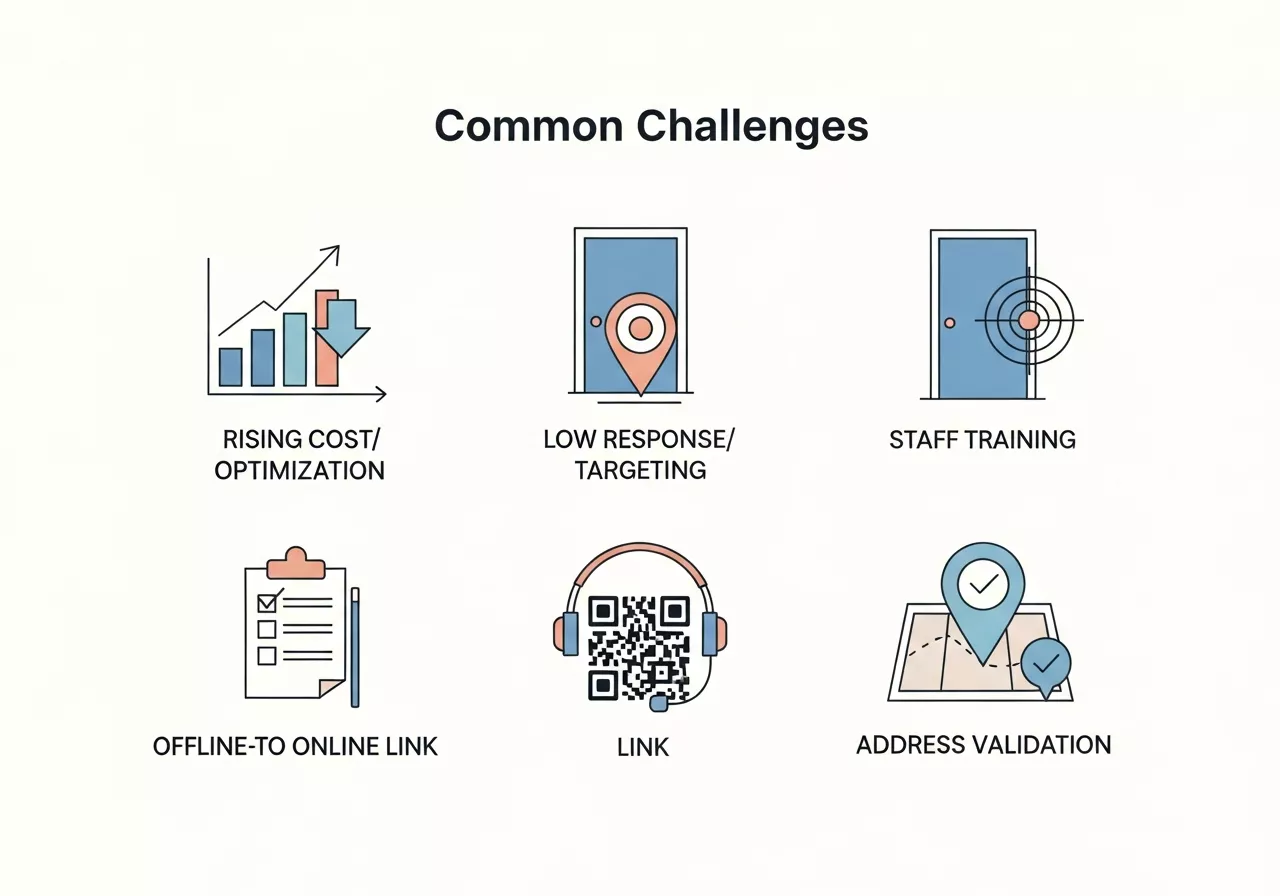
While direct mail and door-to-door outreach are highly effective, businesses may face logistical, operational, and strategic hurdles. Recognizing these early and implementing proactive solutions ensures smoother execution and higher ROI.
Common Challenges & Solutions:
- Rising Postal or Printing Costs:
– Use batch printing or negotiate bulk postage rates.
– Switch to lightweight formats without compromising quality. - Low Door-to-Door Response Rates:
– Send pre-notification postcards or emails to warm up households.
– Use hyper-targeted territory mapping based on propensity modeling. - Limited Staff Training:
– Implement standardized scripts, role-playing sessions, and product quizzes. - Difficulty Tracking Offline Results:
– Add QR codes, trackable phone numbers, or campaign-specific URLs. - Address Accuracy Issues:
– Clean mailing lists regularly using NCOA (National Change of Address) and address validation tools.
Challenges & Recommended Actions
| Challenge | Recommended Action |
|---|---|
| High campaign overhead | Optimize printing formats; negotiate local vendor rates. |
| Low conversions | Personalize offers and refine targeting. |
| Poor CRM data integration | Use mobile apps and automated sync tools. |
| Team inconsistency | Conduct onboarding refreshers every 4–6 weeks. |
| Limited brand recall | Use dimensional and sensory-rich mail creatives. |
Integrating Offline & Online Channels
To amplify impact, synchronize your traditional tactics with digital efforts:
- QR Codes & PURLs: Bridge print to online by offering exclusive content or discounts via quick scans or personalized URLs.
- Retargeting Campaigns: Use mailing lists to create custom audiences for social media and display ads.
- Cross-Channel Promotions: Promote offline events through email blasts and social posts, and vice versa.
- Unified Analytics: Consolidate offline response data with digital analytics for a holistic performance view.
Advanced Personalization & Segmentation Techniques
As personalization becomes a non-negotiable expectation, brands that tailor their traditional marketing efforts will see significantly higher engagement and conversion rates. Modern data tools allow businesses to segment with precision and deliver hyper-relevant messaging.
Segmentation Strategies:
- Behavior-Based Segmentation:
– Target based on purchase frequency, past product categories, or seasonal buying patterns. - Geographic Micro-Segmentation:
– Customize offers by neighborhood income level, weather patterns, or community interests. - Lifecycle-Based Targeting:
– Tailor communication for new homeowners, renewal customers, or lapsed buyers. - Psychographic Profiling:
– Align messages with interests, values, or lifestyle indicators. - Triggered Outreach:
– Automatically send direct mailers after digital cart abandonment or service inquiries.
Examples of Personalization Elements
| Personalization Type | Example Implementation | Expected Impact |
|---|---|---|
| Name & Address | “Hi Sarah, here’s a custom offer for your home in Westlake.” | Moderate |
| Purchase History | Mailers featuring complementary products | High |
| Localized Messaging | Weather-based service offers (“Prepare for storm season”) | High |
| Past Engagement | Targeting households that scanned previous QR codes | Very High |
| Household Demographics | Tailored pricing or bundles based on family size | High |
Case Study Highlights
Consider a regional home services brand that combined a bespoke direct mail piece with door-to-door demos. By using variable data printing, they personalized offers based on neighborhood demographics. Their sales reps captured leads on tablets, enabling real-time follow-up emails. The campaign generated a 12% response rate, a 3.5X ROMI, and a significant uplift in brand awareness within just four weeks.
Budgeting & Resource Allocation
Allocate your marketing budget by weighing production costs (printing, materials), distribution fees (postal rates, canvassing labor), and tracking tools (software, promo codes). A balanced split might reserve 60% for direct mail, 30% for door-to-door execution, and 10% for integrated digital amplification and analytics solutions.
Technology Tools That Enhance Traditional Marketing
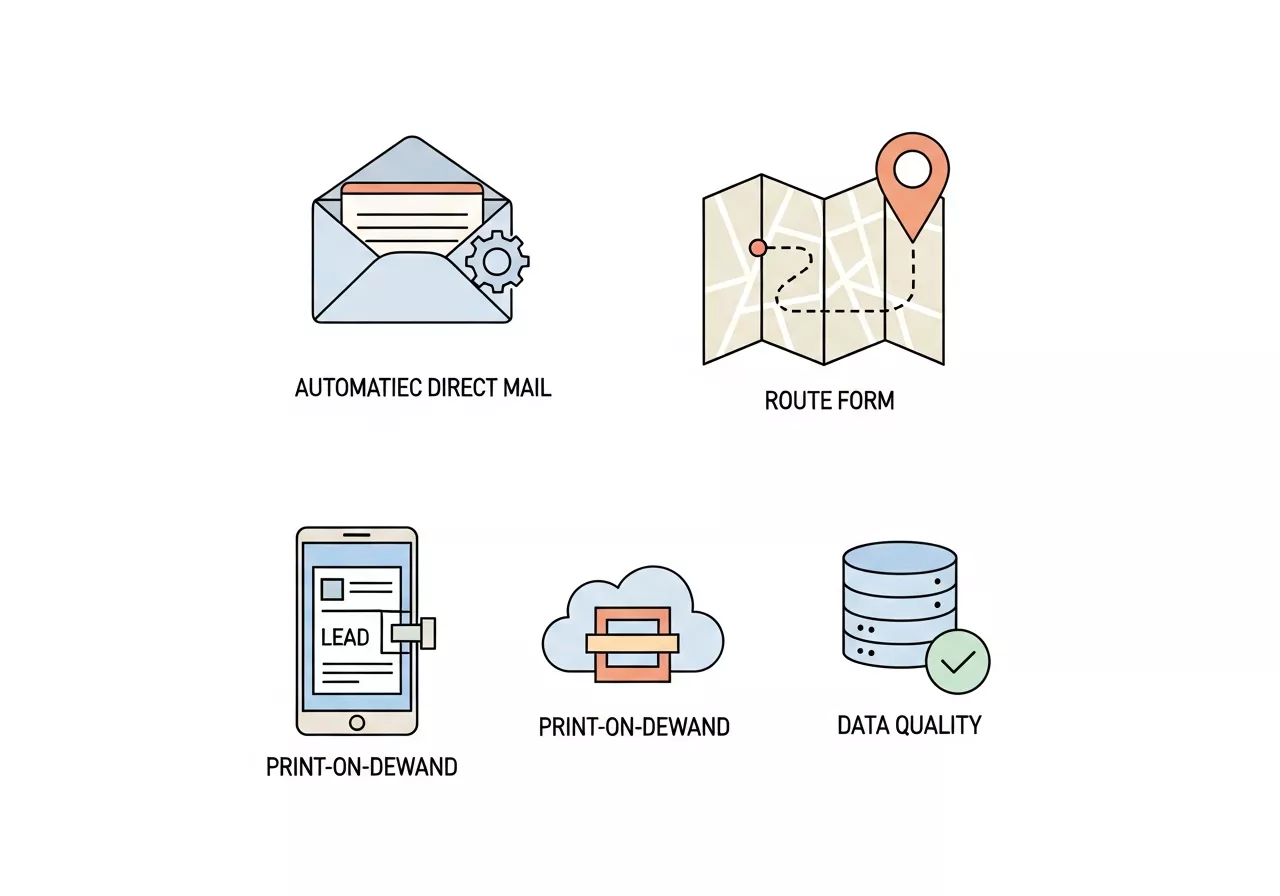
As traditional outreach evolves, technology plays an essential role in streamlining workflows, improving targeting, and enhancing customer experience. Leveraging the right tools ensures that direct mail and door-to-door campaigns are not only efficient but also measurable and scalable.
Recommended Tools & Platforms
- Direct Mail Automation Platforms: Lob, Postie, Inkit
- Route Optimization Apps: Maptive, Badger Maps, Google My Maps
- Lead-Capture Tools: HubSpot CRM mobile app, Jotform, Zoho Forms
- Print-On-Demand Platforms: VistaPrint API, Printful, UPrinting
- Data Enhancement Tools: Clearbit, Experian Data Quality
Tool Functionality Overview
| Tool Type | Purpose | Benefit |
|---|---|---|
| Automation Platforms | Auto-trigger mail based on customer behavior | Speed, personalization |
| Route Optimization Apps | Plan efficient door-to-door routes | Saves time, increases coverage |
| Lead-Capture Tools | Instant data entry to CRM | Reduces manual errors |
| Data Enhancement | Clean, enrich, and validate mailing lists | Higher accuracy and response rates |
Implementation Roadmap
Follow this step-by-step process to launch your campaign seamlessly:
- Research & Segmentation
- Creative Development
- List Procurement & Cleansing
- Print & Collateral Production
- Pre-Launch Testing
- Distribution & Canvassing
- Data Collection & Follow-Up
- Performance Analysis & Optimization
Legal & Ethical Considerations for Traditional Campaigns
Running physical outreach campaigns requires careful attention to legal guidelines and ethical best practices. Following compliance rules not only protects your business but also builds trust with consumers who value transparency and respect for privacy.
Key Considerations
- Privacy Compliance:
– Follow GDPR, CCPA, and local privacy laws when storing or using consumer data. - Door-to-Door Permissions:
– Check municipal requirements; some require permits or restrict solicitation hours. - “No Soliciting” Guidelines:
– Train staff to respect signage and avoid confrontation. - Data Usage Transparency:
– Disclose how data collected at the door will be used. - Mailing Compliance:
– Use correct postal barcodes, address formatting, and weight limitations to avoid issues.
Compliance Risk Checklist
| Risk Area | Example Risk | Mitigation Action |
|---|---|---|
| Privacy | Using outdated or unauthorized mailing lists | Regular list cleaning & opt-in review |
| Solicitation Rules | Canvassing in restricted zones | Pre-check city regulations |
| Data Security | Lost paper forms or unsecured devices | Use encrypted mobile forms |
| Misrepresentation | Overstating an offer during D2D interactions | Provide scripts & mandatory training |
Industry-Specific Applications of Traditional Marketing

Direct mail and door-to-door outreach are not one-size-fits-all. Different industries see unique benefits depending on customer behavior, product complexity, and local audience needs. Tailoring your strategy to your industry can dramatically improve ROI.
High-Performing Industries
- Home Services: HVAC, roofing, pest control, landscaping
- Healthcare Providers: Dental offices, optometrists, wellness clinics
- Real Estate: Agents, brokers, property managers
- Retail & E-commerce: Seasonal promotions, catalog drops
- Nonprofits: Fundraising campaigns and community awareness drives
Industry Strategy Examples
| Industry | Effective Traditional Tactic | Why It Works |
|---|---|---|
| Home Services | Door-to-door demos + neighborhood direct mailers | Trust-building + hyper-local relevance |
| Healthcare | Reminder postcards, new patient welcome kits | Tangible reminders increase appointment rates |
| Real Estate | Geographic farm mailers + in-person market updates | Personal connection + local expertise |
| Retail | Mini catalogs and coupon mailers | Boosts in-store and online conversions |
| Nonprofits | Door-to-door awareness + donation envelopes | Emotional connection + community presence |
Conclusion & Next Steps
Direct mail and door-to-door marketing offer time-tested pathways to meaningful customer connections. When executed with precision—backed by personalization, integrated analytics, and digital reinforcement—these traditional tactics can yield exceptional ROI. Begin by defining your objectives, assembling the right resources, and embedding measurement at every stage. Embrace the tangible power of offline engagement to complement your digital efforts and watch your brand loyalty and conversions soar.
Frequently Asked Questions (FAQ)
1. Is direct mail still effective in the digital age?
Yes. Direct mail consistently achieves higher response rates than many digital channels because it provides a physical, tangible touchpoint. When paired with digital reinforcement—such as QR codes or follow-up emails—its effectiveness increases even more.
2. How do I know if my mailing list is high-quality?
A high-quality mailing list is:
- Accurate (addresses updated with NCOA or similar tools)
- Relevant to your target audience
- Segmented (demographics, purchase history, or location)
- Permission-based when possible
Clean your list regularly to remove duplicates, invalid addresses, and inactive customers.
3. What’s the average response rate for direct mail campaigns?
Response rates vary by industry and quality of targeting, but house lists typically perform around 4–6%, while prospect lists average 1–2%. Personalized mailers, dimensional formats, and strong offers can significantly improve these numbers.
4. How can I measure success from door-to-door marketing?
Track key metrics such as:
- Number of doors knocked
- Conversations held
- Leads collected
- Conversion rate
- Cost per acquisition (CPA)
- Feedback from homeowners
Using mobile CRM apps makes tracking much easier.
5. What’s the best time of day for door-to-door outreach?
Optimal times are typically:
- Weekdays: 4 PM – 7 PM
- Weekends: Late morning to early afternoon
Always respect local rules and household preferences.
6. How can I make my direct mail stand out?
Try using:
- Textured or premium paper
- Unique shapes or dimensional mailers
- Localized offers
- High-quality visuals
- Augmented reality (AR) features
The more sensory the experience, the more memorable the mailer.
7. Can direct mail integrate with digital marketing?
Absolutely. Some effective integrations include:
- QR codes linking to landing pages
- Personalized URLs (PURLs)
- Retargeting ads using your mailing list
- Automated follow-up emails
These connections help bridge offline engagement with online conversions.
8. What legal considerations should I be aware of for door-to-door campaigns?
Check for:
- Local solicitation permits
- Restricted zones or posted “No Soliciting” signs
- Time-of-day limitations
- Staff identification requirements
Following these rules avoids fines and protects your brand reputation.
9. How much should I budget for a direct mail campaign?
Budget depends on:
- Print quality
- Mailing list size
- Format type (postcards are cheaper; dimensional mailers cost more)
- Postage rates
- Tracking tools (QR codes, call tracking, etc.)
A common split is 60% direct mail production, 30% door-to-door execution, and 10% digital reinforcement.
10. Which industries benefit the most from door-to-door marketing?
Industries that rely on local engagement or trust-building see the strongest results, including:
- Home services (HVAC, roofing, landscaping)
- Real estate
- Healthcare & dental practices
- Nonprofits
- Telecommunications & utilities
11. Can small businesses run effective direct mail campaigns on a tight budget?
Yes. Smaller businesses can start with:
- Postcards (cheapest format)
- Targeted local mailing lists
- Simple but strong offers
- Smaller print batches
Automation platforms can help lower costs and streamline workflow.
12. How personalized should my direct mail be?
At minimum, include the recipient’s name and a localized reference. More advanced personalization—like product recommendations or neighborhood-specific offers—can dramatically boost engagement.
13. What should my door-to-door team bring with them?
- Branded materials
- Tablets or phones for lead capture
- Identification badges
- Product samples
- Scripts and objection-handling sheets
- Safety gear if needed (vests, flashlights, etc.)