

In the age of digital everything, it’s easy to assume that all marketing should be measured through clicks, views, and analytics dashboards. But for many businesses—especially those in local markets, retail, events, or traditional industries—offline marketing remains a powerful tool.
From print ads and billboards to direct mail and in-person events, offline marketing builds trust, boosts brand awareness, and reaches audiences that digital sometimes can’t. The challenge? Measuring what actually works.
While online marketing gives you real-time metrics, offline marketing measurement often feels more ambiguous. But it doesn’t have to be. With the right tools, tracking methods, and mindset, you can measure the ROI of your offline efforts—and refine your strategy just like you would online.
This blog will break down the offline marketing metrics that matter, how to track them effectively, and which methods work best for different types of offline campaigns.
What Is Offline Marketing?
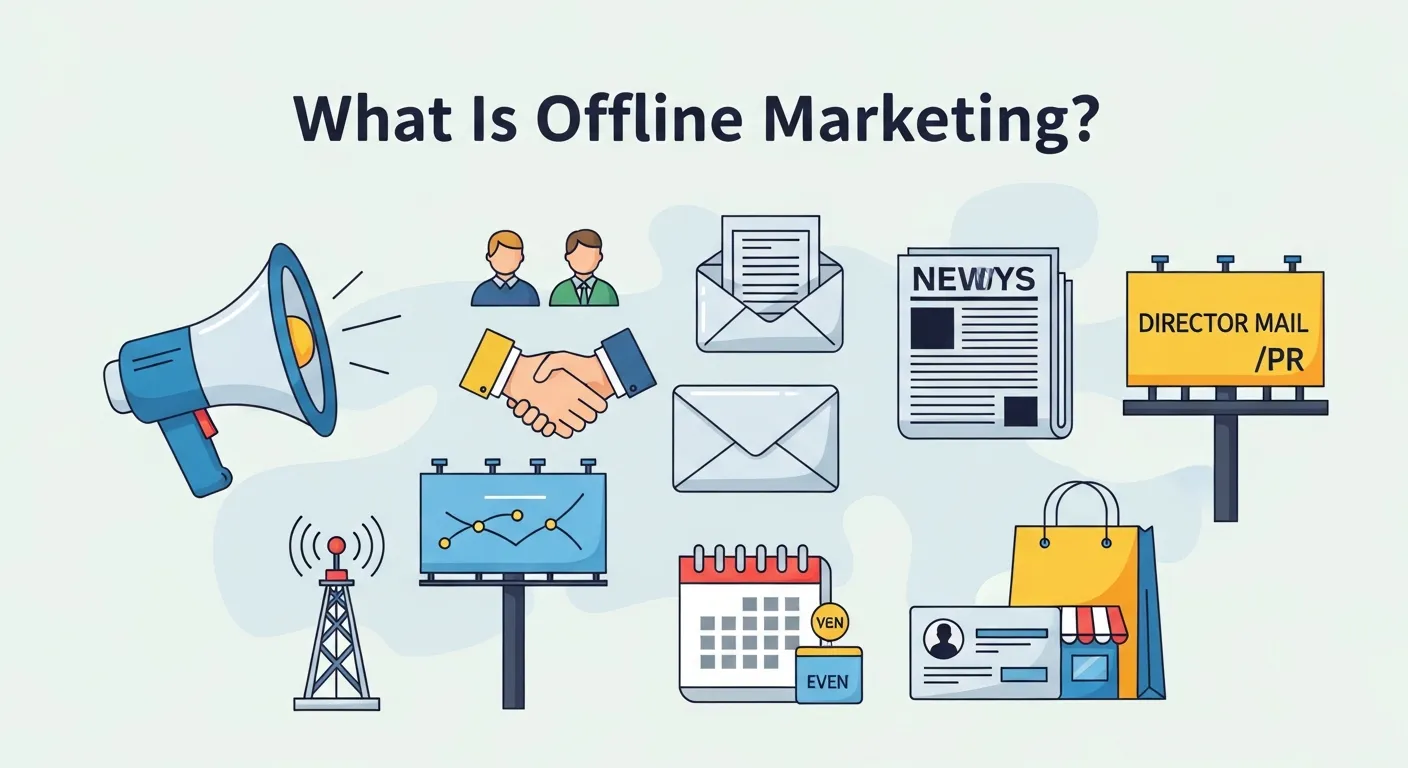
Offline marketing refers to any promotional activity that occurs outside of the digital space. This includes:
- TV and radio advertising
- Print media (newspapers, magazines)
- Billboards and signage
- Flyers, brochures, and direct mail
- Trade shows and exhibitions
- Guerrilla marketing
- Sponsorships and branded merchandise
- In-store promotions and events
While these channels may seem “old school,” many still offer impressive ROI—especially when used alongside digital campaigns. Offline marketing is often grouped under the broader umbrella of traditional marketing, which emphasizes real-world customer touchpoints and face-to-face interactions. And despite the digital age, traditional marketing continues to be highly effective when strategically executed and measured.
Why Tracking Offline Marketing Matters
Just because offline marketing isn’t inherently digital doesn’t mean it’s untrackable. If you don’t measure performance, you can’t:
- Know what’s working
- Justify your marketing spend
- Optimize future campaigns
- Align offline strategies with business goals
Modern marketers need to treat offline efforts with the same rigor as online ones. The good news? You already have more tools than you think.
Key Offline Marketing Metrics You Should Be Tracking
Let’s dive into the most valuable metrics for evaluating offline campaigns—and how to track them effectively.
1. Direct Response Rate
This measures how many people respond to a specific offline campaign.
How to measure:
- Use unique phone numbers, URLs, or QR codes on print ads, flyers, or signage.
- Count how many leads, calls, or visits are traced back to that specific asset.
Example:
A real estate agency places a flyer in local mailboxes with a custom landing page URL (e.g., www.youragency.com/flyerdeal). If 150 people visit that URL, that’s your direct response count.
2. Redemption Rate
If your campaign includes a coupon, discount, or offer, track how many people redeemed it.
Formula:
Redemption Rate = (Number of redemptions / Number of offers distributed) × 100
Example:
You hand out 1,000 flyers with a 15% off code in-store. If 120 people use the code, your redemption rate is 12%.
3. Foot Traffic & In-Store Visits
For brick-and-mortar businesses, offline marketing often drives foot traffic. You can measure the increase in store visits during or after a campaign.
How to measure:
- Use door counters to track physical entries.
- Compare foot traffic against baseline data.
- Encourage staff to ask, “How did you hear about us?”
Bonus Tip: Use beacon technology or geofencing if your location supports it, to track how many mobile users enter your store after seeing a local billboard or sign.
4. Lift in Sales or Leads
Ultimately, you want to know whether offline marketing increased revenue or lead generation.
How to measure:
- Track sales during your campaign window vs. historical average.
- Tag new customers with campaign-specific data (e.g., “Referred by event”).
- Use POS systems to track offer-based sales.
Example:
You sponsor a local 5K run and hand out branded water bottles. Over the next week, your store sees a 20% bump in new customer sales—paired with customer feedback that mentions the race.
5. Cost per Acquisition (CPA)
Just like digital marketing, you want to know how much it costs to acquire a customer through offline means.
Formula:
CPA = Total cost of the campaign / Number of new customers acquired
Example:
If you spend $5,000 on radio ads and acquire 100 new customers, your CPA is $50.
6. Brand Awareness & Recall
Not all offline marketing is designed for immediate action. Some campaigns focus on long-term brand awareness. You can measure this through:
- Surveys or polls asking if people recognize your brand.
- Social media listening to track mentions or buzz post-campaign.
- Direct customer feedback (“I saw your ad on the train last week!”)
Tip: Use a short online survey with a small incentive to gauge brand recall post-campaign.
7. Event Attendance & Engagement
For events, trade shows, or pop-up activations, measure more than just turnout:
- Total number of attendees
- Booth or stall visits
- Email sign-ups or business cards collected
- Social media check-ins or hashtags are used
Example:
At a trade show, you offer a giveaway in exchange for an email address. You collect 350 leads, 220 of which engage with your follow-up email—clear proof of campaign success.
Building an Offline Marketing Measurement Framework
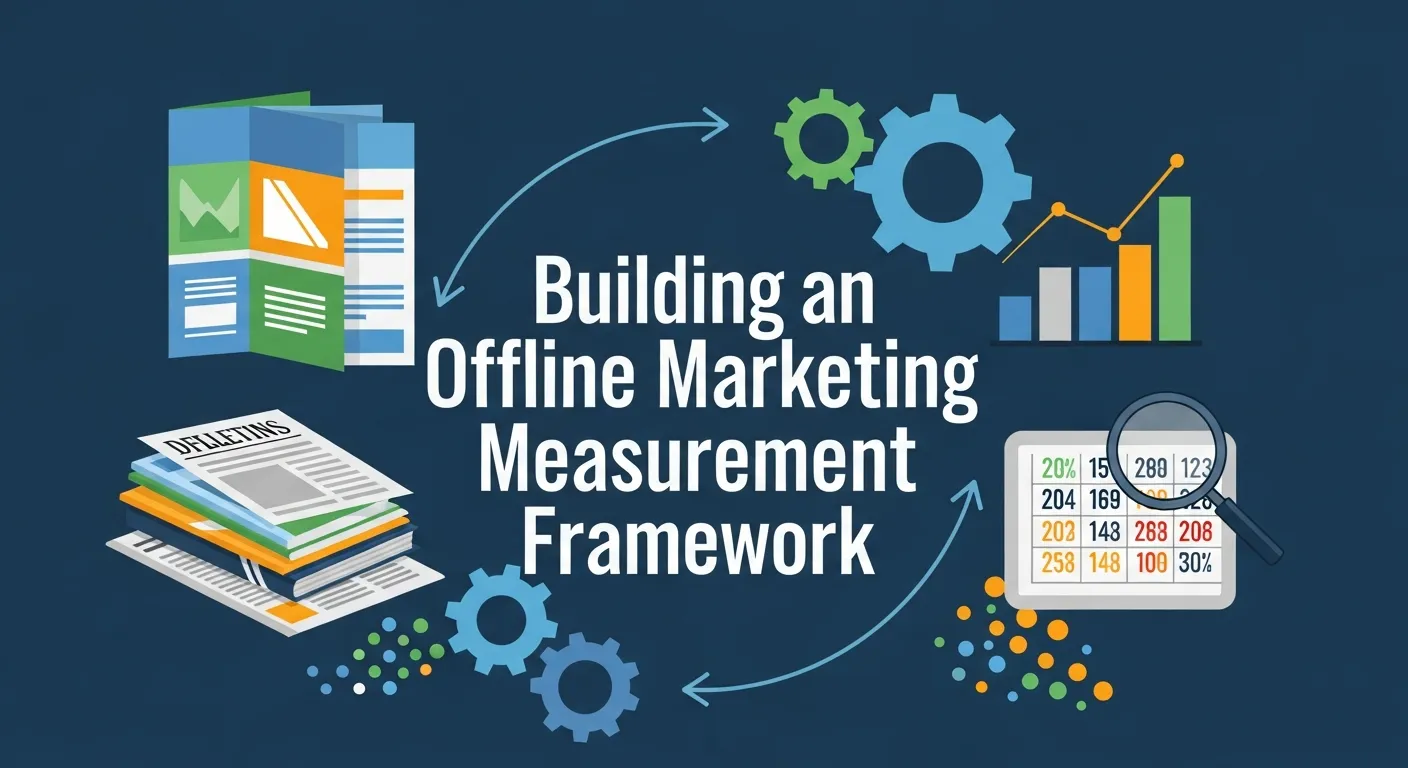
Measuring offline marketing effectively requires more than isolated metrics—it demands a structured framework. Without a system in place, data becomes fragmented, insights are lost, and decision-making becomes reactive instead of strategic. A measurement framework ensures that every offline campaign contributes meaningful data to your overall marketing performance.
The foundation of any offline measurement framework starts with clear objectives. Are you aiming to increase brand awareness, generate leads, drive in-store traffic, or boost short-term sales? Each goal requires different metrics and tracking tools. For example, a billboard campaign may prioritize brand recall and foot traffic, while a direct mail campaign focuses on redemption rates and CPA.
Once objectives are defined, marketers must align tracking mechanisms with each campaign asset. Offline channels don’t automatically generate data like digital platforms, so marketers must intentionally design touchpoints that allow attribution—such as QR codes, phone numbers, URLs, or staff-recorded responses.
Steps to Create a Reliable Offline Measurement Framework
- Define clear campaign goals and success benchmarks
- Assign specific KPIs to each offline channel
- Integrate tracking elements into all creative assets
- Centralize data collection in a CRM or analytics system
- Analyze results across time periods, not just campaign windows
A successful framework also considers time lag. Offline marketing often influences decisions gradually. Customers may see an ad multiple times before acting, so analysis should include pre-campaign baselines and post-campaign lift measurements.
By treating offline measurement as a system—not a one-off task—you create repeatable processes that improve campaign performance over time.
Tools & Tactics to Track Offline Marketing
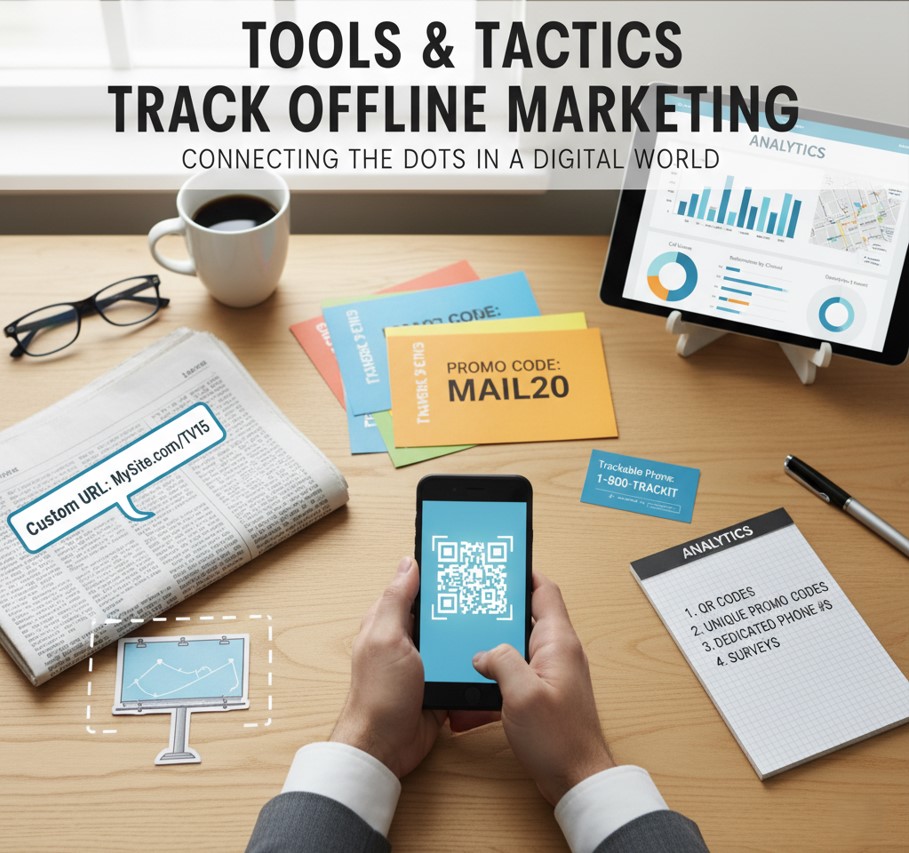
Now that we’ve identified what to measure, let’s look at how to do it effectively—even without the internet.
1. Custom URLs & Landing Pages
Create dedicated URLs for each offline campaign. This helps track traffic from specific sources (e.g., flyers, newspaper ads, billboards).
- Use URL shorteners (like Bitly) to create easy-to-type links.
- Track analytics in Google Analytics or other platforms.
- Add UTM parameters to the URL for detailed tracking.
2. QR Codes
QR codes are back in a big way—thanks to smartphones. Add them to:
- Flyers
- Posters
- Event booths
- Business cards
Use trackable QR codes that lead to unique landing pages or sign-up forms.
3. Unique Promo Codes or Keywords
Use unique discount codes for each campaign. For example:
- TV ad code: TV15
- Radio ad code: RADIO10
- Direct mail code: MAIL20
This allows you to see which channels drive the most redemptions.
4. Dedicated Phone Numbers
Use a unique phone number for each print ad or campaign. Services like CallRail or Grasshopper offer call tracking that shows:
- Call volume
- Time of call
- Caller location
It’s an easy way to attribute calls to specific offline sources.
5. Point-of-Sale (POS) Data Tracking
Train your staff to ask customers how they heard about you and input that info into your POS or CRM system.
Alternatively, set up POS codes for each campaign that automatically tag sales.
6. Customer Surveys
Post-campaign surveys can give you insights into:
- How did people hear about your business
- What influenced their decision to visit or purchase
- Recall of specific ads or messages
Incentivize completion with discounts or entries into giveaways.
7. Geofencing & Location Tracking
Advanced—but powerful. Geofencing allows you to set up a virtual perimeter around your billboard or event. If people enter that area and later visit your store or website, you can connect the dots.
This is especially useful for campaigns with local geographic targeting.
Combining Offline & Online for Better Tracking
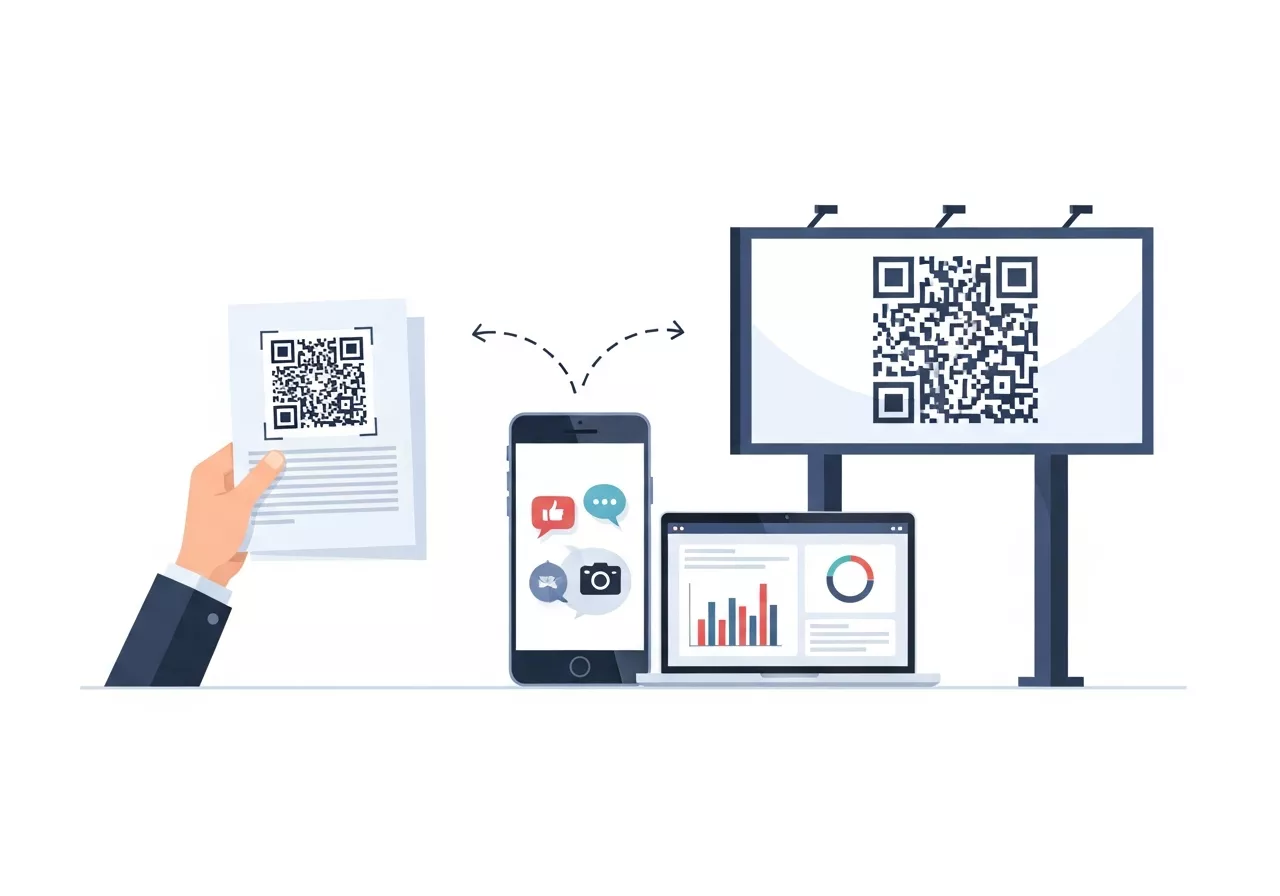
Want the best of both worlds? Use integrated marketing strategies that blend offline and online elements:
- Direct mail with QR codes linking to a digital catalog
- Print ads that lead to exclusive online content
- In-person events promoted and recapped on social media
- Billboards that feature a branded hashtag
When your offline campaigns drive people online, they become easier to track, engage, and convert.
Using Offline Data to Optimize Future Marketing Decisions
Collecting offline marketing data is only valuable if it leads to better decisions. The true power of measurement lies in optimization—using insights from past campaigns to improve messaging, placement, budget allocation, and timing.
Offline data helps answer strategic questions such as:
- Which channels generate the highest-quality customers?
- Which geographic areas respond best to certain campaigns?
- Which offers or messages resonate most with offline audiences?
By analyzing performance trends, marketers can identify patterns that are invisible in single-campaign analysis. For example, a retail brand may discover that radio ads perform best when paired with in-store promotions, or that direct mail performs significantly better in suburban zip codes than urban ones.
Ways to Optimize Using Offline Marketing Data
- Reallocate budget toward high-performing channels
- Refine messaging based on customer feedback and recall
- Adjust campaign timing based on response trends
- Improve targeting by location, demographic, or event type
- Combine offline insights with digital analytics for full-funnel visibility
Offline data becomes even more powerful when combined with digital metrics. For instance, an increase in branded search traffic or website direct visits during an offline campaign often signals strong cross-channel impact—even if conversions happen online.
Over time, this data-driven approach transforms offline marketing from a “brand play” into a predictable growth channel. Instead of guessing what works, marketers can confidently invest in strategies backed by real-world evidence.
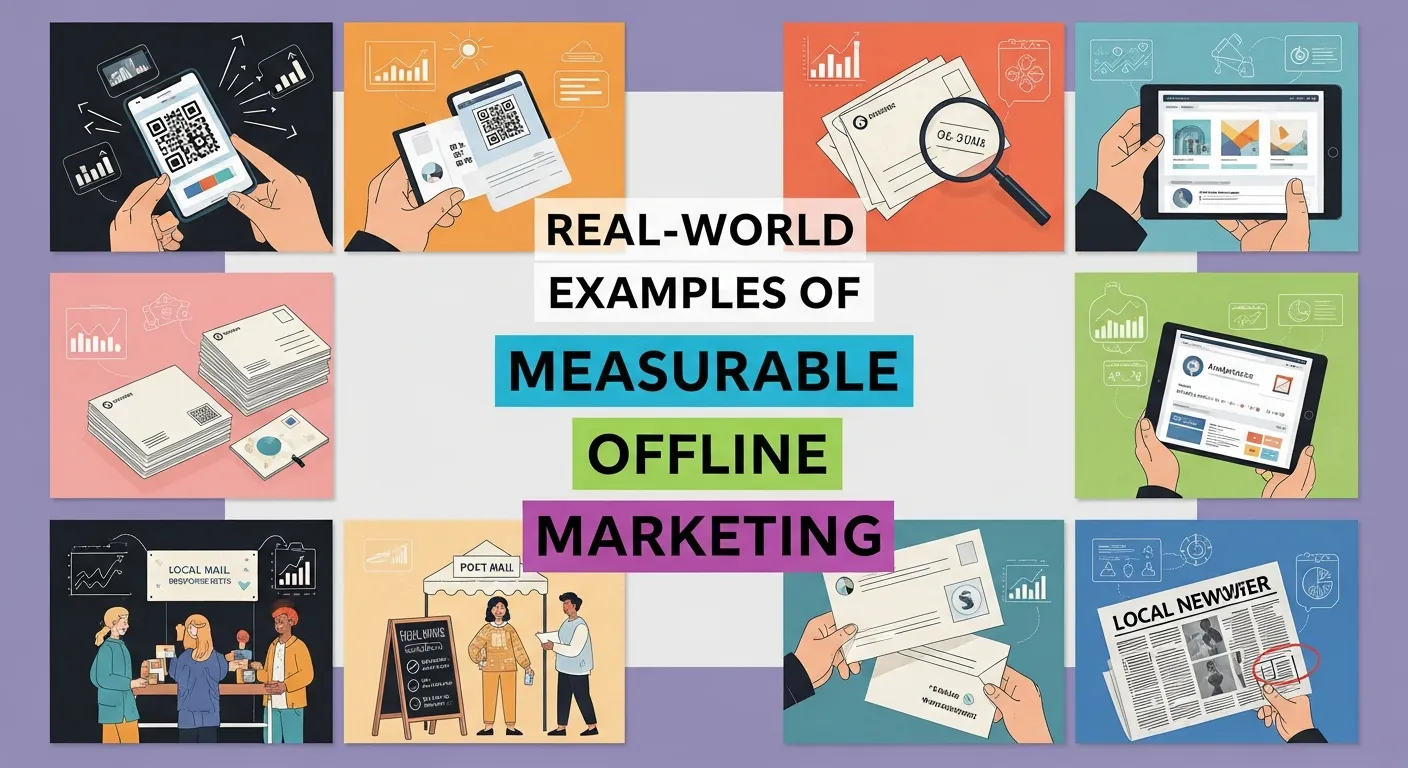
Real-World Examples of Measurable Offline Marketing
1. Coca-Cola’s “Share a Coke” Campaign
Though product-focused, this campaign used physical cans with names on them—encouraging people to share photos online. Sales rose 2% after years of decline, and hashtag use soared globally.
2. Casper Mattresses Pop-Up Showrooms
Casper used temporary offline locations to let people test mattresses. Each visitor was encouraged to book online appointments or use QR codes to purchase—blending offline experience with online conversion.
3. IKEA’s Catalog QR Integration
IKEA’s printed catalogs featured QR codes that led to virtual room planners, product info, and shopping links—creating a trackable bridge between offline and digital.
Final Thoughts: Offline Doesn’t Mean Unmeasurable
In an era obsessed with digital metrics, offline marketing might seem like a leap of faith—but it doesn’t have to be. With the right planning, tools, and creative thinking, you can measure the effectiveness of offline campaigns just as rigorously as online ones.
The key is to design for measurement from the start. Use unique tracking tools, set clear goals, and regularly review your results. When done right, offline marketing not only works—it becomes a reliable, data-driven part of your marketing strategy.
Frequently Asked Questions (FAQ)
1. Can offline marketing really be measured accurately?
Yes, offline marketing can be measured accurately when campaigns are designed with tracking in mind. While it may not offer instant analytics like digital marketing, tools such as unique URLs, QR codes, promo codes, dedicated phone numbers, and POS data make it possible to track responses, conversions, and ROI. The key is to plan measurement before launching the campaign—not after.
2. What are the most important offline marketing metrics to track?
The most important metrics depend on your campaign goals, but commonly tracked offline marketing metrics include:
- Direct response rate
- Redemption rate
- Foot traffic and in-store visits
- Sales or lead lift
- Cost per acquisition (CPA)
- Brand awareness and recall
Tracking a combination of performance and awareness metrics provides a more complete view of campaign success.
3. How do I track offline marketing if customers don’t take immediate action?
Offline marketing often influences decisions over time. To track delayed responses:
- Monitor sales and leads over longer timeframes
- Compare pre- and post-campaign performance
- Track increases in branded searches or direct website visits
- Use customer surveys to identify earlier touchpoints
Looking at trends and lift over time is more effective than relying only on immediate conversions.
4. Which offline marketing channels are easiest to measure?
Channels that encourage direct action are generally the easiest to measure, such as:
- Direct mail with promo codes
- In-store promotions
- Events and trade shows
- Radio ads with dedicated phone numbers
Brand-focused channels like billboards and sponsorships are harder to measure directly but can still be evaluated through awareness surveys, foot traffic analysis, and sales lift.
5. How do QR codes help measure offline marketing?
QR codes create a direct bridge between offline and online experiences. When scanned, they can lead users to trackable landing pages, sign-up forms, or product pages. Marketers can then analyze traffic sources, engagement, and conversions—making QR codes one of the most effective tools for offline attribution.
6. What’s the difference between offline marketing ROI and digital marketing ROI?
Digital marketing ROI is typically more immediate and precise due to real-time tracking. Offline marketing ROI often requires a broader view, incorporating:
- Sales lift over time
- Brand awareness impact
- Cross-channel influence
While the measurement methods differ, both can deliver strong ROI when aligned with clear goals and tracking systems.
7. How can small businesses track offline marketing on a limited budget?
Small businesses can track offline marketing affordably by:
- Using free QR code generators
- Creating simple custom landing pages
- Asking customers how they heard about the business
- Tracking coupon redemptions manually
- Using spreadsheet-based reporting
You don’t need enterprise-level tools to gain valuable insights—consistency matters more than complexity.
8. Should offline marketing be combined with digital marketing?
Absolutely. Combining offline and online marketing improves both reach and measurability. Offline channels build awareness and trust, while digital platforms capture data, enable retargeting, and drive conversions. Integrated campaigns are easier to track and often deliver better overall performance.
9. How long should I run an offline campaign before evaluating results?
Evaluation timelines vary by channel:
- Promotions and events: 1–4 weeks
- Print and radio ads: 4–8 weeks
- Billboards and sponsorships: 2–6 months
Always compare results against historical benchmarks rather than judging performance in isolation.
10. What is the biggest mistake marketers make with offline marketing measurement?
The most common mistake is not planning for measurement upfront. Launching offline campaigns without tracking mechanisms leads to guesswork and missed insights. Successful offline marketing starts with clear goals, defined metrics, and built-in attribution tools from day one.
Learn more about: Traditional Marketing for Small Business: Strategies That Work







[…] businesses focused on broader offline measurement, an offline marketing metrics strategy can help organize these performance […]
[…] broader offline marketing metrics can help set realistic benchmarks for what a successful print campaign should look like before you […]
[…] promo code redemptions, or measurable foot traffic increases during the campaign window. Our guide to offline marketing metrics walks through practical ways to track performance for channels like radio that don’t come […]