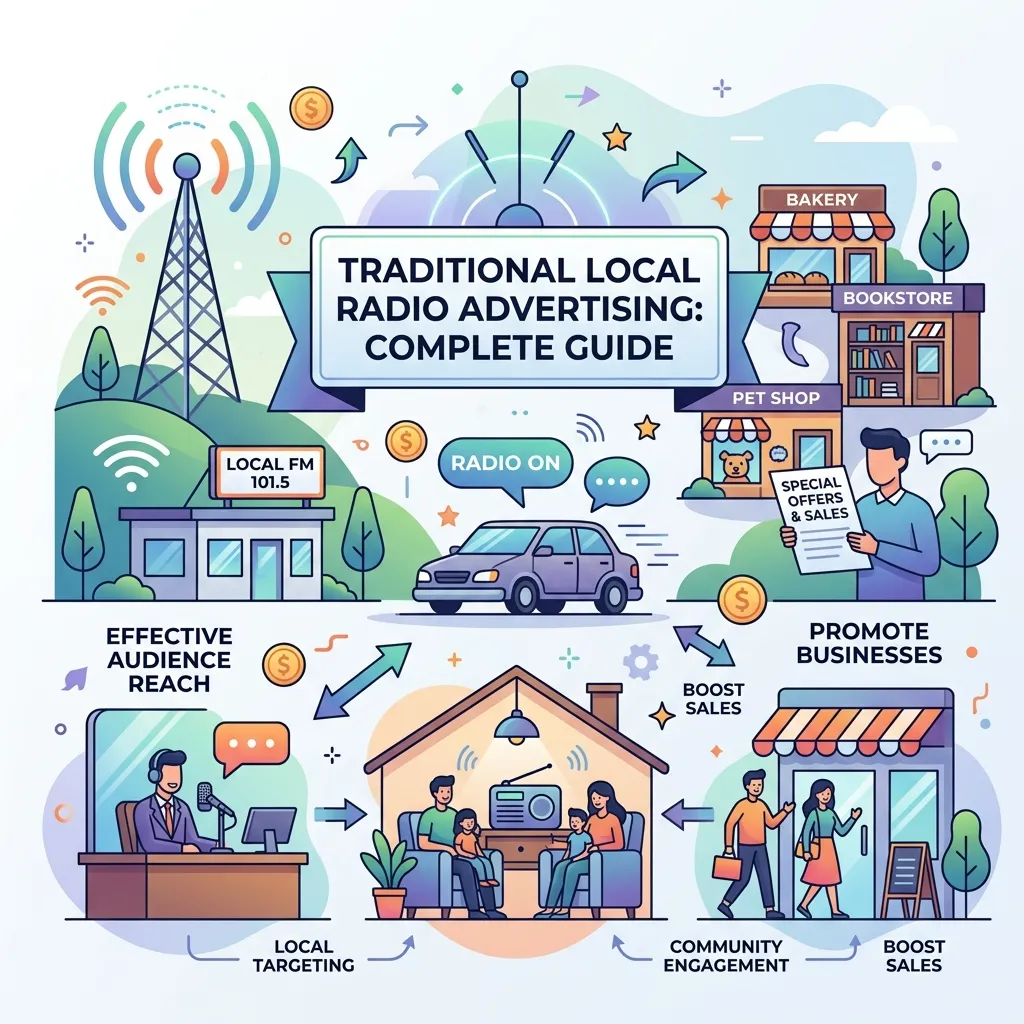
Traditional local radio advertising remains one of the most cost-effective ways for small and mid-sized businesses to reach a nearby audience. This guide covers how local radio ads work, what they cost, how to write and place them, and how they compare to other channels businesses commonly use alongside radio.
Long before social media feeds and streaming platforms, radio was already doing something most digital channels still struggle to replicate: building a personal, trusted connection with a local audience. That relationship hasn’t disappeared. Traditional local radio advertising still reaches commuters, shop owners, parents on the school run, and anyone within listening range of a station’s signal — often at a fraction of the cost of a national campaign.
For businesses trying to grow within a specific city, county, or service area, local radio advertising offers something digital ads can’t always guarantee: a captive, geographically concentrated audience that trusts the voice coming through their speakers. This guide walks through how local radio advertising actually works, what it typically costs, how to structure a campaign, and where it fits alongside other traditional and digital channels.
Why Traditional Local Radio Advertising Still Works
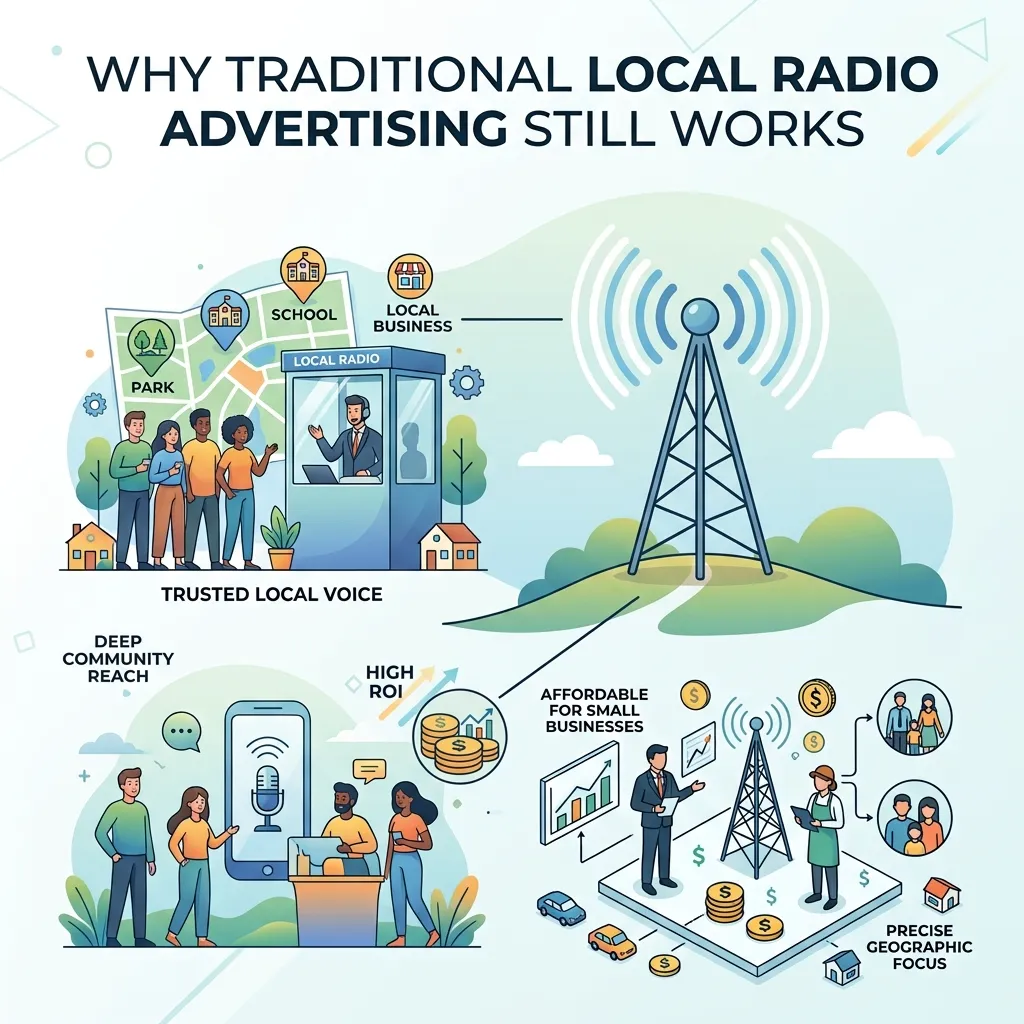
Radio has survived decades of new media because it does a few things exceptionally well. It’s a companion medium — people listen while driving, working, or doing chores, which means the ad reaches them during moments when they’re not staring at a screen and scrolling past a banner. It’s also intimate. A familiar host reading a live ad carries more trust than a skippable pre-roll video, and that trust often transfers to the brand being mentioned.
Local radio specifically narrows this advantage even further. A station serving a single metro area or county builds a loyal, repeat listenership that identifies with local news, weather, traffic, and community events. When a business advertises on that station, it’s borrowing some of that local credibility. That’s part of why familiarity and repetition through a trusted local voice tend to build recall in a way a single social media impression rarely does.
Our dedicated piece on traditional radio advertising strategy goes deeper into how stations structure their ad inventory and how advertisers typically plan a flight.
How Traditional Local Radio Advertising Works
A local radio advertising buy usually falls into one of a few formats:
- Produced spots — pre-recorded 15, 30, or 60-second ads with music, voiceover, and sound effects, played during commercial breaks.
- Live reads — the on-air host reads the ad copy themselves, often in their own voice and style, which tends to feel more authentic to regular listeners.
- Sponsorships — a business’s name is attached to a recurring segment, like the traffic report or weather update (“Traffic brought to you by…”).
- Remote broadcasts — the station broadcasts live from the advertiser’s location, combining radio exposure with an in-person event.
Stations typically sell airtime in dayparts — morning drive, midday, afternoon drive, evening, and overnight — with morning and afternoon drive commanding the highest rates because that’s when the most commuters are listening. A well-structured local radio plan usually spreads spots across a few dayparts rather than concentrating everything into one slot, since repetition across different listening occasions tends to build recall faster than a single heavily repeated placement.
What Traditional Local Radio Advertising Costs
Costs vary significantly by market size, station popularity, and time slot, but local radio is generally far more affordable than national radio or local television. Small stations in smaller markets may charge a modest rate per 30-second spot, while a top-rated station in a major metro area during morning drive will charge considerably more.
If you’re comparing radio against other local broadcast options, it’s also worth reviewing what local television advertising typically costs in the same market, since many small businesses end up splitting budget between the two rather than choosing one exclusively.
Most stations offer package deals — a bundle of spots across multiple dayparts sold at a discount versus buying each slot individually — which tends to be the more efficient way to buy local airtime for a business without a dedicated media buyer on staff.
Writing Effective Local Radio Ads
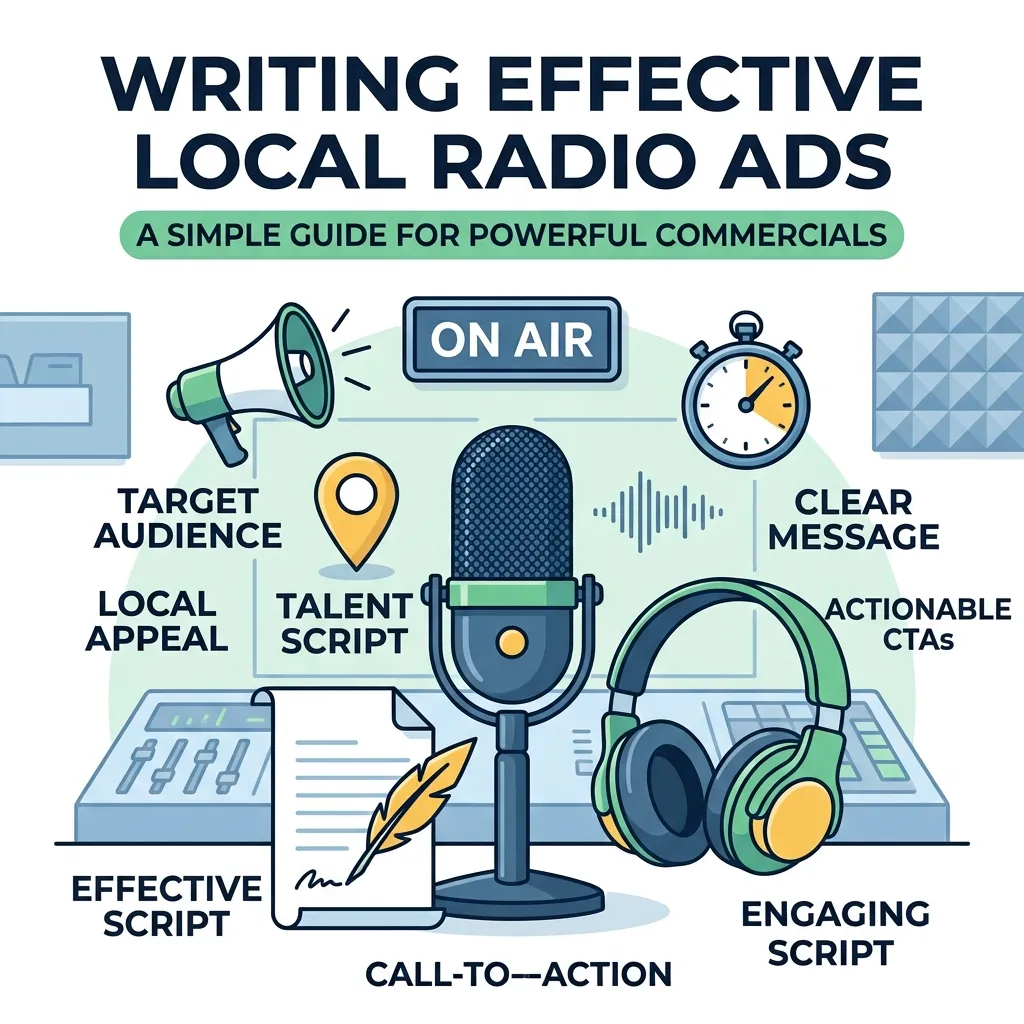
A radio ad has to work with sound alone, which means the writing needs to do more work than a visual ad would. A few principles apply consistently:
- Lead with the hook. Listeners decide within the first few seconds whether to keep paying attention or tune the ad out mentally.
- Repeat the business name and key detail. Because listeners can’t glance back at an ad the way they can scroll back through a feed, the name, offer, and call-to-action typically need to be repeated at least twice.
- Keep the call-to-action simple. A phone number, a short web address, or “mention this ad” works better than something a listener has to write down while driving.
- Match the station’s tone. An ad read in the host’s natural style on a local station tends to outperform a slick, over-produced spot that feels imported from a national campaign.
Good radio copy also borrows a lot from good broadcast storytelling in general — a clear hook, a single idea, and a memorable close tend to outperform copy that tries to cram in every product detail. Keeping the script simple is almost always more effective than trying to be comprehensive within thirty seconds. Businesses that test two or three different scripts over the course of a campaign, rather than locking in one version from the start, often discover which angle their local audience actually responds to.
Traditional Local Radio Advertising for Small Businesses
Local radio is particularly well suited to small businesses that serve a defined geographic area — restaurants, auto shops, real estate agents, medical practices, and retail stores. Unlike a national brand trying to reach a broad demographic, a local business benefits from radio’s ability to say “come visit us this weekend” to an audience that can actually act on it within minutes.
Many small businesses also use community involvement to reinforce a radio presence — sponsoring a local event the station is promoting, for example. This kind of layered visibility tends to reinforce the recall already built through on-air spots, since listeners hear the business name both from the host and from the community itself.
Local Radio vs. Other Traditional and Digital Channels
Traditional local radio advertising doesn’t have to compete head-to-head with television, print, or digital — in most local marketing plans, it works alongside them. Compared to local TV advertising, radio is typically cheaper to produce and buy, though it lacks the visual storytelling television offers. For businesses weighing both, understanding how digital and broadcast audiences overlap makes it easier to decide how much budget to put behind each format rather than treating the decision as either-or.
Radio also pairs naturally with other local awareness tactics. Businesses running billboard or transit advertising in the same market often find that radio reinforces the same message to an overlapping commuter audience, since both formats reach people while they’re out and moving through the community.
For a broader industry perspective on how broadcast media budgets get allocated across formats, our friends’ guide on why TV commercials still work makes many of the same trust and repetition arguments that apply just as well to local radio.
Measuring the Effectiveness of Local Radio Ads
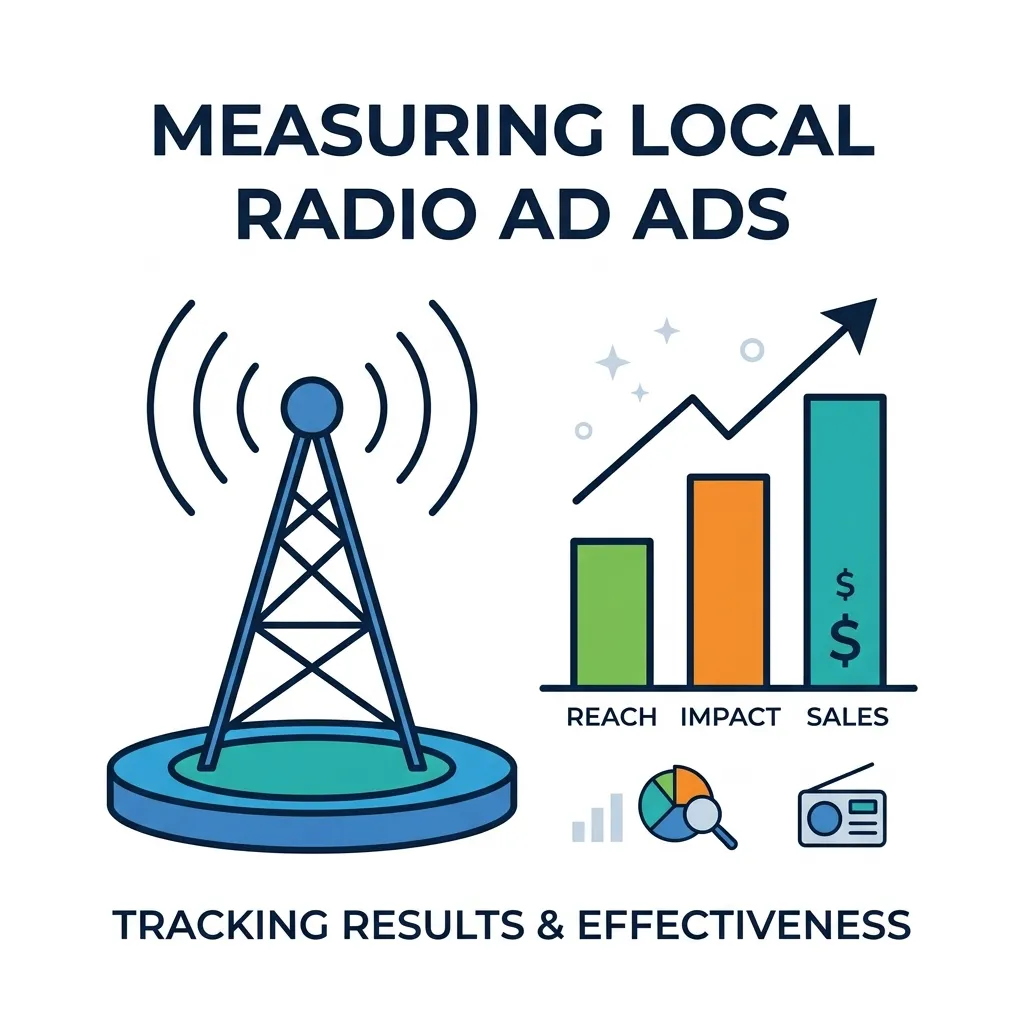
Radio has historically been harder to measure than digital channels, but a few practical methods still work well for a local campaign:
- Unique phone numbers or extensions dedicated to the radio ad, so calls can be tracked back to the campaign.
- Custom landing pages or promo codes mentioned only in the ad copy.
- “How did you hear about us?” tracking at the point of sale or booking.
- Listener surveys conducted by the station, which often include brand recall data as part of a sponsorship package.
Tracking local radio ads this way won’t produce the same real-time dashboards digital campaigns offer, but it gives a business enough data to judge whether a station and daypart combination is actually working, and to make an informed decision before renewing or expanding a buy. Even simple, low-cost tracking is usually enough to tell whether a specific station and time slot is worth the investment over the next renewal period.
Building a Traditional Local Radio Advertising Strategy
A workable local radio strategy usually starts with three decisions: which station best matches the target audience’s listening habits, which dayparts fit the budget, and how long the campaign needs to run before frequency starts to build real recall. Radio rarely works well as a one-off; most local businesses see stronger results from a sustained run of several weeks or months rather than a short burst.
It’s also worth revisiting the campaign periodically rather than running the same spot indefinitely. Refreshing the script, testing a new offer, or rotating between a produced spot and a live read can keep regular listeners from tuning the ad out through repetition fatigue. Coordinating radio timing with seasonal promotions or a wider traditional marketing strategy also helps a station buy feel like part of a larger plan rather than an isolated expense.
Common Mistakes That Hurt a Local Radio Campaign
Even a well-funded campaign can underperform if a few common mistakes creep in. The first is inconsistent scheduling — running spots for two weeks, pausing for a month, then restarting loses most of the frequency benefit that makes radio work in the first place. The second is copy that tries to say too much; a 30-second spot has room for one clear offer and one clear action, not a full list of services. The third is ignoring the station’s own audience data — a station’s demographic profile should match the business’s actual customer base, not just its general popularity in the market.
A fourth, less obvious mistake is treating the ad copy as a one-time asset. Scripts that worked well a year ago may sound stale to a station’s regular listeners, especially if a competitor has since launched a similar campaign on the same station. Businesses that revisit and refresh their messaging every few months, while keeping the same core offer and voice, tend to sustain stronger recall than those that let a single script run indefinitely.
How Local Radio Fits Into a Broader Marketing Mix
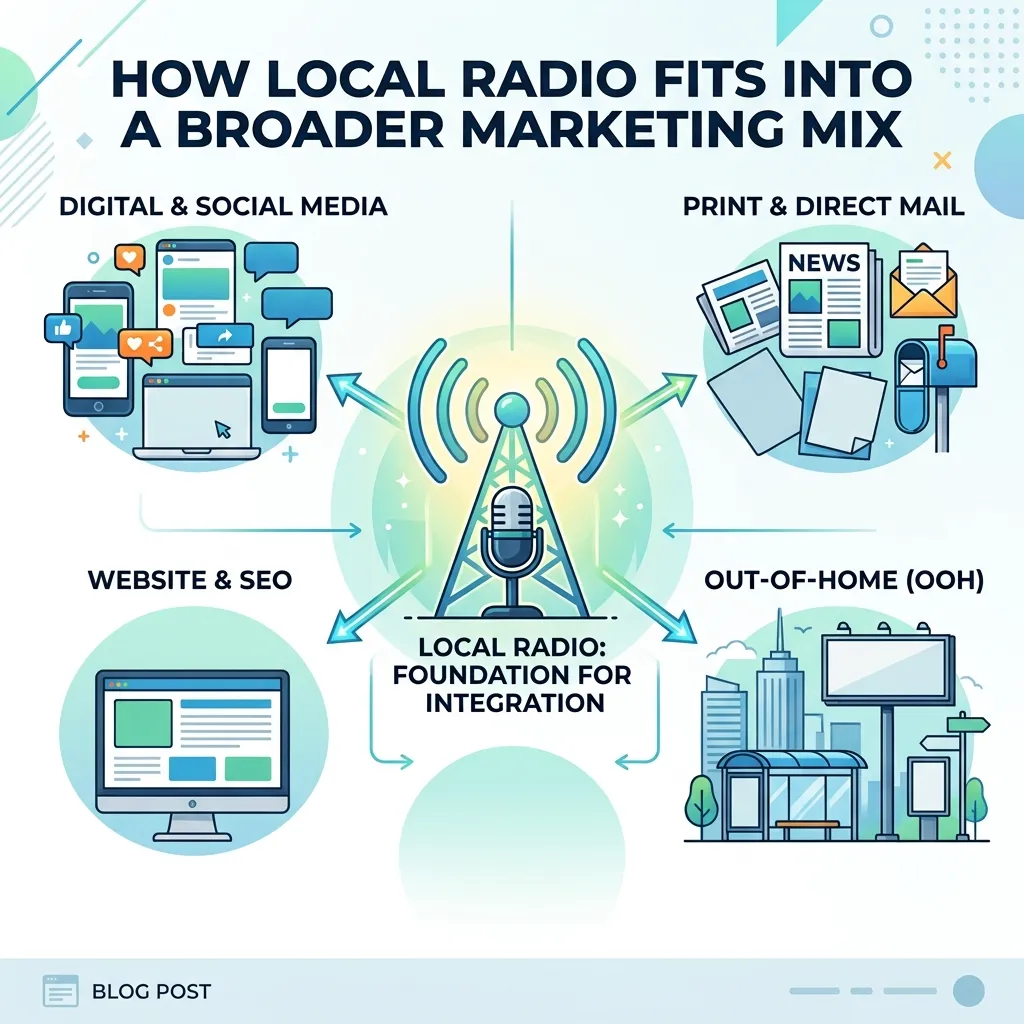
Traditional local radio advertising rarely works best in isolation. Businesses that pair it with a documented traditional marketing plan tend to get more consistent results, since radio’s job in that mix is usually to build broad local awareness while other channels — search, social, email, or in-store promotions — handle the closer stages of the customer journey. Treating radio as one piece of a coordinated plan, rather than a standalone tactic, tends to make the budget go further overall.
Conclusion
Traditional local radio advertising has stayed relevant for one simple reason: it reaches real people, in a specific place, at moments when they’re genuinely listening. For businesses trying to build recognition within a defined service area, the combination of low production cost, geographic precision, and host-driven trust is difficult to replicate through digital channels alone. A well-planned campaign — the right station, the right dayparts, clear and repeated messaging, and consistent tracking — can make this channel one of the more efficient options in a local marketing budget, especially when paired with complementary formats like local television, sponsorships, or print.
Frequently Asked Questions About Traditional Local Radio Advertising
Is traditional local radio advertising still effective in 2026?
Yes. Local radio continues to reach a loyal, geographically concentrated audience, particularly during commuting hours, and it remains one of the more affordable ways for small businesses to build local brand recognition.
How much does traditional local radio advertising typically cost?
Costs depend heavily on market size, station popularity, and daypart, but local radio is generally more affordable than national radio or local television, especially when spots are bought as part of a discounted package.
What’s the difference between a produced spot and a live read?
A produced spot is pre-recorded with music and voiceover, while a live read is delivered by the on-air host in real time, often in their own voice, which tends to feel more personal and trustworthy to regular listeners.
Which dayparts work best for local radio ads?
Morning and afternoon drive time typically reach the largest audiences since that’s when most commuters are listening, though they also come at a higher cost than midday or evening slots.
How long should a local radio campaign run?
Most local businesses see better results from a sustained campaign of several weeks or months rather than a short burst, since frequency and repetition are what build recall with radio.
Can traditional local radio advertising be tracked for ROI?
Yes. Common tracking methods include dedicated phone numbers, unique promo codes, custom landing pages, and simply asking new customers how they heard about the business.
Is local radio advertising better than local TV advertising?
Neither is universally better. Radio tends to be cheaper to produce and buy, while TV adds visual storytelling. Many small businesses use both channels together rather than choosing one exclusively.
What types of businesses benefit most from local radio ads?
Businesses with a defined local service area — restaurants, auto shops, real estate agents, me