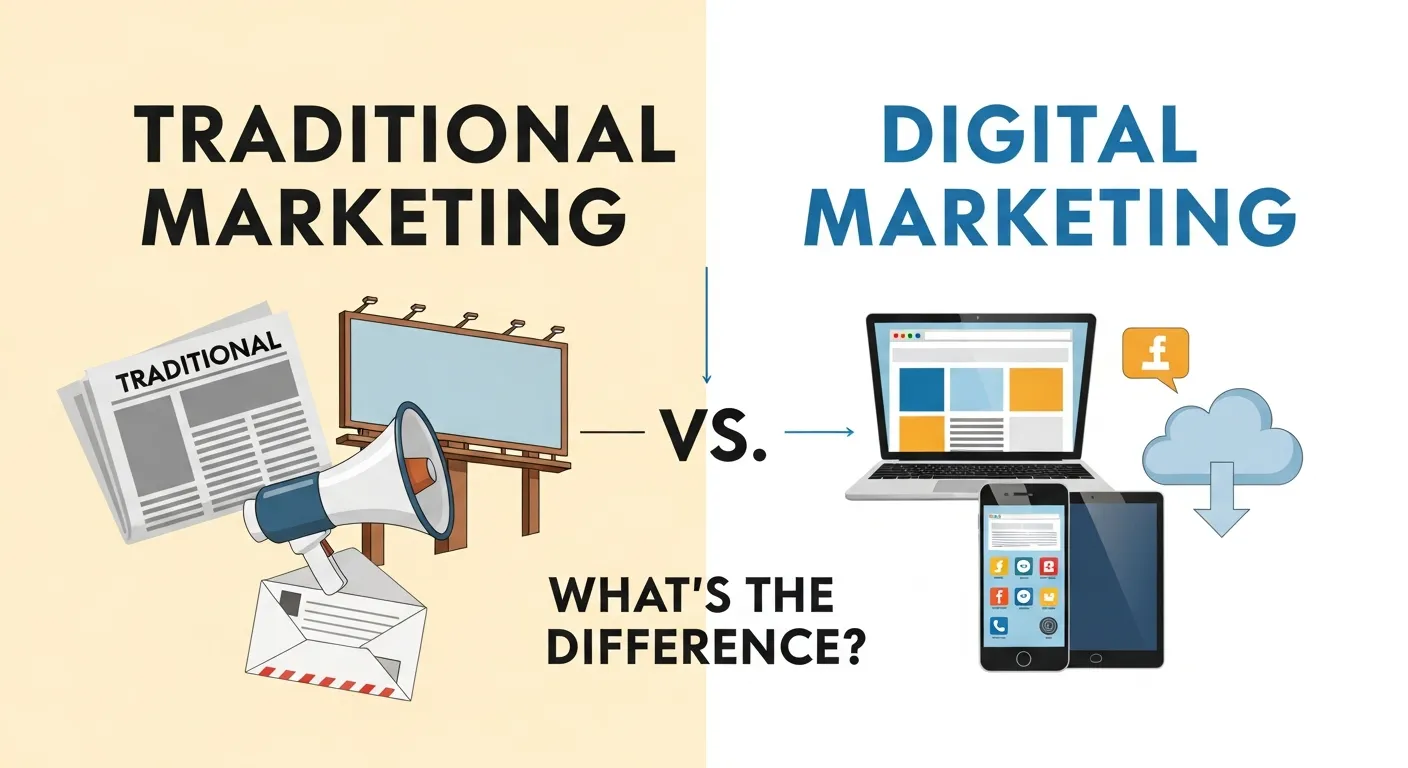
Traditional Marketing vs Digital Marketing are two distinct approaches businesses use to reach their audiences. Traditional marketing relies on offline channels such as TV, radio, print, and billboards, offering credibility, tangibility, and mass reach. Digital marketing uses online platforms like social media, email, websites, and search engines, providing precise targeting, measurable results, and real-time engagement. Combining both approaches in a hybrid strategy maximizes reach, engagement, and ROI for modern businesses.
When it comes to building and promoting a successful business, marketing is the key to opening the door to your target audience. But as the world of marketing evolves, businesses often find themselves faced with an important question: which approach is better—traditional marketing or digital marketing?
Whether you’re considering a prime-time TV spot or a cleverly crafted Instagram campaign, it’s important to know the strengths and weaknesses of each to create a winning strategy.
What Is Traditional Marketing?
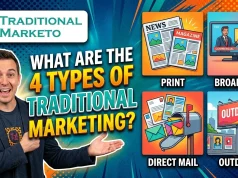
Traditional marketing refers to promotional methods that don’t rely on digital platforms. These are the tried-and-true techniques that have built brands for decades. Think TV ads, radio jingles, billboards, direct mail, and print media.
Key Characteristics of Traditional Marketing
- Physical Presence: Flyers, newspapers, posters, and magazines have a tangible impact.
- Widespread Reach: Channels like TV and radio allow brands to target broad audiences.
- One-way Approach: These strategies typically present information without immediate interaction.
- Repetition for Impact: Repeated exposure to ads helps reinforce brand recall.
What Is Digital Marketing?
Digital marketing, on the other hand, lives in the online world. It uses the internet, mobile devices, social media, search engines, and email to promote products and services.
Key Characteristics of Digital Marketing
- Interactive and Engaging: Digital marketing allows for real-time interaction, comments, and feedback.
- Data-Driven: Platforms like Google Analytics and social media insights provide detailed performance metrics.
- Scalable and Targeted: You can reach global audiences or hyper-focus your efforts on specific demographics.
Traditional Marketing vs. Digital Marketing: A Head-to-Head Comparison
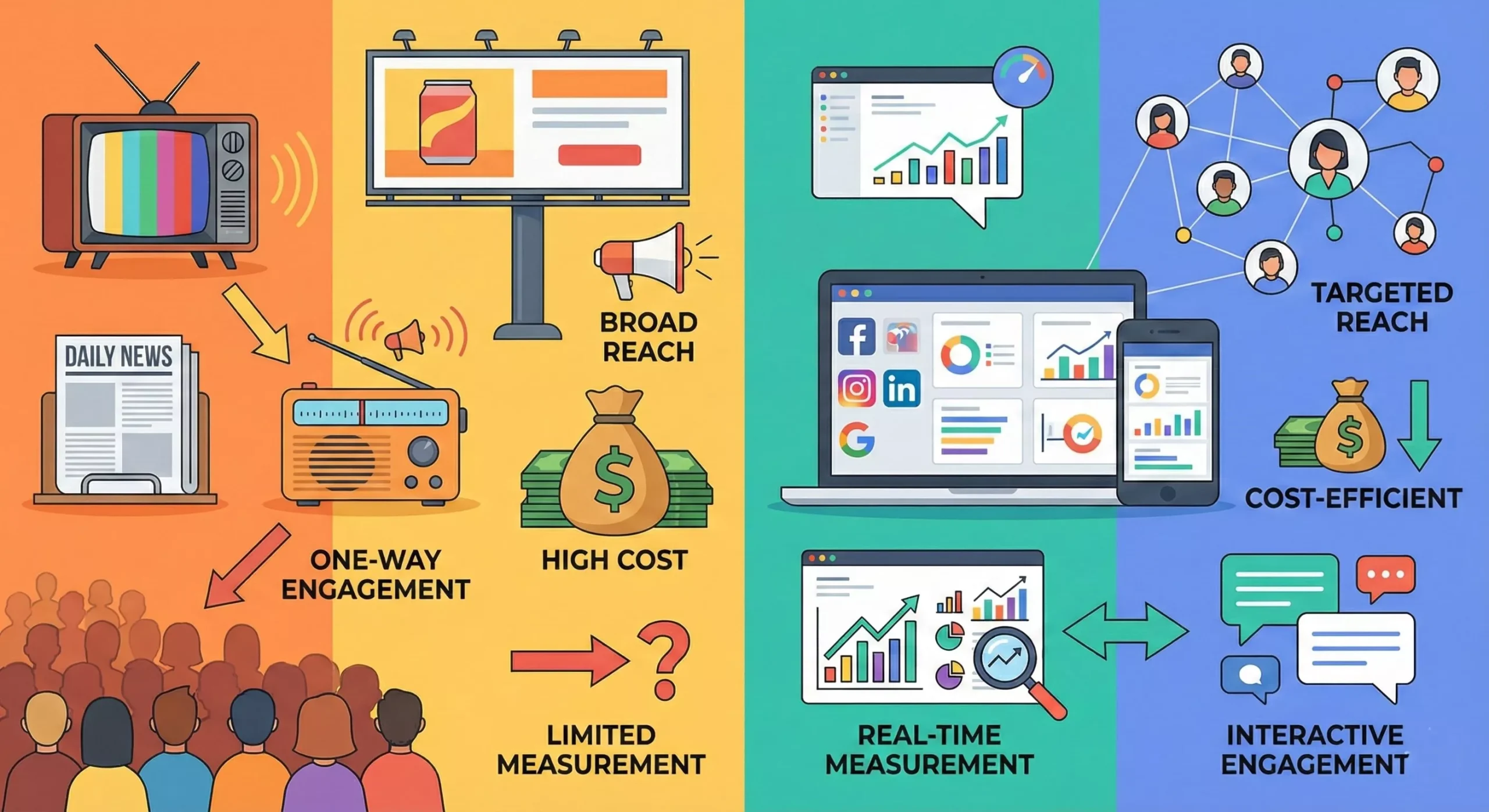
Reach
- Traditional: Offers broad exposure through media like TV or national newspapers, making it ideal for targeting large, general audiences.
- Digital: Allows hyper-targeting, enabling businesses to reach specific audiences based on demographics, interests, or online behaviors.
Cost
- Traditional: Often requires a significant investment, with high production and placement costs for TV ads or billboards.
- Digital: More budget-friendly and scalable, especially for small businesses. PPC advertising, for instance, allows businesses to start with low budgets.
Measurement
- Traditional: Difficult to measure effectiveness precisely; metrics rely on estimations (e.g., TV ratings, newspaper circulations).
- Digital: Easily measurable, with clear analytics showing ROI, click-through rates, and user behavior.
Engagement
- Traditional: Primarily a one-way communication channel. It informs but doesn’t facilitate a direct conversation with the audience.
- Digital: Interactive and dynamic. Brands can engage with audiences instantly through comments, shares, and messages.
Benefits of Each Method
Both traditional and digital marketing offer unique advantages, and understanding these benefits can help you choose the right approach—or combination—for your business.
Benefits of Traditional Marketing
- Tangibility
Physical materials like flyers, brochures, magazines, and business cards leave a lasting impression. Recipients can hold, keep, or display them, which strengthens brand recall over time. - Credibility
Many consumers still perceive traditional media—such as television, radio, and print publications—as more trustworthy. Being featured in these channels can enhance your brand’s legitimacy and authority. - Brand Recall
Repeated exposure through billboards, TV ads, or radio spots helps embed your brand in consumers’ minds. Seeing a consistent message across familiar channels reinforces recognition and encourages future engagement. - Mass Audience Reach
Traditional marketing is effective for reaching large and diverse audiences at once. Television commercials, print ads, and radio broadcasts can target entire regions or demographics simultaneously, making them ideal for brand awareness campaigns.
Benefits of Digital Marketing
- Greater ROI
Digital marketing provides detailed performance metrics, enabling you to optimize campaigns in real time. This ensures that your budget is spent efficiently, targeting strategies that deliver measurable results. - Global Reach
Online platforms break geographic boundaries, allowing businesses to connect with audiences anywhere in the world. This is especially valuable for e-commerce, SaaS companies, and brands looking to expand internationally. - Personalization
Digital tools, AI, and algorithms enable highly tailored marketing. Ads, emails, and content can be customized based on users’ interests, behavior, and preferences, increasing engagement and conversion rates. - Real-Time Adaptation
Digital campaigns can be adjusted instantly in response to performance data. Businesses can test different messages, optimize ads, and respond to trends quickly, ensuring maximum impact without waiting weeks or months for results.
Traditional Marketing vs. Digital Marketing: Quick Summary
Marketing strategies can feel overwhelming, but breaking down the differences between traditional and digital methods can help you make smarter decisions. Both have unique strengths, and understanding when and how to use each can improve your ROI, reach, and customer engagement.
Key Takeaways
- Traditional marketing relies on offline channels such as TV, radio, print media, and billboards. It is ideal for building trust, broad awareness, and local campaigns.
- Digital marketing uses online channels like social media, search engines, email, and websites. It excels in precise targeting, measurable results, and interactive engagement.
Many successful campaigns blend both approaches to maximize brand visibility, credibility, and conversions.
Quick Comparison Table
| Feature/Aspect | Traditional Marketing | Digital Marketing |
|---|---|---|
| Channels | TV, radio, print, billboards, direct mail | Social media, websites, email, SEO, PPC |
| Audience Targeting | Broad demographic groups | Highly specific segments (age, interests, location) |
| Cost | High upfront costs | Flexible, scalable, lower entry costs |
| Measurement | Harder to measure, indirect metrics | Real-time analytics, clear ROI |
| Engagement | One-way communication | Two-way interaction, comments, shares |
| Credibility | High trust factor with older audiences | Builds credibility online with content and social proof |
| Best Use Case | Brand awareness, local campaigns, mass exposure | Lead generation, niche targeting, online sales, and real-time campaigns |
How to Use This Table
- For quick decisions: Scan the table to match your business goals with the method that fits best.
- For strategy planning: Use the bullet points and table together to identify opportunities for blending traditional and digital tactics.
- For hybrid campaigns: Consider combining columns to achieve both mass reach and precise targeting.
Blending Traditional and Digital Marketing for Maximum Impact
Marketing success doesn’t have to come from choosing between traditional or digital strategies. In fact, many of today’s most effective campaigns use a hybrid approach that blends both. By combining offline visibility with online engagement, businesses can create seamless customer journeys that maximize reach, recall, and conversions.
Traditional marketing is excellent for creating awareness and trust, while digital marketing excels at engagement, personalization, and measurement. When used together, they reinforce each other and deliver stronger, more consistent results.
Why a Hybrid Approach Works
- Wider Reach: Traditional channels expose your brand to large audiences, while digital platforms capture and nurture interested prospects.
- Stronger Brand Recall: Seeing a brand both online and offline increases familiarity and credibility.
- Improved Customer Experience: Customers can move smoothly from awareness to engagement to conversion across multiple touchpoints.
- Better Measurement: Digital tools help track and optimize the impact of traditional campaigns.
Real-Life Examples of Integration
TV Ads + Social Media
Television commercials can spark initial interest and direct viewers to social media platforms for deeper engagement. Brands often encourage viewers to follow their Instagram or TikTok accounts for behind-the-scenes content, contests, or exclusive promotions, turning passive viewers into active participants.
Billboards with QR Codes
Outdoor advertising becomes interactive when paired with digital elements. Adding a QR code to a billboard allows people to instantly access a landing page, special offer, or event registration using their smartphones. This bridges the gap between offline exposure and online action.
Direct Mail + Email Campaigns
A physical postcard or brochure can capture attention in a crowded mailbox, while follow-up email campaigns continue the conversation. For example, a postcard might introduce an offer, and an email series can provide product details, testimonials, or limited-time incentives to drive conversions.
Print Ads + Website or Landing Pages
Magazine or newspaper advertisements can include website URLs or custom landing pages. This helps track campaign performance while encouraging readers to learn more, sign up, or make a purchase online.
Events and Trade Shows + Digital Follow-Ups
In-person events generate leads and personal connections, while digital tools help maintain those relationships. Businesses can collect email addresses at events and follow up with automated emails, social media connections, or retargeting ads to stay top-of-mind.
Making Integration Work for Your Business
To successfully blend traditional and digital marketing, ensure your messaging, visuals, and tone remain consistent across all channels. Use digital analytics to measure performance and refine your campaigns over time. The goal is to create a unified brand experience that guides customers naturally from awareness to action.
By thoughtfully integrating both approaches, businesses can achieve greater impact, stronger engagement, and long-term marketing success.
When to Choose Traditional Marketing
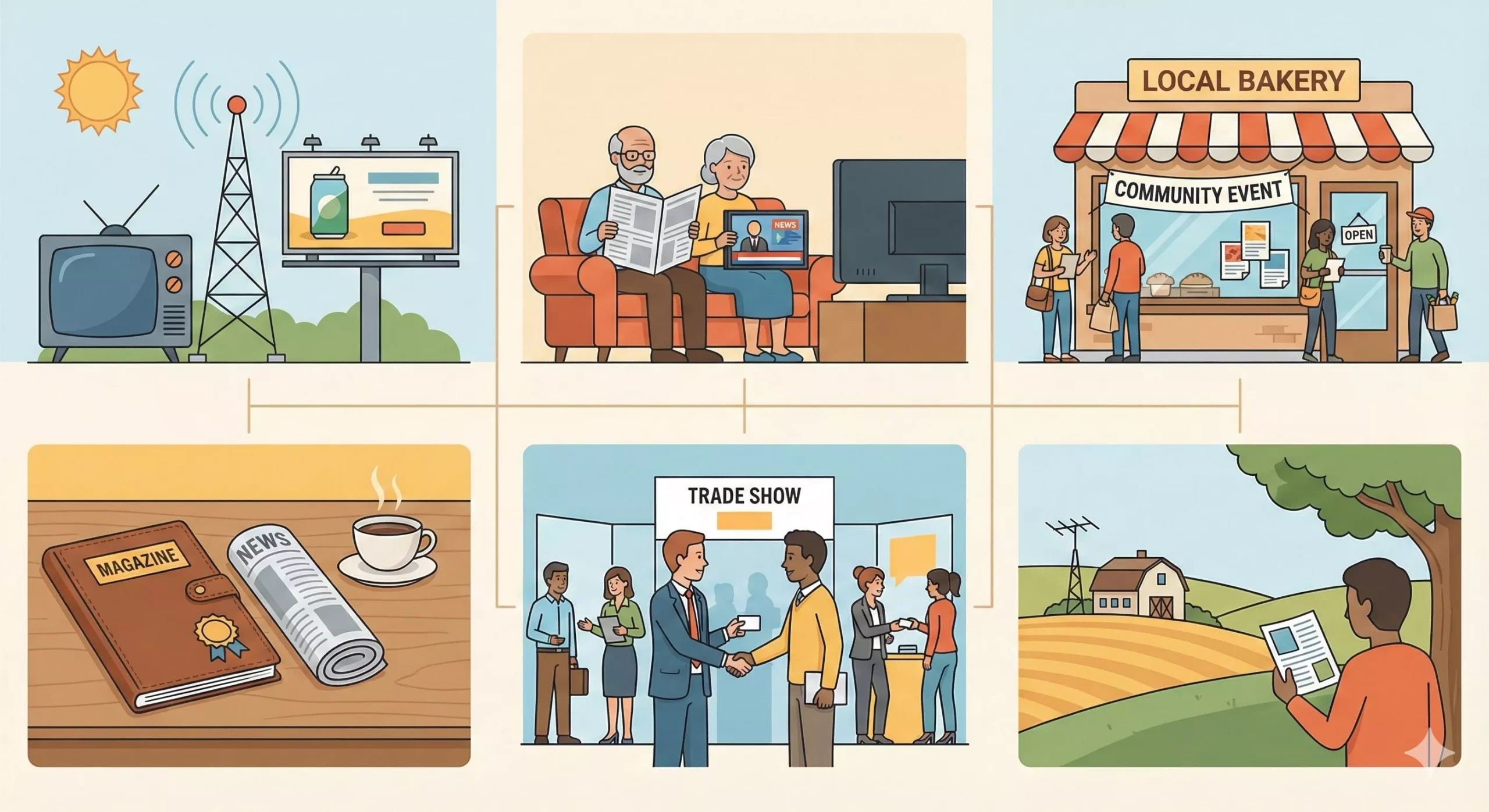
Traditional marketing remains a powerful option in situations where physical visibility, mass exposure, and personal trust play a key role. While digital platforms dominate modern marketing, offline channels continue to deliver strong results for specific goals and audiences.
When to Use It
Building Brand Awareness
Traditional marketing channels such as television commercials, radio ads, and large-format billboards are highly effective at creating widespread brand recognition. Repeated exposure through these mediums helps embed your brand in consumers’ minds, making them more likely to remember you when a purchasing need arises. This is especially valuable for new brands or product launches that require rapid visibility.
Targeting Older Audiences
Older demographics often rely more on traditional media for information and entertainment. Print newspapers, magazines, and television remain trusted sources for this audience. Brands offering healthcare services, financial products, or household services frequently see better engagement through these channels than through digital-only campaigns.
Local and Community-Based Campaigns
Traditional marketing excels at reaching people within a specific geographic area. Flyers, posters, local newspaper ads, radio spots, and community event sponsorships are effective for promoting store openings, local services, or time-sensitive offers. These methods help businesses establish a strong presence within their community.
Enhancing Brand Credibility and Trust
Being featured in established media outlets can significantly boost brand credibility. Consumers often perceive businesses advertised in newspapers, magazines, or on television as more legitimate and reliable. This trust factor is particularly important for industries where credibility strongly influences purchasing decisions.
Supporting In-Person Sales and Experiences
For businesses that rely on face-to-face interactions—such as retail stores, exhibitions, or service providers—traditional marketing helps drive foot traffic. Signage, direct mail, and event marketing encourage customers to visit physical locations and engage directly with your brand.
Reaching Audiences With Limited Internet Access
In areas with limited internet connectivity or lower digital adoption, traditional marketing may be the most reliable way to reach potential customers. Offline channels ensure your message reaches audiences who might otherwise be missed by digital campaigns.
When to Choose Digital Marketing
Digital marketing is the go-to when precision targeting, cost efficiency, and measurable ROI are priorities.
When to Use it:
Engaging Younger Audiences:
- Millennials and Gen Z are digital natives who respond well to social media campaigns and influencer marketing.
E-commerce:
- If your business operates online, reaching customers digitally is non-negotiable.
Startups or Budget-Conscious Businesses:
- Scalable campaigns on digital platforms help maximize limited resources.
Craft Your Marketing Strategy Today
Understanding the differences between traditional and digital marketing is the first step toward choosing the right tools for your business. While traditional methods are rooted in familiarity and trust, digital strategies enable adaptability and precision in an evolving market.
For the best results, integrate the two approaches where it makes sense. Build brand awareness with a billboard while driving engagement online. Use print ads to establish credibility while running precise PPC campaigns for conversions.
Conclusion
When comparing Traditional Marketing vs Digital Marketing, neither method alone is enough to fully capture today’s diverse audiences. Traditional channels excel at building credibility, trust, and mass awareness, while digital platforms allow precision targeting, interactivity, and performance tracking. Integrating both methods ensures a seamless customer journey, stronger engagement, and long-term marketing success, making a hybrid approach the most effective strategy in the evolving marketing landscape.
Frequently Asked Questions (FAQs)
1. What is the difference between traditional and digital marketing?
Traditional marketing uses offline channels (TV, radio, print, billboards) for broad awareness, while digital marketing uses online platforms (social media, email, websites) for precise targeting and measurable results.
2. Which marketing method is more cost-effective?
Digital marketing is generally more affordable due to low entry costs, scalability, and real-time optimization. Traditional marketing often requires higher upfront production and placement costs.
3. Can traditional marketing still be effective in the digital age?
Yes. It builds credibility, reaches local and older audiences, and creates mass awareness. Combining it with digital marketing often yields stronger results.
4. How do I choose between traditional and digital marketing?
Consider your target audience, goals, budget, and location. Traditional marketing works for trust, brand awareness, and local campaigns, while digital marketing excels at online sales, engagement, and measurable ROI.
5. Can businesses combine traditional and digital marketing?
Absolutely. A hybrid approach maximizes impact. For example, TV ads can direct viewers to social media, or a print ad can include a QR code linking to a landing page.
6. Which method provides better measurement of results?
Digital marketing allows real-time analytics, tracking clicks, conversions, and ROI. Traditional marketing relies on indirect metrics like TV ratings or circulation numbers.
7. Is digital marketing better for startups?
Yes, due to low costs, scalability, and precise targeting. But small, focused traditional campaigns can still help with local visibility or credibility.
8. Which businesses benefit most from traditional marketing?
Local service providers, retail stores, healthcare services, and brands targeting older demographics benefit from print, radio, TV, and community campaigns.
9. How does digital marketing engage younger audiences?
Social media platforms, influencer campaigns, and interactive content resonate strongly with Millennials and Gen Z.
10. Can digital marketing reach global audiences?
Yes. Online platforms break geographic barriers, enabling global reach and international brand recognition.
11. What are the benefits of a hybrid marketing strategy?
Combining traditional and digital marketing improves brand recall, audience engagement, credibility, and overall campaign effectiveness.
12. How can I maintain consistent branding across all channels?
Ensure messaging, visuals, and tone remain uniform offline and online. Use analytics to monitor performance and adjust campaigns for maximum impact.