
Digital Products for Students help college learners organize their schedules, improve study habits, manage assignments, and access educational resources from anywhere. From digital planners and note-taking applications to printable worksheets and productivity tools, these resources make learning more flexible and convenient. This guide explores the most useful digital resources for students, explains how to choose the right tools, and shows how technology can make academic life more organized and productive.
Digital Products for College Students
College students frequently manage multiple subjects, deadlines, group projects, and examinations simultaneously. Digital resources can simplify these responsibilities by keeping academic information organized in one accessible place.
Digital Products for Students, such as assignment trackers, semester planners, revision calendars, and downloadable academic templates, help learners plan their workload more effectively. A semester planner, for example, allows students to record examination dates, assignment deadlines, and important academic events before they become overwhelming.
Students can also use digital flashcards, recorded lectures, and subject-specific learning guides to reinforce classroom lessons. These resources make it easier to review difficult concepts without carrying numerous physical books.
When choosing college resources, consider affordability, ease of use, and compatibility with your devices. Free versions can be sufficient for students who need basic organizational features, while premium options may offer additional storage, customization, or collaboration capabilities.
Best Digital Tools for Students
The best digital tools are those that make everyday academic tasks simpler. Calendar applications help students schedule classes and examination preparation, while cloud storage services keep documents accessible across different devices.
Digital Products for Students also include task management platforms, grammar checkers, citation generators, and collaborative document editors. These tools can support different stages of academic work, from researching a topic to preparing a final assignment.
For example, students working on a research paper can organize their references, maintain a writing schedule, and collaborate with classmates using suitable digital applications. Those managing several assignments can prioritize urgent tasks and monitor their progress through a task manager.
It is important to use these tools responsibly. Students should verify information, protect their personal data, and follow their institution’s academic integrity policies. Technology should support independent learning rather than replace critical thinking.
Digital Study Planners for Students
 Planning is one of the most effective ways to maintain consistent academic progress. A digital study planner helps students divide large assignments into smaller tasks, allocate revision time, and monitor upcoming deadlines.
Digital Products for Students, including weekly planners, monthly calendars, examination preparation templates, and habit trackers, can make study schedules easier to maintain. Many templates can be edited on a tablet or computer, while others can be printed for traditional paper-based use.
A practical study planner should reflect your actual routine. Students who attend classes throughout the day might schedule short evening revision sessions, whereas those preparing for examinations may prefer longer blocks dedicated to individual subjects.
Regularly reviewing your planner is equally important. At the end of each week, assess which tasks you completed, identify subjects that require additional attention, and adjust the next week’s schedule. This approach encourages consistency without creating an unrealistic workload.
Printable Study Notes and Worksheets
Printable educational materials remain useful even as digital learning becomes more common. Students can download worksheets, revision summaries, subject notes, vocabulary exercises, and practice questions to reinforce what they learn in class.
Digital Products for Students such as printable study sheets combine the convenience of online access with the familiarity of handwriting. Students can print materials when they need to annotate diagrams, solve mathematical problems, or practice answering examination questions.
These resources are particularly valuable for learners who understand concepts better through written practice. A science worksheet might include labeled diagrams, while a language worksheet could provide grammar exercises and vocabulary activities.
Before downloading educational materials, check their accuracy, relevance, and educational level. Resources should match your syllabus and learning objectives. You can also organize downloaded worksheets into subject-specific folders, making revision easier when examinations approach.
Digital Learning Resources for Students
Online learning resources allow students to explore subjects beyond their classroom curriculum. Educational websites, video lessons, electronic textbooks, interactive simulations, and online courses provide different ways to understand complex topics.
Digital Products for Students in this category can support independent learning by giving students access to explanations, demonstrations, and additional practice. For instance, a student struggling with a mathematical concept can review a video lesson before attempting related exercises independently.
Digital learning resources can also introduce students to professional skills, including communication, research, programming, and writing. These additional skills may prove useful when applying for internships or preparing for future employment.
Students should evaluate the credibility of learning materials before relying on them. Prefer resources created by qualified educators, recognized institutions, or reputable educational platforms. Comparing explanations from multiple reliable sources can also help clarify confusing concepts.
Best Educational Apps for Students
Educational applications make learning more accessible by providing interactive exercises, progress tracking, quizzes, and personalized revision opportunities. Depending on the subject, students can use language-learning applications, mathematics practice tools, science resources, or flashcard programs.
Digital Products for Students available through educational apps can encourage regular practice by turning complicated lessons into manageable learning activities. Short quizzes, for example, help students identify knowledge gaps before an examination.
Some applications also use spaced repetition, a learning technique that schedules reviews over time. This method can help students retain information more effectively than repeatedly reviewing everything in a single session.
However, downloading too many applications can become counterproductive. Choose a small collection that supports your main academic goals. Review privacy settings, check subscription conditions, and disable unnecessary notifications to protect your concentration.
Productivity Tools for Students
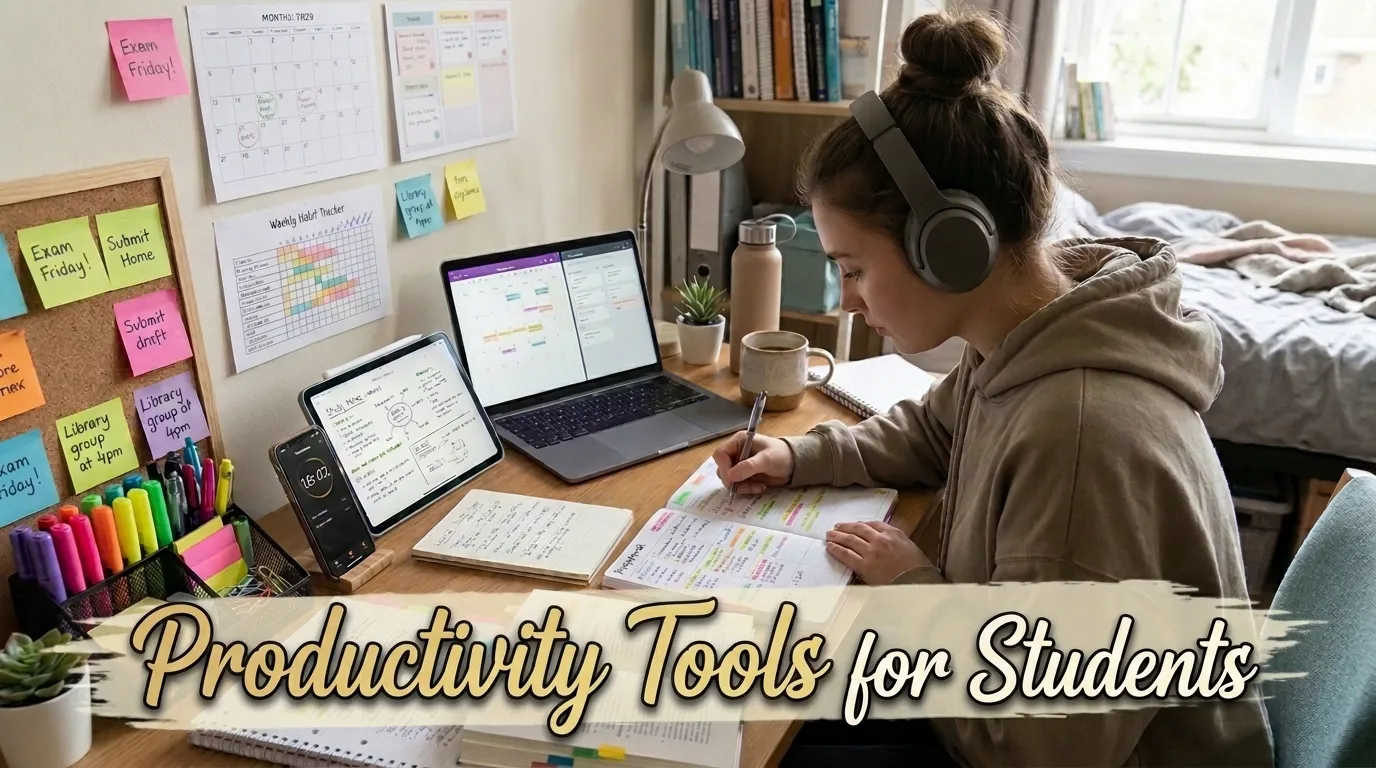 Productivity involves completing important tasks efficiently while maintaining a sustainable routine. Students can improve productivity by using digital timers, task managers, distraction blockers, note organizers, and file management systems.
Digital Products for Students designed for productivity help learners prioritize assignments and establish consistent study routines. For example, a task manager can separate urgent deadlines from long-term projects, while a focus timer can encourage concentrated work sessions followed by short breaks.
Students can also use cloud-based storage to organize lecture notes, research documents, and presentations. Consistent file names and subject folders reduce the time spent searching for important materials.
Productivity tools work best when combined with realistic goals. Instead of attempting to study every subject in one day, identify the most important tasks and allocate appropriate time to each. Take regular breaks, maintain a healthy sleep schedule, and adjust your approach when your workload changes.
Digital Notebooks for Note-Taking
Digital notebooks provide a flexible alternative to traditional notebooks. They allow students to organize lecture notes, annotate PDF documents, insert images, create diagrams, and search for specific information.
Digital Products for Students such as electronic notebooks and annotation applications can be particularly helpful for students who manage extensive course materials. Notes can be arranged by subject, semester, or topic, making information easier to retrieve during revision.
Some applications support handwriting with a stylus, while others focus on typing and document organization. Students can choose the format that best matches their learning preferences and available devices.
An effective note-taking system should emphasize understanding rather than simply copying information. Summarize important ideas in your own words, record examples, highlight concepts that need further review, and revisit your notes after class. These habits make digital notebooks more valuable as long-term learning resources.
Online Study Materials for Students
Online study materials help learners access educational content without depending entirely on physical textbooks. Digital libraries, past examination papers, subject guides, academic journals, and recorded lectures can provide valuable supplementary information.
Digital Products for Students that offer organized study materials can reduce preparation time and make independent revision more convenient. Students preparing for examinations can combine textbook reading with practice questions, topic summaries, and instructor-approved online resources.
When researching academic topics, use reputable libraries, institutional repositories, and recognized educational websites. Check publication dates when information may have changed, and cite original sources whenever your assignment requires references.
Students should also organize online materials carefully. Saving every document without a clear system can create confusion. Create folders for individual subjects, keep track of useful links, and remove outdated files that no longer support your learning objectives.
Digital Products to Improve Student Productivity
 Improving productivity requires more than completing assignments quickly. Students need systems that help them remain organized, maintain concentration, and use their available time effectively.
Digital Products for Students, including habit trackers, goal-setting worksheets, revision dashboards, budgeting templates, and time management planners, can support these objectives. A budgeting template, for example, can help college students monitor spending on transportation, meals, books, and subscriptions.
Students interested in developing additional skills can also explore digital resources related to entrepreneurship, communication, and online business. Understanding topics such as profitable online business ideas may help students discover ways to apply their skills outside the classroom.
Likewise, learning about online store marketing can introduce students to e-commerce concepts, while a practical social media marketing strategy guide can help those interested in digital communication understand how online audiences are reached.
Students exploring career opportunities may benefit from learning about a digital marketing company and how marketing services operate. Understanding traditional promotional methods through an article on the benefits of TV advertising can also broaden their knowledge of advertising and business communication.
The most effective approach is to select resources that directly support your academic and personal goals. Track your progress regularly, eliminate tools you rarely use, and focus on sustainable improvements rather than trying every new application.
Conclusion
Technology has transformed the way students organize information, access educational materials, and manage academic responsibilities. From study planners and printable worksheets to educational applications and digital notebooks, the right resources can make learning more flexible and structured. Digital Products for Students are most valuable when they address specific needs, fit within a student’s budget, and encourage active learning. Before purchasing a subscription or downloading a new application, consider whether it will save time, improve understanding, or help you maintain a consistent routine.
FAQ
1. What are digital products for students?
Digital Products for Students are downloadable or online resources that support learning, organization, and academic productivity. Examples include digital planners, electronic notebooks, printable worksheets, educational applications, and online study guides.
2. Are digital products useful for college students?
Yes, they can help college students manage assignments, organize lecture notes, prepare for examinations, and access educational resources. Their usefulness depends on how well they match the student’s academic needs and study habits.
3. Which digital products are best for studying?
Study planners, flashcards, digital notebooks, practice worksheets, and educational applications are popular options. The best choice depends on the subject, learning preferences, and tasks that need the most attention.
4. Can students find free digital study resources?
Yes, many educational websites, digital libraries, and applications offer free learning materials. Students should check the quality, licensing conditions, and relevance of these resources before using them.
5. Are digital study planners better than paper planners?
Digital planners are convenient for editing schedules, setting reminders, and accessing information across devices. Paper planners may be preferable for students who enjoy handwriting and want fewer digital distractions. Both can work well.
6. How do digital notebooks help students?
Digital notebooks allow students to organize notes, annotate documents, add diagrams, and search for information quickly. They can also simplify backup and access to academic materials across compatible devices.
7. Which educational apps should students use?
Students can consider apps for flashcards, language learning, mathematics practice, note-taking, and task management. Choose applications based on educational value, ease of use, privacy, and cost.
8. Can digital products improve student productivity?
Yes, suitable resources can help students plan tasks, prioritize deadlines, reduce disorganization, and maintain consistent study routines. However, results depend on regular use and realistic academic goals.
9. Are paid digital study tools worth buying?
Paid tools may be worthwhile when their features solve a specific problem that free alternatives cannot address. Students should compare pricing, cancellation policies, features, and long-term value before subscribing.
10. How can students choose the right digital learning resources?
Start by identifying your biggest academic challenge, such as time management, note-taking, or examination preparation. Compare a few relevant resources, test free versions when available, and keep the tools that genuinely improve your learning experience.